Johan Kuylenstierna, the Executive Director of the Stockholm Environment Institute, has been recognised in a ranking of the most influential people on environmental issues in Sweden. The ranking of the 100 most influential people, includes members of the European Parliament, politicians, business leaders and journalists. Scandinavia’s largest environmental newsmagazine, Miljöaktuellt, compiled the ranking together with an external jury and readers of the magazine.
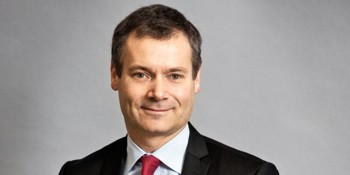
“It’s a real honour, but a bit of a surprise”, said Johan Kuylenstierna. “After all, there are many knowledgeable people that deserve this recognition, some of whom are making a difference out of the limelight.”
Johan Kuylenstierna was appointed Executive Director of SEI in 2012. Under his leadership the SEI has consolidated its position as a leading research to policy institute on environment and development. Recently SEI was ranked as the second most influential think tank in the world on environmental issues.
Below Johan reflects on what it means to be considered Sweden’s most influential voice on environmental matters and highlights some priorities for the coming months.
Q: How does it feel to be considered so influential?
A: I am lucky, and grateful, to have such experienced colleagues at SEI. This nomination is a well deserved reflection of their excellent work in bridging science and policy. In my experience, power is particularly effective when exercised collectively, to build coalitions for sustainable development.
Q: What are the priorities for the coming months?
A: Climate change must continue to be a priority for science, policy and business. This week the Intergovernmental Panel on Climate Change is finalizing its latest report in Japan. SEI and SMHI are organising a seminar in Stockholm on 31 March to discuss the findings and the implications for Sweden. Alongside this essential updating of the science on how the climate is changing, we also need to find solutions. That’s why SEI is leading research on The New Climate Economy project, which is aiming to find ways to harness economic growth in order to rise to the challenge of climate change. SEI also recently launched Min Klimatpåverkan, an online tool that not only calculates how sustainable your way of life is, but also provides suggestions on how to become more environmentally friendly.
Q: SEI’s research covers more than just the familiar environmental topics. The Institute has, since its inception, sought to expose the interdependence of development and environment issues. What issues are particularly high on this agenda?
A: In 2014 the foundations for the next generation of global development goals, the Sustainable Development Goals (SDGs), will be laid. SEI is part of the Independent Research Forum (IRF2015), a collaboration of research institutes providing critical thinking and integrated analysis for the SDGs. What makes these goals so important is that they will tackle the causes of poverty and address the challenges facing the rich world. The SDGs are not for some, but for all.
Water and land resources are crucial for sustainable agriculture. Energy and trade drive the motor of economic growth. But as populations grow and living standards rise, the evidence on natural resource scarcity is mounting. It is now time to take resource efficiency seriously. Research suggests that this approach can create jobs and strengthen competitiveness. Decision makers in politics and business need to identify job opportunities and see the advantages of sustainable lifestyles. My opinion is that a sustainable future is not just necessary but also very attractive.
Journal article / "Breathing well" is about more than air quality: cleanliness, population and building density and the presence of vegetation all make a difference.
Journal article / Quantitative measures combined with free-text boxes in surveys can provide rich insights into the impact of citizen science activities on participants.
Journal article / Accessibility is not only a matter of compliance or inclusion, but a methodological condition that shapes who participates and how they contribute.