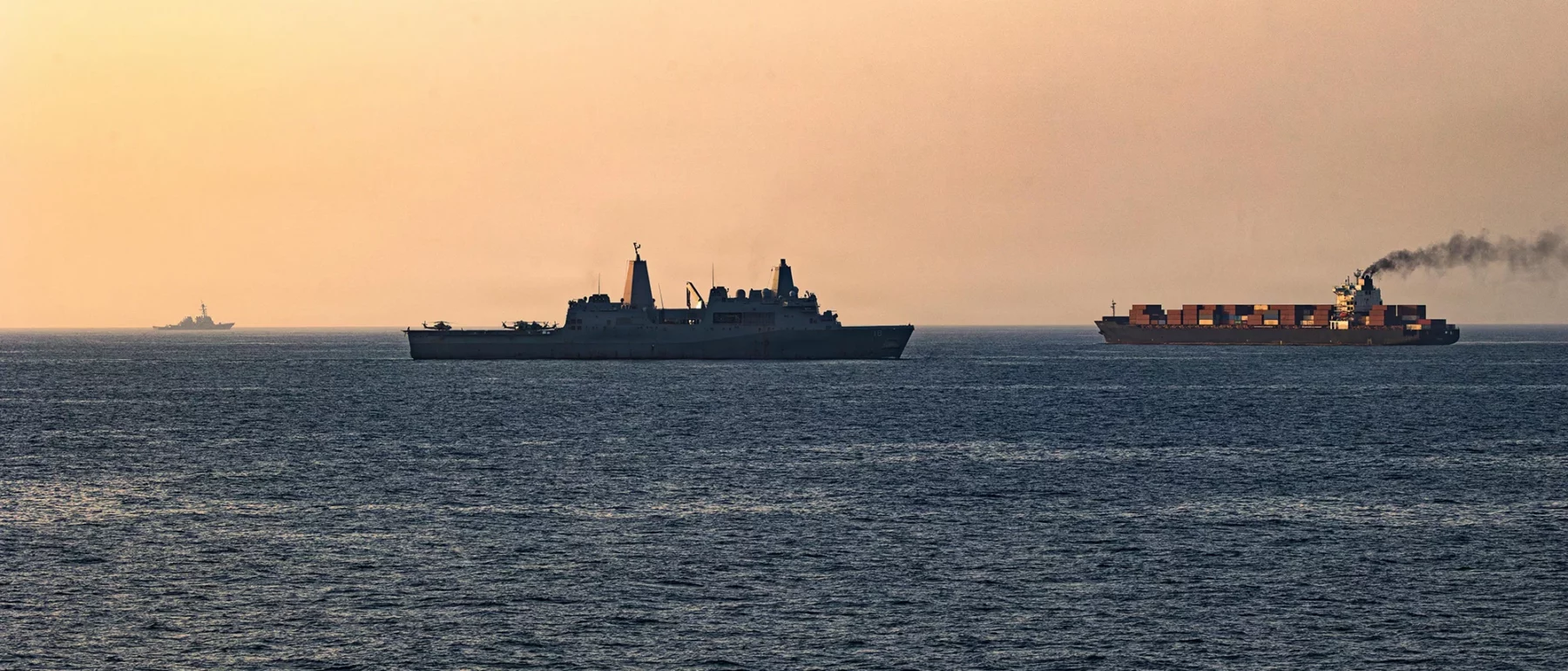
The war on Iran is causing economic upheaval. In this analysis, experts from SEI’s centres give their take, region by region, on how the crisis is affecting energy and transport systems.
This perspective is part of SEI’s sustainable transport program.
While recent disruptions to the global oil supply are rooted in the US-Israel war on Iran and tensions around the Strait of Hormuz, they are often framed as another episode of energy price volatility. However, the scale of what is unfolding points to something more significant.
At the peak of Covid-19 restrictions, global oil demand dropped by around 20 million barrels per day. Today, we are facing supply disruptions of comparable magnitude but with no corresponding slowdown in economic activity. The scale of the shock to the oil system means that change is unavoidable: consumption must reduce as markets respond through a rapid reduction of oil demand.
This is a moment of reckoning. The experience of the 1970s shows crises can trigger structural changes in energy systems and speed up investment in alternative energy sources. Will the current disruption lead to a similar shift – away from fossil-fuel dependent “petrostates” towards more sustainable and electrified energy systems?
Transport is among the sectors hardest hit by this crisis – and it is also where change must begin. It accounts for the largest share of global oil use (57%) – with road transport, aviation, and shipping still dependent on fossil fuels – compared to electricity generation, where oil-based products are one part of a more diversified energy mix. And the impacts of the crisis on transport ripple out beyond mobility: they are already affecting food supply chains, access to services, and everyday life across the world.
Africa relies heavily on imported refined petroleum products despite being a significant producer of crude oil. Countries across Africa have taken measures such as diluting petrol and restricting electricity consumption to cope with the fuel crisis triggered by the US-Israel war on Iran. South Sudan has started to ration electricity in its capital, Juba, while Mauritius has imposed restrictions to reduce waste especially in high-power consumption areas.
African countries are seeking alternative sources of fuel, and many are fearful over rising prices. In Kenya, as of 15 April 2026, the Energy and Petroleum Regulatory Authority announced record increases in Kenyan fuel prices due to rising global costs. Diesel rose by around 24% per litre, and petrol rose by approximately 16% per litre. In Ethiopia, suppliers have been ordered to prioritize specific sectors, while Zimbabwe is increasing the ethanol content in its petrol.
Several countries are introducing different forms of subsidies and cuts to fuel levies (e.g. Namibia, Mozambique, and South Africa). Kenya has moved to reduce the VAT on fuel from 16% to 8% in an effort to cushion consumers from increased prices. In Egypt, authorities are asking the public to limit fuel use, reduce lighting, close shops earlier, and shift toward public transport, while government bodies are required to cut fuel consumption.
The four largest economies in the region – Brazil, Mexico, Argentina and Colombia – are fossil fuel exporters (for Colombia, it amounts to 45% of total goods exports), which in the short term is boosting revenues. Nevertheless, the region has struggled with high inflation for the last five years, and the oil crisis is intensifying pressure on transport costs and supply chains. This has reignited the debate over expanding fossil fuel subsidies, amid elevated levels of public debt.
Government responses have varied. Colombia and Ecuador have maintained a gradual reduction of fossil fuel subsidies, while Mexico has expanded existing subsidies, where they have recently reached a peak cost of USD 280 million per week. Chile, on the other hand, is implementing targeted subsidies for public transport and household heating.
The crisis has also prompted political support for transport electrification policies in Chile and Colombia as a means to build resilience to future oil price swings, lower long-term operating costs, and improve energy security. In particular, the logistics and retail sectors have rapidly adopted electric vehicles to cut fuel expenses and improve efficiency.
The impacts of the war are hitting Asia especially hard. Most countries in Southeast Asia are heavily dependent on fossil fuel imports – the Philippines, for example, imports almost 98% of its oil from the Gulf states. In addition, public transport systems are comparatively underdeveloped in many parts of the region, especially when considering the size of cities like Manila or Jakarta, the latter being the world’s largest metropolitan area. In those cities and beyond, semi-formal modes of transport such as motorbike taxis or minivans are vital for people to get around, particularly for groups on low-incomes. Those communities will be hit the hardest from soaring fuel prices, not only for transport but also for cooking and cooling.
Unfortunately, governments in the region are still reeling from the increased debt burden taken on during Covid-19, which means they have fewer policy arrows in their quivers to tackle price shocks.
China’s exposure to the current energy price shock remains real but increasingly differentiated. While the country still imports over 70% of its crude oil and remains exposed to price shocks in freight, aviation, and industrial logistics, its vulnerability is no longer growing in step with its economy.
The primary driver is electrification: electric vehicles surpassed 50% of new car sales in 2024, dampening the impact of fuel price volatility on passenger transport. This is reinforced by a dramatic expansion of renewable energy capacity, which reached 2340 GW by the end of 2025, meaning an increasing share of electricity for vehicles comes from domestic, non-fossil sources. Extensive charging infrastructure, smart grid integration, and strategic petroleum reserves provide further buffers. Heavy transport and aviation remain oil-dependent, but the overall system is shifting toward electricity-based mobility – reducing both the transmission and persistence of external energy shocks.
The US is a nation of extremes. Not least of these is its high dependence on private vehicles (almost 92% of commutes is by private car), supported by low gasoline prices for consumers. These policies have been reinforced in the last decade by new technologies enabling major expansion of national oil and gas resources and the emergence of the US as a major international oil exporting petrostate. US public-transport passenger numbers crashed during the Covid-19 pandemic and have not rebounded to pre-Covid levels. These factors make transportation the major greenhouse gas emitting sector in a country with one of the highest levels of emissions per capita globally.
The current oil price shocks are already being felt by consumers in the US. The direct cost of the war on Iran, estimated to be between USD 40–95 billion over the past two months, is now being compounded by higher fuel costs consumers. With petrol prices around one dollar per gallon higher, this adds roughly USD 23 billion in extra costs to consumers over the same period, based on annual consumption of about 138 billion gallons of gasoline per year.
At the same time, policy signals are moving in different directions. Some manufacturers recently cancelled plans to produce new electric vehicle models following changes in federal climate policies, yet rising and confusing petrol prices have prompted renewed consumer interest in electric vehicles. This is a confusing mix of signals for both consumers and industry, making it harder to plan and respond effectively.
The EU’s energy import dependency was 57% in 2024, with rates varying widely across countries, from very high levels in Malta (98%), Luxembourg (91%) and Cyprus (88%), to much lower levels in Estonia (5%), Sweden (27%) and Latvia (29%). The crisis is both spurring interest in electricity and biofuels but also providing a lifeline to fossil fuels that were on the way out – to coal producers, for example, in Italy and Germany. Many countries are introducing fuel subsidies to shield households (e.g. France, Greece, Ireland), yet these are costly and unlikely to be sustainable if the crisis deepens.
Very few measures are targeted at reducing demand for fossil fuels in the transport sector in the long-term. Fossil fuel subsidies in the region have doubled since 2022’s energy price crisis following Russia’s invasion of Ukraine, and are expected to increase with this crisis as well.
In a statement on 13 April, the President of the European Commission, Ursula von der Leyen, noted that since the war on Iran began on 28 February, EU fossil fuel import costs increased by 22 billion Euros. This amounts to about 25% of the total budget of the EU’s Social Climate Fund (86.7 billion Euros in 2026–2032), which is meant to make the green transition fair and inclusive. Von der Leyen urged member states to make better use of funds, but also highlighted that public money alone will not be enough for improving the European energy system.
On subsidies, the case of Sweden is instructive. While its electricity mix is largely fossil-free (99% in 2024), transport remains heavily dependent on fossil fuels and most food is imported. Recent measures such as cuts to fuel tax (EUR 0.1 for gasoline and EUR 0.04 for diesel) are not enough to provide relief to those most affected by rising transport and food prices. At the same time, even the Swedish trade organization for fuel suppliers points out that such measures reinforce fossil fuel dependence and are an obstacle over the long-term to the transition to renewables.
In the UK, energy policy is being reframed from a focus on climate objectives to a central pillar of national resilience, aimed at reducing dependence on volatile global oil prices. The UK government has outlined a package of measures to go “further and faster” in reducing reliance on fossil fuels, including expanding access to low-cost solar, bringing forward investment in renewables, and support for households to improve energy efficiency. This approach also emphasizes closer cooperation with European partners to strengthen collective resilience.
The Baltic Sea Region has distinct characteristics in terms of energy security, flowing from its rapid decoupling from Russian energy systems and increasing integration with Nordic and EU electricity markets. While this regionalization strengthens resilience, it also raises questions about how energy price shocks are transmitted into Baltic transport systems and local mobility. In Estonia, dependency on cars means the economy is particularly sensitive to fuel price shocks. As geopolitical tensions have increased, rising fuel prices have driven inflation, with transport contributing nearly 7% to the consumer price index between February and March 2026, compared to less than 2% for most other commodity categories.
In Ukraine, as Russia targets centralized energy infrastructure, energy policy is shifting from a climate issue to a core pillar of resilience and sovereignty. Here, transport is crucial: even before the full-scale invasion, Ukraine’s transport sector accounted for 80% of oil product consumption, with road transport alone making up 77% of the total. The war has also inflicted enormous damage on the country’s transport system, with losses estimated at USD 38.5 billion by late 2024. For Ukraine, investing in electrified, low-carbon municipal transport and stronger European logistics links has become a key part of a wider security strategy: reducing oil dependence, increasing the resilience of mobility and supply chains, and weakening the fossil fuel economy from which Russia continues to draw revenues to sustain its protracted war.
Throughout the European transport sector, the war on Iran and consequent spike in fuel prices is causing a surge of interest and demand for electric vehicles.
This current oil crisis provides an opportunity to break dependence on fossil fuels. Aside from the environmental impacts of oil dependence, it also lays bare the high economic and political risks: exposure to geopolitical conflict, pressure on public budgets through subsidies, and real impacts on people’s everyday lives.
It is a strong signal to move faster away from oil-based transport. Electrification can help, especially if it is linked to domestic energy systems, but it cannot be the only solution. We also need better public and shared transport, alternative fuels, and less dependence on cars, especially in cities.
At the same time, the transition needs to be fair. If not designed carefully, it risks reinforcing existing inequalities or simply replacing one type of car dependency with another. The aim is not just to switch fuels, but to build more resilient, inclusive, and accessible transport systems.
SEI has spent decades developing tools to support robust, evidence-based energy planning. One such tool, LEAP (the Low Emissions Analysis Platform), allows nations to examine policies that can combat climate change and build resilience against fluctuating oil and gas prices. LEAP offers detailed transport planning capabilities that can study the economic benefits of policies, such as increased electric vehicles and allows policymakers to study how transport systems interact with the wider energy system.
One-SEI program / SEI advances fair, inclusive, and low-emission transport solutions worldwide, bridging global insights with local action for a just mobility transition.
Media coverage / In an interview with TheWorld, SEI’s Anderson Kehbila discusses Kenya's goal to generate all its electricity from renewable sources by 2030
Perspective / SEI fossil fuel experts weigh in on the successes and challenges of the First Conference on Transitioning Away from Fossil Fuels in Santa Marta, Colombia.
Media coverage / SEI’s Alphayo Lutta emphasizes that one way Kenya can reduce its vulnerability to global oil disruptions is to give greater attention to its bioeconomy.