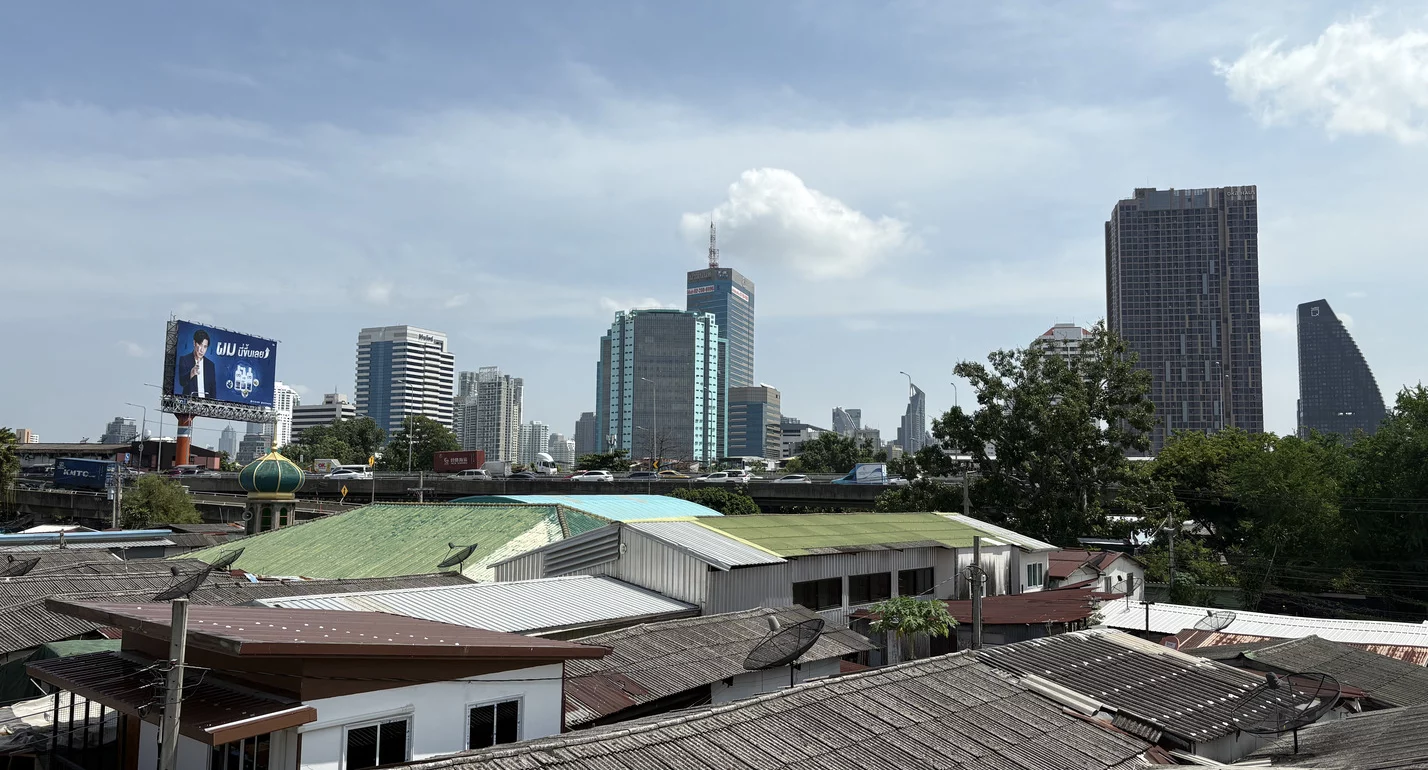
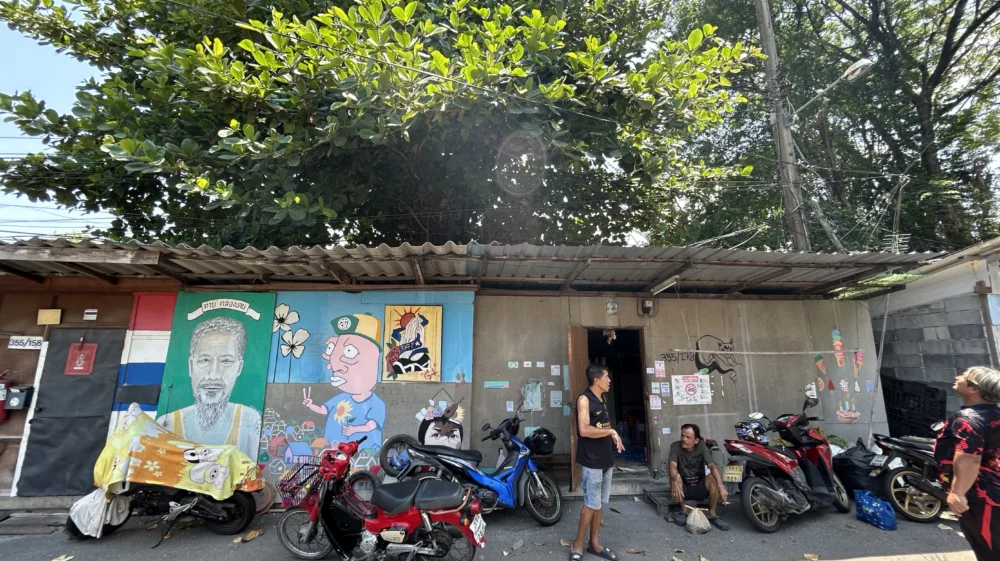
Last year, SEI visited Khlong Toei community, one of the low-income communities in Bangkok, to document how residents are coping with the intense and unforgiving heat during the hot season of March to May. This year, we returned to explore ways to find solutions to address the urban heat island (UHI) effect and potentially co-produce a community cooling plan with the locals.
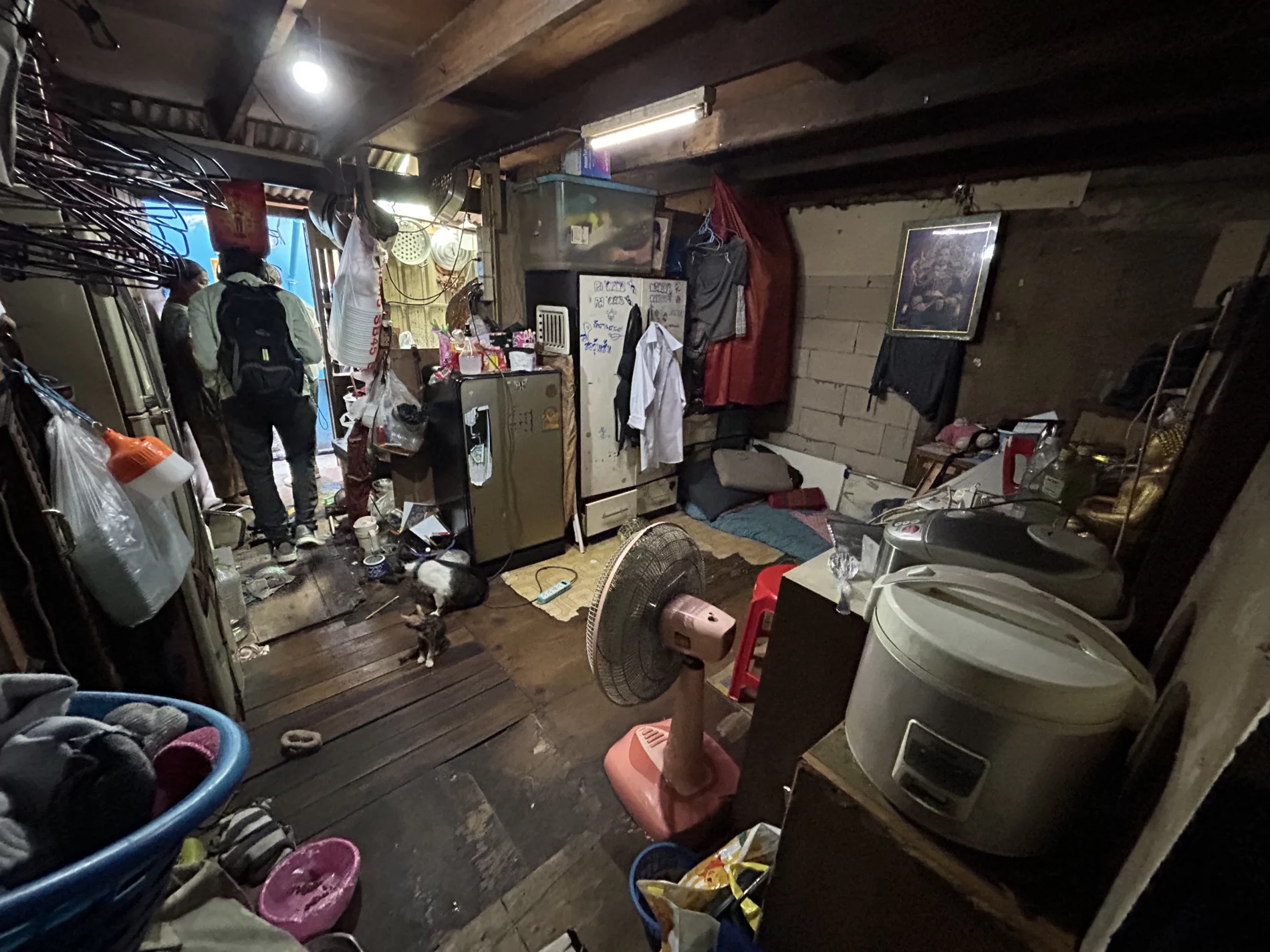
We experienced first-hand what the Khlong Toei residents endured every hot season. Walking around the neighbourhood under the blazing sun was a sensation. Inside local homes, the air was often stagnant and humid, making the poorly ventilated space feels almost unsanitary. Indoor air temperatures reached 39°C, intensified by heat radiating from metal sheet roofs, walls and floors (which reached 68.1°, 45.7°, 41.1°C, respectively).
Pushing for greater awareness and constructive approaches to manage the urban heat island (UHI) for low-income urban populations, SEI organised a housing visit and assessment with the community leaders in Khlong Toei lock 1-3.
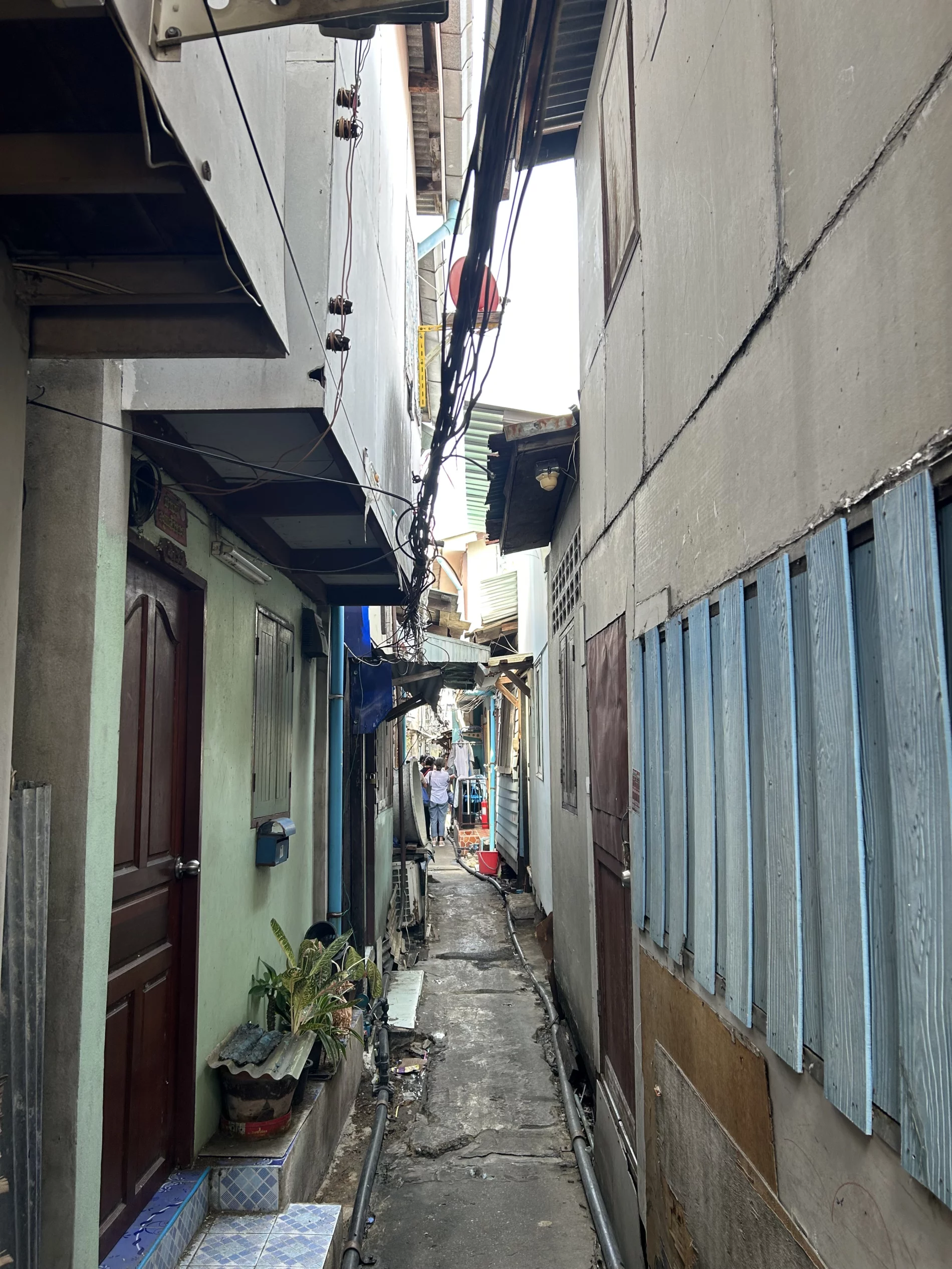
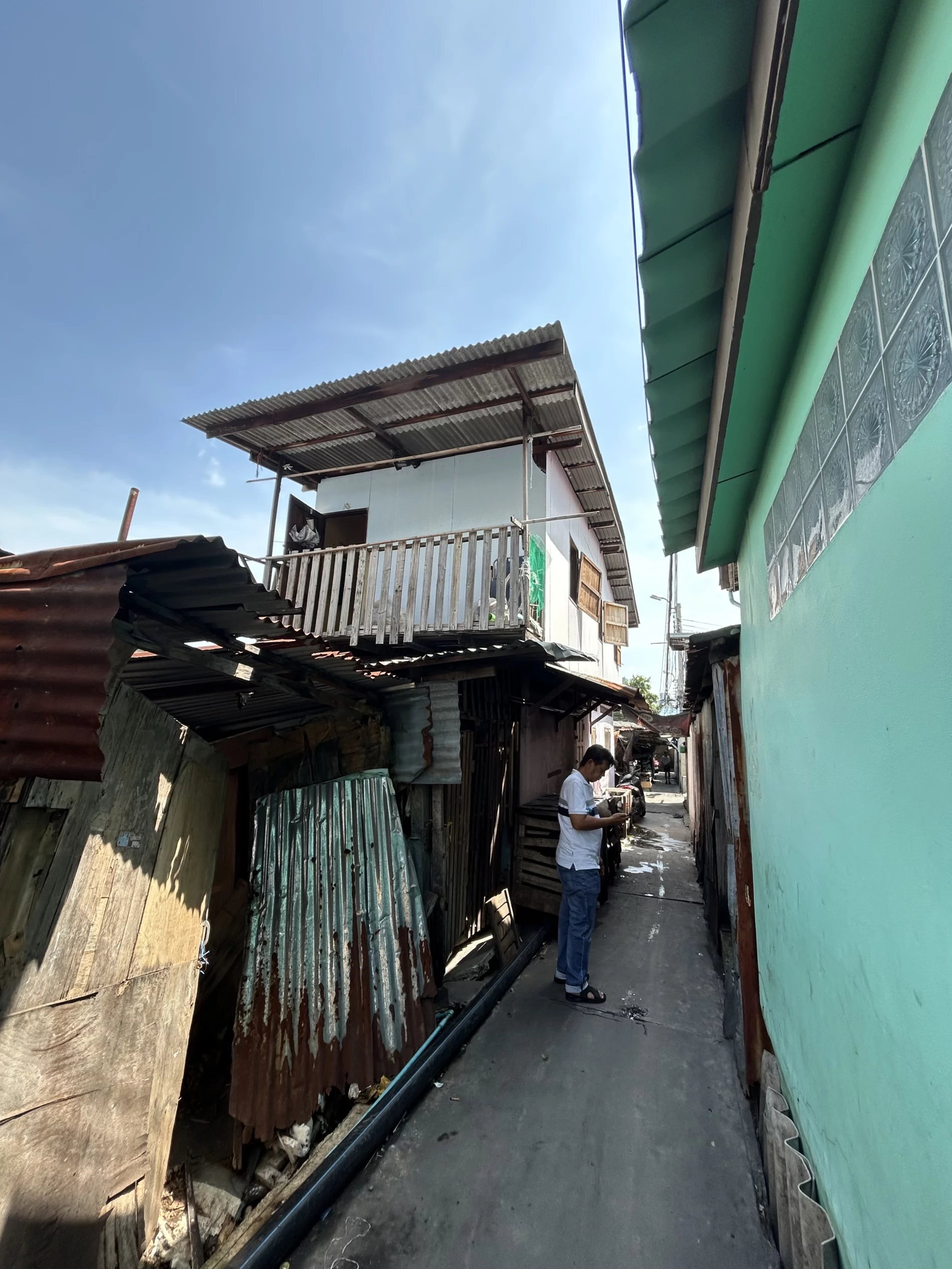
We assessed the housing orientations in Khlong Toei to understand how heat accumulates in the neighbourhood. East- and west-facing houses absorb more solar radiation through façades and roofs than north- and south-facing ones. In Lock 1-3, the houses are densely packed into one- to two-storey squared blocks and linear rows.
Photo: Raja Asvanon / SEI Asia.
Photo: Raja Asvanon / SEI Asia.
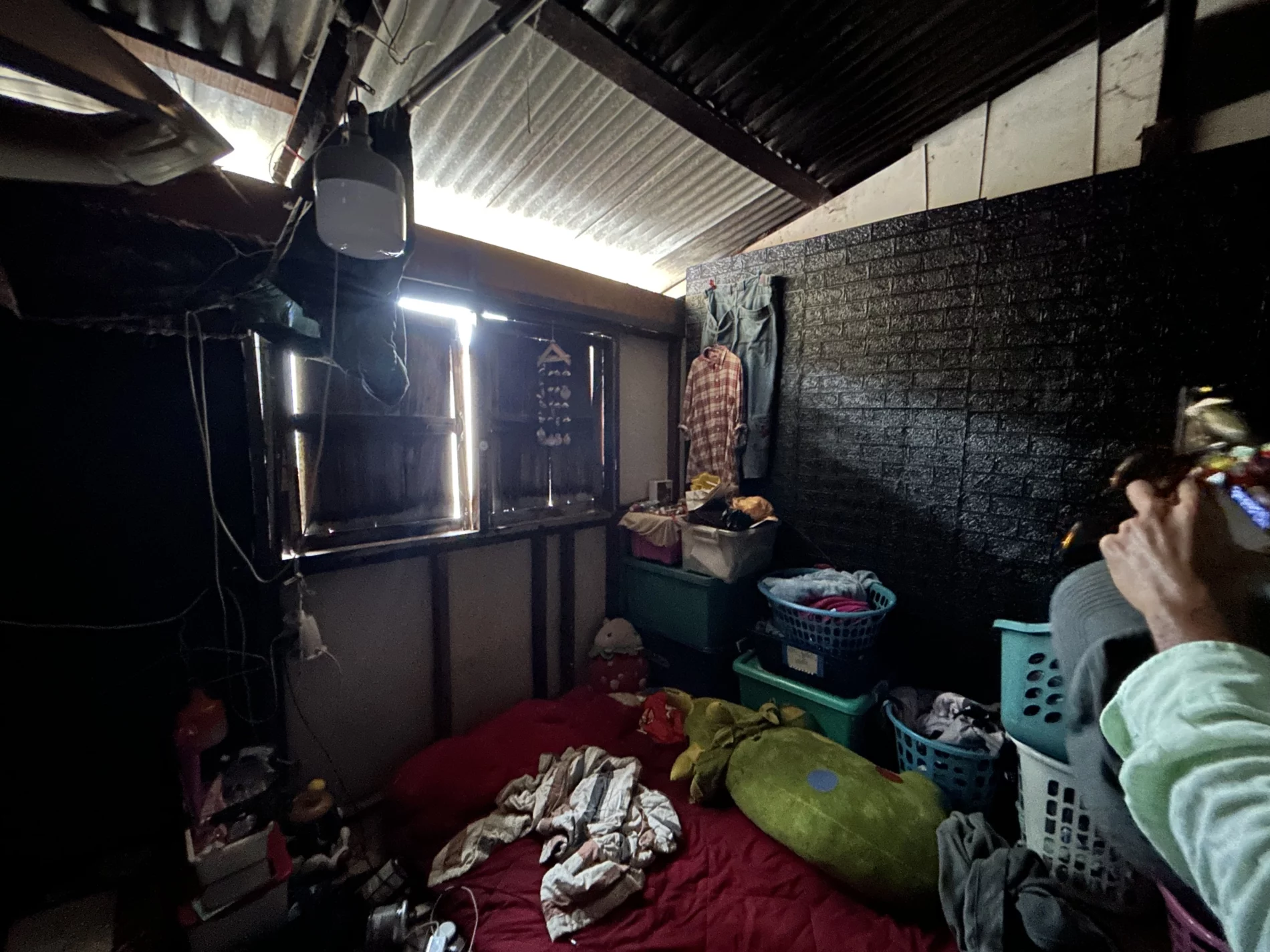
On a relatively cooler day with an ambient temperature of 33° C, we measured second-storey air temperatures that ranged from 35.0° to 36.6° C (note this is not the hottest time of the day yet). At these temperatures, locals confirmed that nobody stays upstairs during the day. All daytime activities – resting, home errands, leisure, cooking and socializing – happen on the ground floor. Even cats and dogs stay on the first floor.
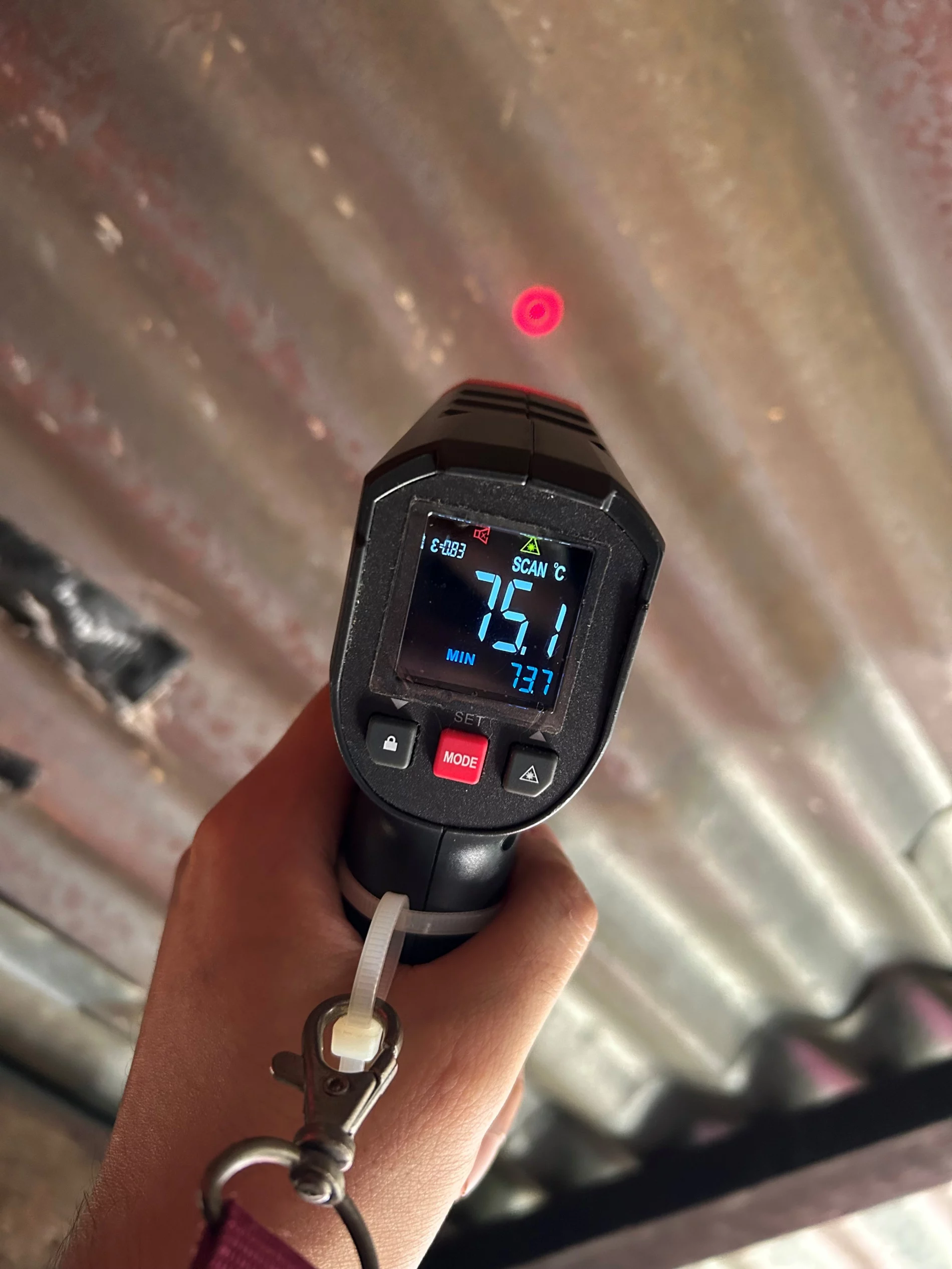
An assessment of the housing materials reveals their thermal capacity and conductivity. Roofs, typically made of metal sheets, ranged in temperature from 43.8 °C (shaded from sunlight) to 75.1 °C (when exposed to direct sunlight).
High roof surface temperature at 75°C because it is directly exposed to the sun.
Photo: Raja Asvanon / SEI Asia.
Floors and walls, typically made of wood, ranged in temperature from 39.3 °C to 51.7 °C. Newer, upgraded houses using concrete and tiles had slightly cooler surface temperatures, at 38.8 °C. We found that the community volunteer office had installed insulation under its metal sheet roof; the temperature was significantly cooler (41.6 °C) than in the sections without insulation (53.3 °C) – a 11.7 °C difference. This demonstrates how insulation can significantly reduce the temperature of indoor spaces.
Ventilation is crucial for enhancing indoor thermal comfort. Having channels for air to enter and escape, such as windows and vents, serves two functions: it allows heated, moist indoor air to rise and escape, and it creates a pressure difference that draws cooler outdoor air into the house.
In Thailand, the two dominant wind patterns are shaped by the monsoons: the northeastern and southwestern winds. Designing homes with ventilation openings on the northeast and southwest sides would maximise natural ventilation and create a cooling indoor breeze.
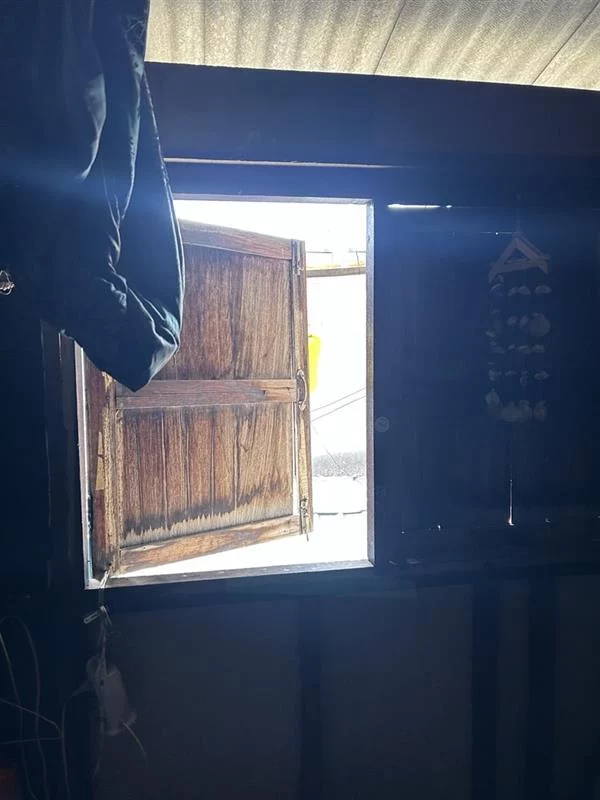
We identified a simple and impactful improvement to increase the in- and out-flow of air: encouraging residents to leave their windows and doors open more often, especially on the upper floor. This allows trapped hot air to escape, and draws cooler air from the ground floor upwards and out, cooling and circulating the indoor air.
Opening the windows creates an out-flow of trapped hot air
Photo: Raja Asvanon / SEI Asia.
Windows kept shut traps the hot air inside
Photo: Raja Asvanon / SEI Asia.
In the ground floor, the air flows through the entrance door, up and out of the upper floor
Photo: Raja Asvanon / SEI Asia.
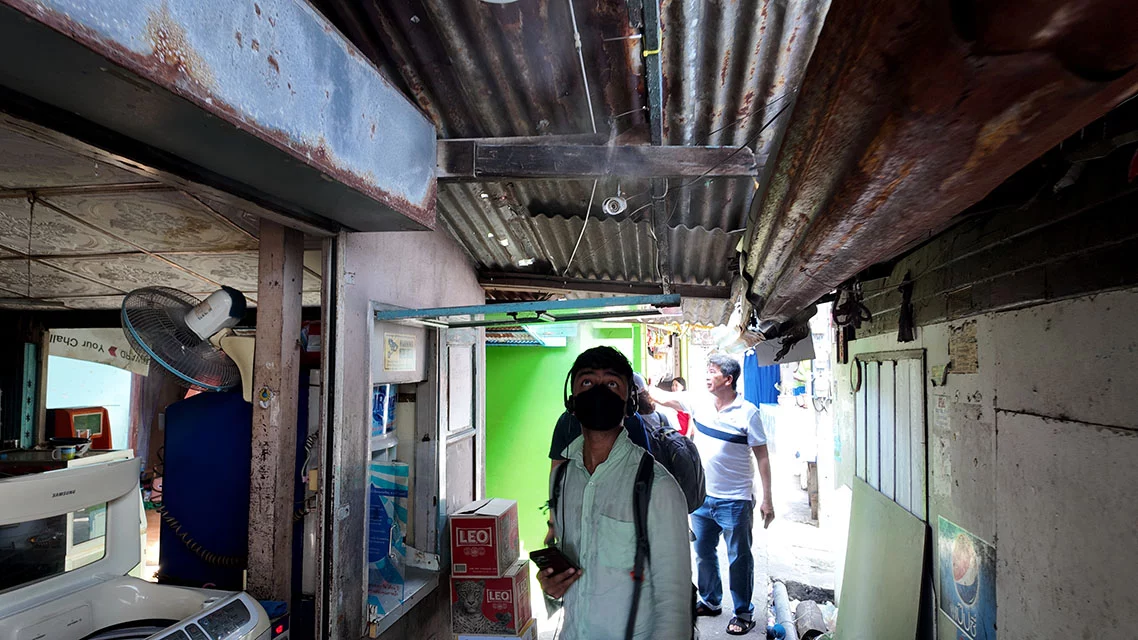
However, several concerns prevent homeowners from keeping windows open including the need for privacy, fear of theft, and the desire to keep out mosquitoes and other pests. We also saw people using water sprinklers and vaporisers to cool their roofs and indoor spaces.
Water sprinklers are installed to cool down areas where the residents pass by.
Photo: Variya Plungwatana / SEI Asia.
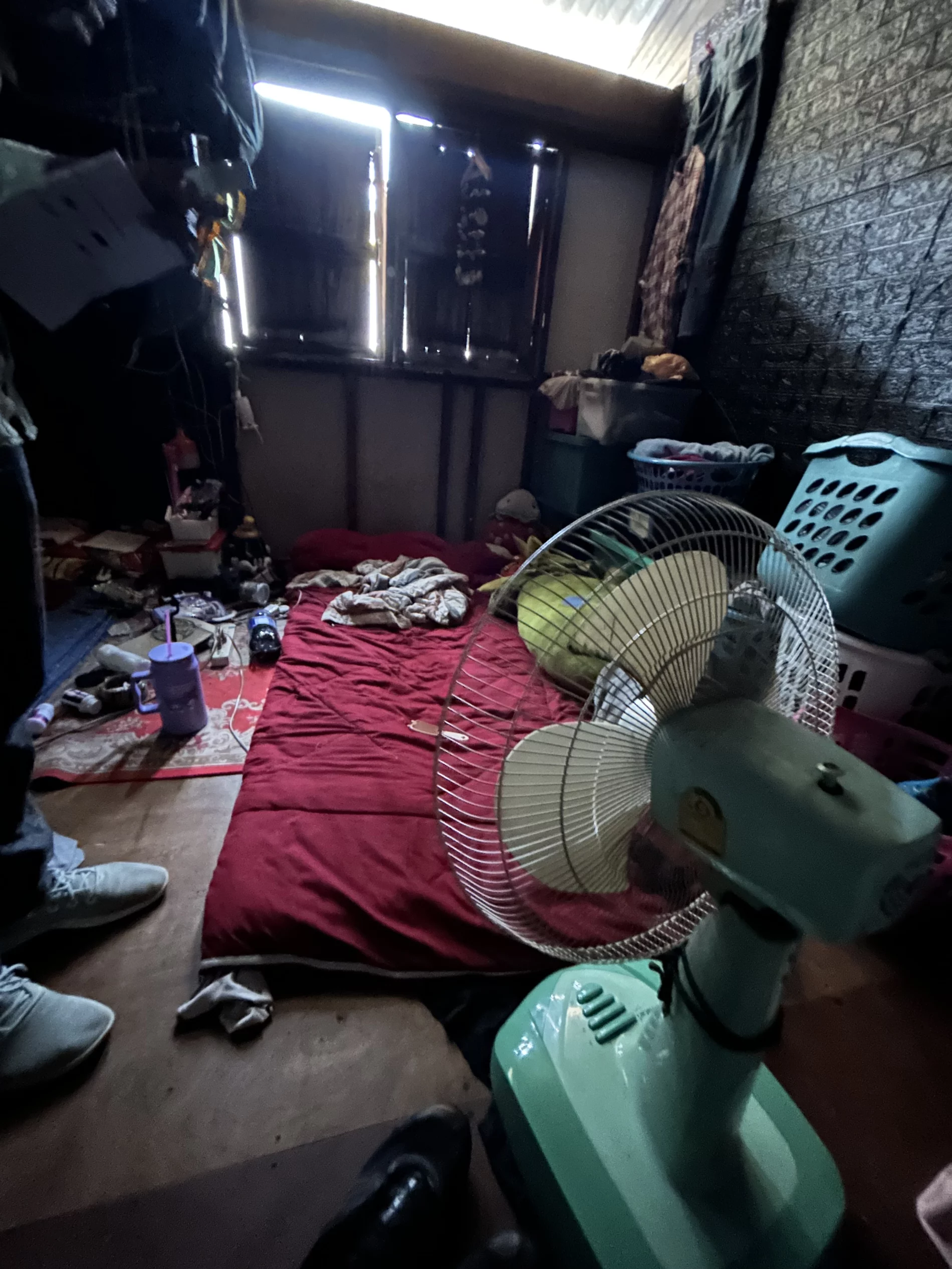
It is typical for locals to sit in open spaces outside their houses as the heat becomes unbearable during the day. At night, people shower several times across the night to cool down. In addition to sleeping right in front of a fan, some choose to sleep on the tile floors because the hard, cool surface is more pleasant than sweat-damped bed sheets.
There was a time when the air-conditioner broke, and I couldn’t sleep at all because of the heat. I was up until 2 or 3 a.m. The fan just was not enough. What I did was move to sleep on the first floor since there is water (that we used) under the floor that helps cool down the space a bit.
Khlong Toey resident
All dwellers sleep with the fan facing them.
Photo: Raja Asvanon / SEI Asia.
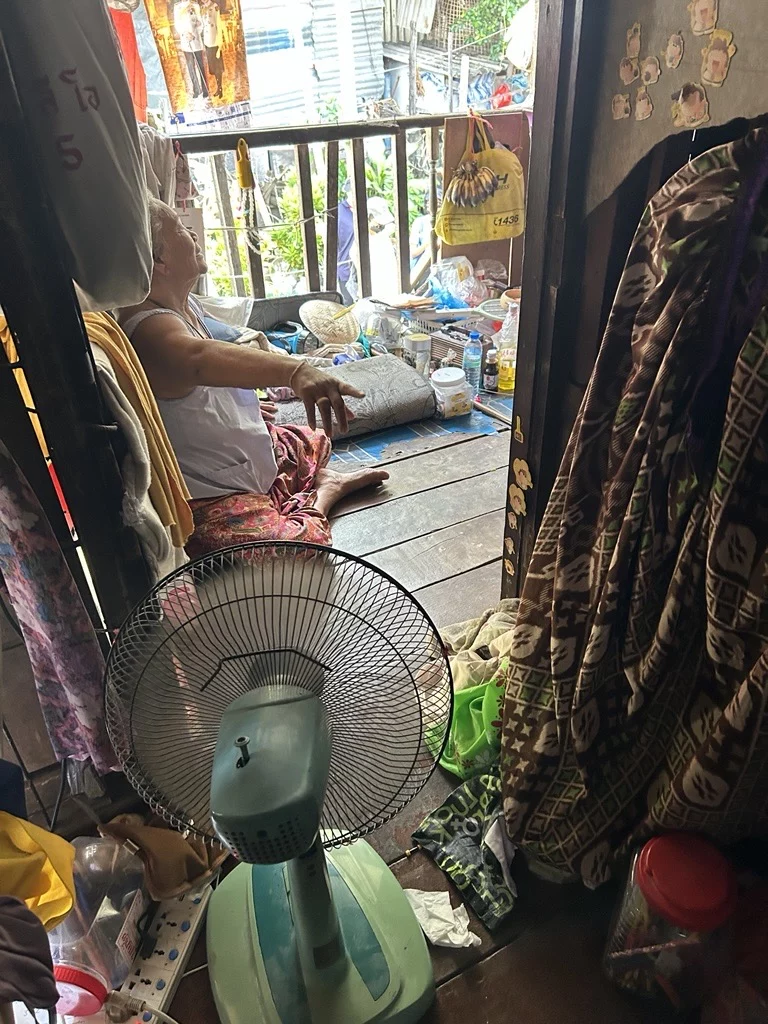
One elderly woman said she often sleeps on the balcony because it is cooler at night.
Photo: Raja Asvanon / SEI Asia.
We learned that elderly residents have been sleeping on their porch, along the walkway, as it is cooler than sleeping indoors.
Apart from renovating their homes, residents can also use other solutions, such as painting their homes with cool-tone colours to reduce heat absorption and using vinyl sheets to block heat while still allowing ventilation.
A community cooling plan can be co-developed by rapidly assessing the heat accumulation in the house and identifying ways to improve thermal comfort. Some solutions could include:
By combining vernacular architecture with urban research insights, we can help local communities find solutions to mitigate and cope with high urban temperatures tailored to their specific needs. A participatory process between researchers and locals to improve housing and neighbourhood design can make resilience-building more practical, affordable, and impactful as cities continue to warm.
Perspective / Extreme heat affects low-income communities the most; better urban planning and social support are needed to counter the health risks and economic costs.
Perspective / Asia’s next financial revolution must make climate adaptation finance accessible to vulnerable households and small businesses.
Media advisory / Experts from SEI will be at CBD COP17 in Yerevan from 19–30 October and are available for commentary and analysis.