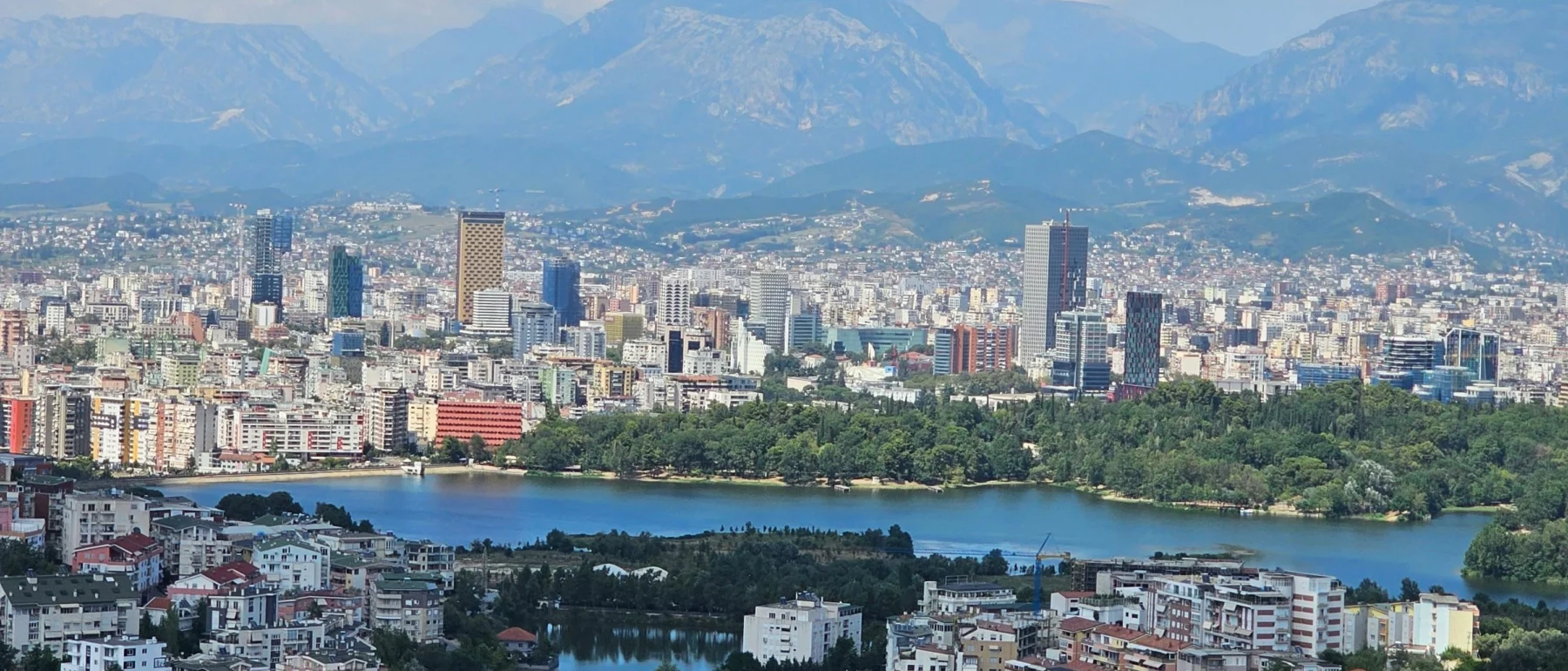
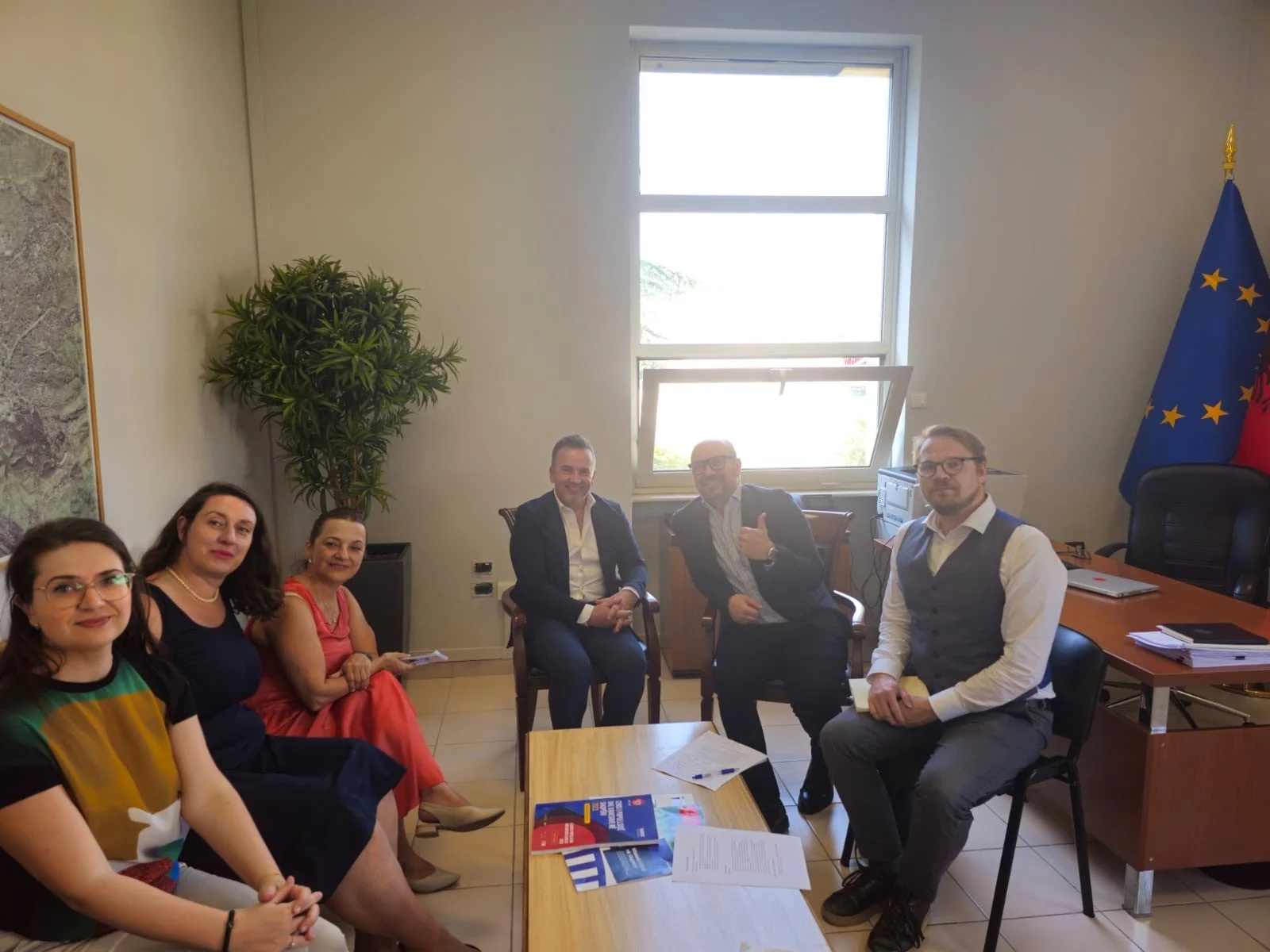
Members of SEI’s Fact-Finding Mission (FFM) in Albania project recently carried out the team’s first mission to Tirana, engaging in high-level bilateral meetings with key institutional stakeholders. These included representatives from the Ministry of Tourism and Environment, the Prime Minister’s Office, and the National Environmental Agency, as the project’s primary beneficiaries.
The mission served to establish a shared understanding of Albania’s current position in aligning with the EU acquis under Chapter 27 – Environment and Climate Change, within Cluster 4 – Green Agenda and Sustainable Connectivity. Discussions also explored how relevant institutions are contributing to the EU approximation process and what support may be needed as negotiations move forward.
Throughout the mission, institutional representatives highlighted the proactive steps the Albanian government is taking under the accelerated EU accession methodology. This approach requires swift and strategic reforms to align with the EU standards, where flexibility and adaptability remain key in this dynamic process.
So far, Albania has opened negotiations for four out of the six EU clusters and aims to open the remaining two by this fall. The Intergovernmental conference on Cluster 4 is expected to take place in early July, marking the formal opening of that Cluster, including Chapter 27. This would represent a major milestone and increase the workload across legal, institutional and technical capacities.
The government has set an ambitious goal to close negotiations by 2027 and achieve EU membership by January 2030. In this context, Chapter 27 represents a particular challenge, given its complexity, significant financial demands, and the need for strong inter-institutional coordination. For these reasons, it has been intentionally scheduled toward the end of the negotiation process.
Despite progress, Albania still faces several systemic challenges in environmental governance. Due to historical factors, including decades of isolation and a difficult post-communist transition, environment and climate issues have not been a national priority. Pollution from past heavy industry, combined with widespread illegal construction along rivers and coastlines, continues to pose significant problems.
Climate change, in particular, has emerged as a critical area where national capacity remains limited. While Albania is more a victim than a driver of climate change issues, addressing its impacts requires technical expertise, improved coordination, and targeted investments. Nature protection is another area of concern – as a country rich in biodiversity and reliant on tourism, Albania risks falling into the trap of pursuing strategic investments that could threaten natural habitats and biodiversity.
Other sectors, such as water management, air quality, agriculture (particularly the use of fertilizers), and waste also require stronger policies and improved infrastructure. Albania has demonstrated clear potential and is making steady progress in many of these areas, though continued effort and investment will be essential to sustain and accelerate that progress.
A recurring theme throughout the discussions was the gap between legislative alignment and actual enforcement. Implementation remains weak across many sectors, and the public administration’s absorption capacity will need to be significantly strengthened to keep pace with the demands of the EU accession process.
It was clearly emphasized that EU integration should not be viewed solely as a government or administrative task. Instead, it is a shared process that must engage all parts of society, including the private sector, civil society, and academia. A whole-of-society approach is essential to foster accountability, participation and innovation. In this context, Estonia’s experience in building strong absorption capacity offers valuable lessons. Its model of active engagement and coordination during the EU accession process could serve as a useful example for Albania to follow.
Funding and investment remain persistent challenges. While securing funding is vital, it is crucial to have the ability to use available funds efficiently and strategically, especially when accessing EU programs. Raising public awareness and encouraging community involvement are also essential to ensure the success of reforms.
On a technical level, challenges persist in areas such as software and IT systems for air and water monitoring, environmental data collection, and inventory management. Research and innovation in the environmental field also remain limited, mainly due to budget constraints.
To address these challenges, it’s important to move beyond just government-led reforms and involve the whole society – a strong national narrative and communication strategy that connects environmental reform with economic growth, public health, and everyday quality of life can help drive that change. This should combine both incentives and accountability – a “carrot and stick” approach, to build momentum and public support.
SEI's FFM in Albania project team
Photo: Bora Hajdini / SEI.
Following this first mission to Tirana, the SEI team will develop two key deliverables:
A second mission of the SEI team to Tirana is planned for later this fall, which will serve as a follow-up to the initial discussions and will expand stakeholder engagement to include civil society, academia, and additional institutional actors.
Given the pace and pressure of the accelerated methodology, flexibility, responsiveness and high-quality implementation partnerships will be critical moving forward. Strengthening cross-institutional coordination and maintaining momentum will help ensure Albania stays on track to meet its EU accession goals.
The Fact-Finding Mission (FFM) in Albania project is designed to support Albania in its EU accession negotiation process by assessing the country’s readiness for negotiations. It focuses on Chapter 27 – Environment and Climate Change, part of the EU Cluster 4 – Green Agenda and Sustainable Connectivity. Through strategic support and relevant expertise, the project aims to help Albania advance its alignment with the EU acquis in the related field and prepare for a successful negotiation process.
Team Leader: Environmental Policy and Strategy; Senior Project Manager
SEI Headquarters
Project / This project supports Albania’s EU accession by assessing readiness to align with and implement EU acquis under Chapter 27 on Environment and Climate Change.
Past event / This event brought together EU institutions, member states, and regional stakeholders from the Eastern Partnership (EaP) and Western Balkans countries.
Project / This project supports Albania’s EU accession by assessing readiness to align with and implement EU acquis under Chapter 27 on Environment and Climate Change.
Feature / Read about climate finance in Western Balkans, Eastern Europe and the Caucasus and what SEI does on this topic.