A meeting hosted by the UK government brought together a new configuration of actors working on locally led adaptation. Despite fissures, SEI’s Katherine Browne sees a pathway forward, with more rigorous evidence and collaboration.
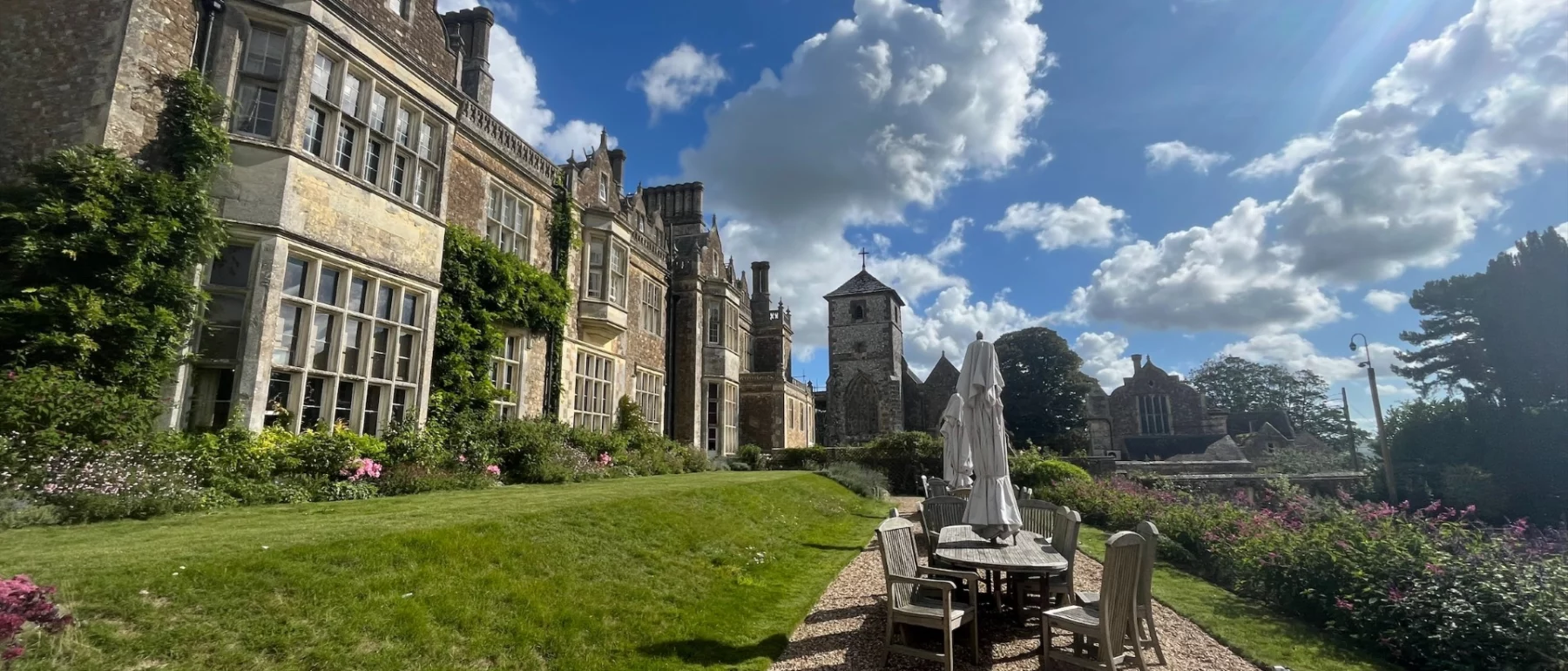
In a meeting hosted by the UK government in Wilton Park, a forum for dialogue under Chatham House Rule, on 8 to 10 September, development organizations, multilateral banks, researchers and civil society gathered to discuss locally led adaptation and how to create a vision for 2030. Katherine Browne, team lead for SEI’s International Climate Risk and Adaptation team, attended as a knowledge partner.
“In a time of uncertainty and financial headwinds, this gathering was an eye opener,” Browne said. “We are seeing both great opportunities to work together and make progress, at the same time that the landscape is shifting beneath our feet,” for the organizations that are championing locally led adaptation and other development, from the knowledge partners to the funders.
Nevertheless, Browne sees new movement bringing new actors together to act on LLA. The multilateral development banks (MDBs) and the private sector seem more serious now about this form of investment, she said. Some participants highlighted loans for LLA as an investment in building societies’ economies, and now they need the evidence to support their decisions.
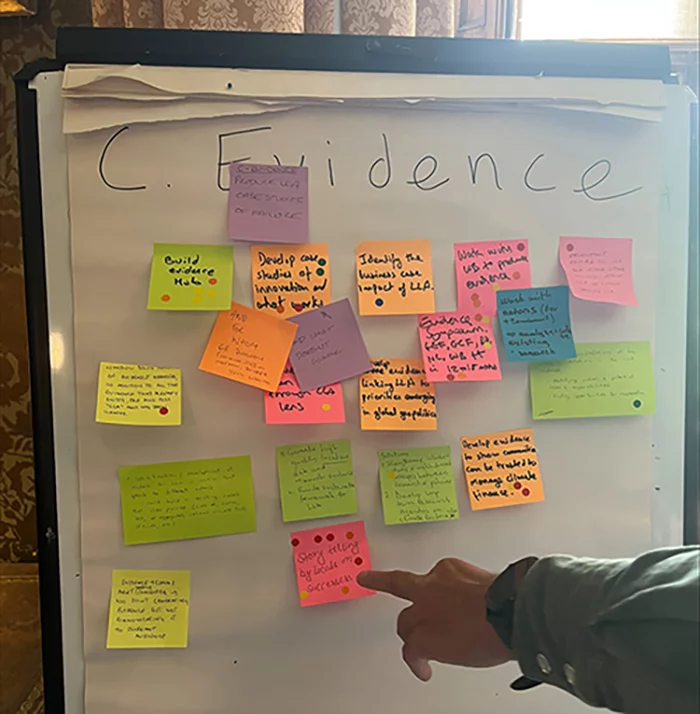
A participant points to ideas on building stronger evidence for LLA during the meeting at Wilton Park, September 2025.
Photo: Katherine Browne / SEI.
For this to happen, Browne said, the community working on LLA needs to better articulate the value added for LLA. “We have evidence of LLA success, but it is anecdotal, fragmented and small scale. We need more systematic evidence of outcomes and impact. Funders are asking for more systematic evidence; we should meet that need. The case studies that are collected are excellent, but we need more rigorous data – quantitative evidence, that is systematic.”
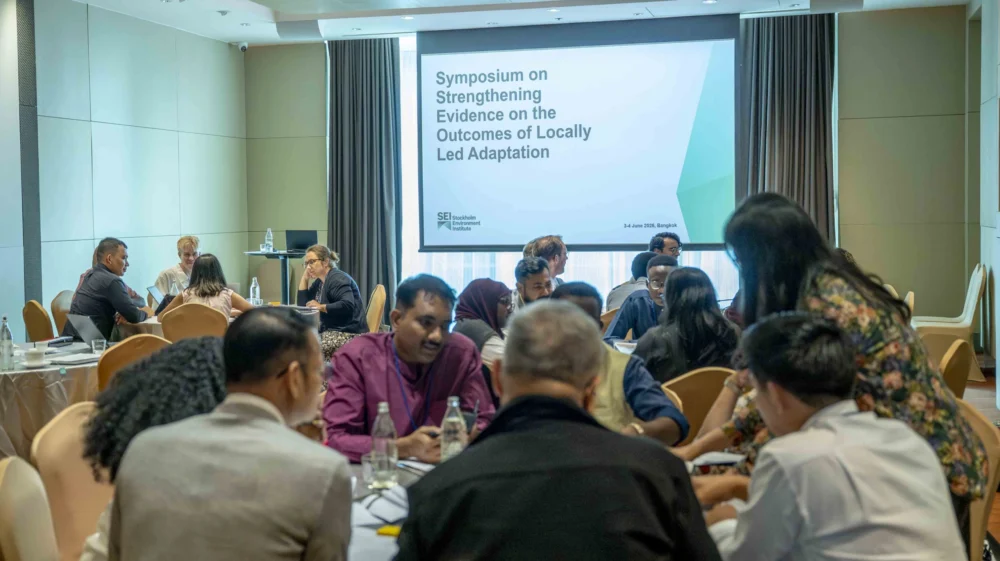
In an effort to build momentum before the meeting, Browne and Janne Parviainen from SEI and Jana El-Horr and Janna Tenzing of the World Bank published a brief that articulated the role of MDBs and DFIs in advancing LLAs. Browne, who hosted a gathering in June at SEI to discuss LLA with many of these actors, says the focus now must be on how they can work better together. “This is the only way we will succeed in scaling up LLA before 2030,” Browne said, looking to next year and COP31.
SEI brief / This brief informs adaptation financiers, the broader community of adaptation scholars, and practitioners in their efforts to scale up support for LLA.
Past event / Join the launch of a new report on the state of evidence on locally led adaptation and recommendations to bridge key divides.
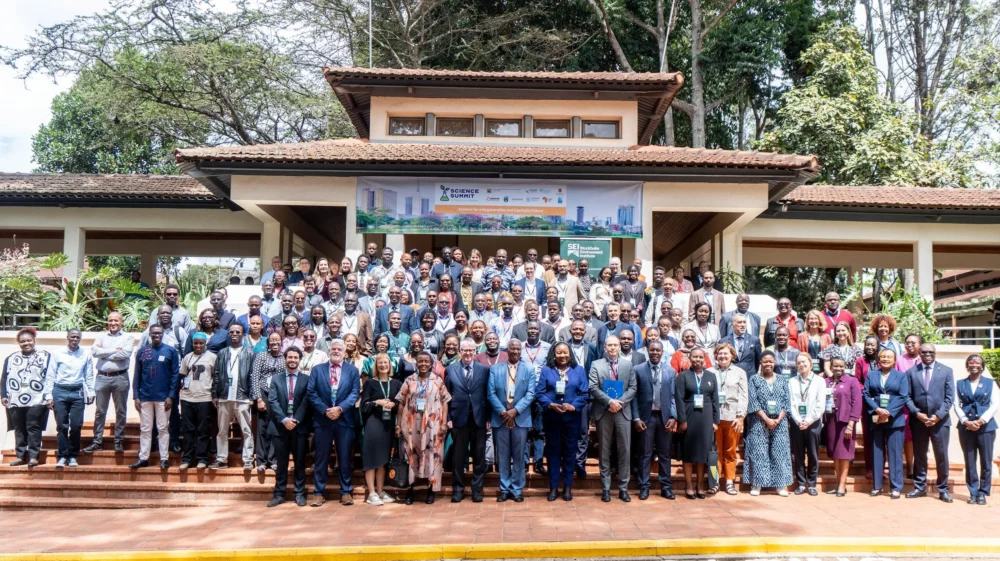
Feature / For the first time, the annual Science Summit alongside the UN General Assembly (UNGA81) extended beyond New York to Nairobi, Kenya.