KTH Climate Action Centre and SEI hosted the Stockholm screening of a documentary that tells the story of the Pacific Islands Students Fighting Climate Change (PISFCC), the organization that brought a landmark case to the International Court of Justice. The event highlighted the impacts of climate change on Pacific islands and served as the basis for wider discussion about taking climate action worldwide.
“When will our voice be heard?”
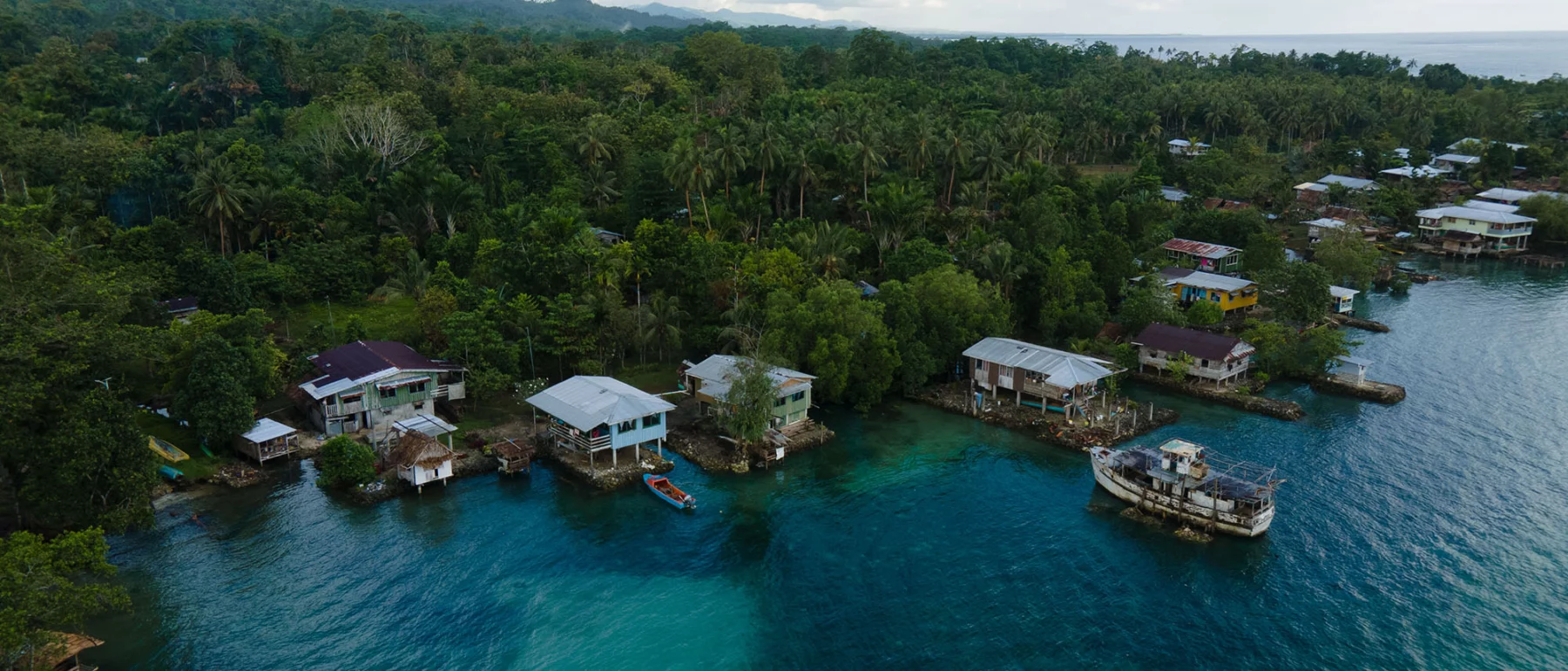
The chief of a Fijian village stood next to an abandoned settlement looking exhausted from asking this question again and again, one climate conference after another. His village had been moved away from their ancestral lands along the coast to further inland due to sea level rise.
This is the story of many villages in Fiji and other Pacific nations, who are at the frontline of the impacts of climate change – losing their homes, culture, ancestral lands, livelihoods and way of life. The documentary YUMI – The Whole World, tells the story of a journey that began in 2019, when 27 students at the University of the South Pacific (based in Vanuatu) came together to attempt something unprecedented: to persuade their leaders to ask the International Court of Justice (ICJ) for a legal opinion on climate change and human rights. Thus were born the Pacific Islands Students Fighting Climate Change (PISFCC) organization and its campaign, which grew into a global movement, leading to the landmark advisory opinion by the International Court of Justice on 23 July 2025.
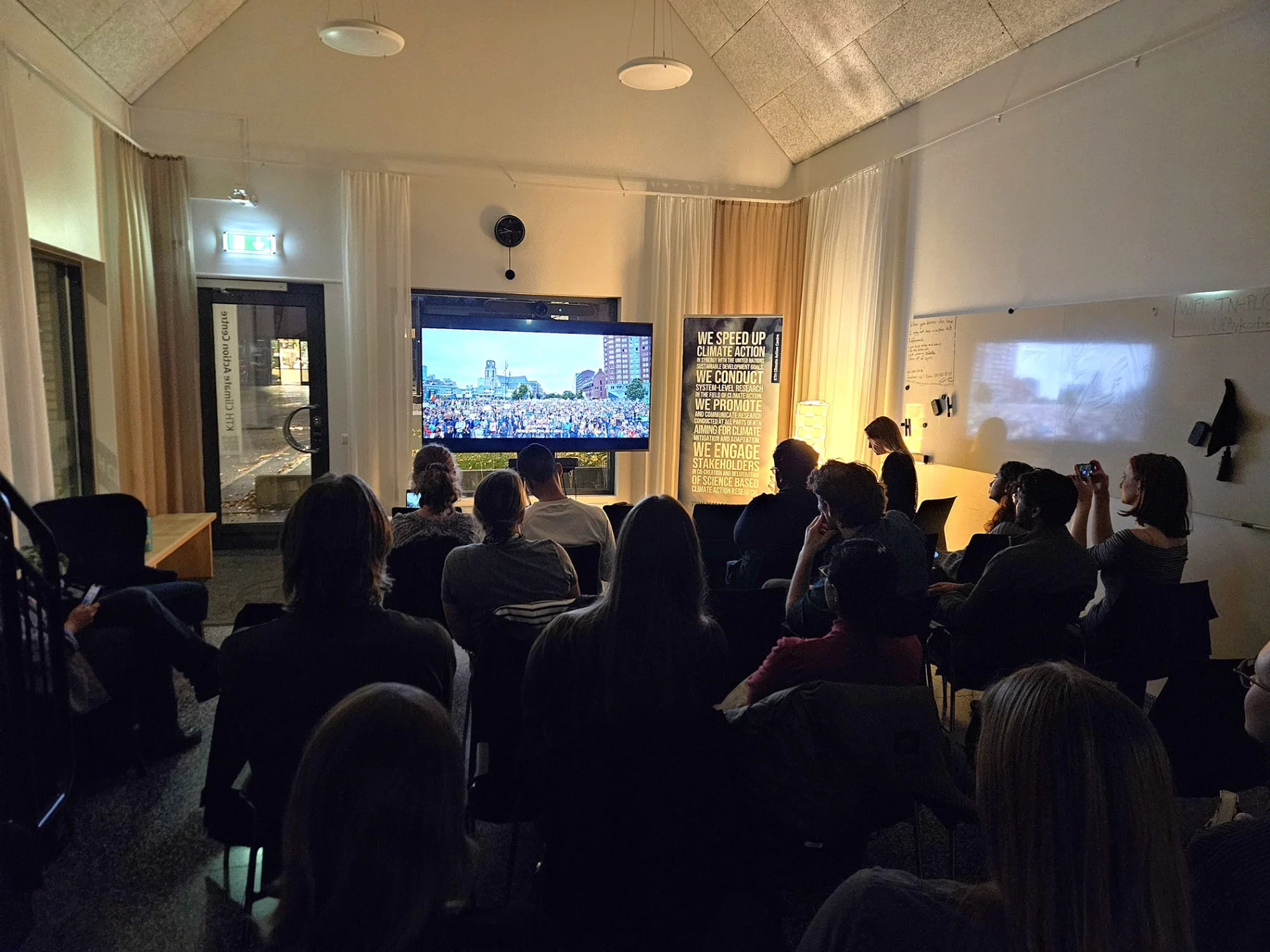
The documentary was recently screened in Stockholm at an event hosted by the KTH Climate Action Centre and SEI. It gave students, researchers, and practitioners gathered in the Nordic darkness an opportunity to hear the voices, stories, and unwavering determination emerging from across the world, in the Pacific. The documentary, which focuses on the power of people and relationships to lead change, presents human stories that offer examples of intergenerational knowledge exchange and practical survival skills that are needed as communities of Pacific islands confront the impacts of global temperature rise – underscoring the reality of abstract concerns, such as climate mitigation and adaptation funding.
Before the screening, attendees were invited into the spirit and rhythm of the Pacific through the words of Belyndar M. Rikimani, a founding member of PISFCC, who joined the event virtually from the Solomon Islands, even in the early hours of the morning.
Gauri Salunkhe read her poem, “The Ocean’s Voice”, which captures both the beauty of the islands and the urgency of action, as illustrated by this excerpt:
For children’s dreams, for futures bright,
We fight for justice, day and night.
The ocean’s voice, the island’s song,
Urges us to stand strong, life-long.
Rikimani’s message was clear and resonant: “We are saving our people and our homes.”
Representatives from the Right Livelihood Awards also joined the event, highlighting why this youth-led movement from the Pacific was chosen as one of its 2025 laureates. The organization was selected “for carrying the call for climate justice to the world’s highest court, turning survival into a matter of rights and climate action into a legal responsibility”.
Photo: Gauri Ashok Salunkhe.
After the screening, Sara K. Phillips, joining virtually from the SEI US Centre, reflected on the ICJ’s advisory opinion, which clarifies that states have legal obligations to protect the climate system, prevent environmental harm, and uphold human rights affected by climate change. Failure to act could constitute “internationally wrongful acts”, opening new avenues for accountability and climate litigation.
Phillips emphasized that law alone cannot solve the climate crisis. This was underscored in the ruling itself, which said “International law … has an important but ultimately limited role in resolving this problem. A complete solution to this daunting, and self-inflicted, problem requires the contribution of all fields of human knowledge. … Above all, a lasting and satisfactory solution requires human will and wisdom – at the individual, social and political levels – to change our habits, comforts and current way of life in order to secure a future for ourselves and those who are yet to come.”
To emphasize the court’s reminder that climate solutions require “all fields of human knowledge”, Salunkhe shared examples from her work with communities in Fiji, illustrating how participatory approaches can bridge Indigenous knowledge and scientific methods to build climate resilience. These included community-led marine conservation, bamboo agroforestry and cyclone-resilient infrastructure, all co-developed with local knowledge holders.
These were reminders that solutions already exist, often built by communities with few resources but immense resolve. These approaches combine multiple forms of knowledge and governance in practical and holistic ways. One attendee reflected on feeling frustrated by governments’ inaction but also inspired by these communities’ actions.
The ICJ’s advisory opinion is not a solution, but it provides clarity and is a compass. It points towards what states must do, but it cannot make them do it. That responsibility falls on all of us, through advocacy, solidarity, and the daily work of shifting norms and systems.
On that November day in Stockholm, Pacific voices travelled across oceans to meet the Nordic winter darkness. The audience left with a mix of questions, frustration, hope, and, perhaps most importantly, the sense that their own voices matter. The Pacific Island students who dared to take their case to the highest international court remind the world that change begins somewhere, often with a small group of committed people who refuse to write off their future.
We acknowledge the Indigenous communities of the Pacific, the makers of the film, the PISFCC, and those who attended and participated in the Stockholm screening event. The stories shared serve as reminders that climate change is not an abstract future but a lived reality.
The event, “Film Screening with Discussion: YUMI – The Whole World”, held on 4 November 2025 at KTH Royal Institute of Technology’s Climate Action Centre, was co-organised by Gauri Salunkhe during her SEI internship, and the KTH Climate Action Centre.
Past event / SEI will contribute to the sessions on climate delivery, adaptation finance and climate communications during Climate Weeks 2026 in Yeosu, Korea.
Past event / The APAN 9th Adaptation Forum on 29 September - 3 October will focus on four priority systems critical to achieving a just and climate-resilient future for all.
Perspective / This blog offers three practical recommendations drawing on insights from youth at the 2024 UN Women Gen-Forum.