On the World Day for Glaciers, Aljandra Melfo offers her reflections on her experiences of witnessing the loss of glaciers and “the life inside the ice” in Venezuela.
This reflection is the first in an occasional series by the Adaptation at Altitude program to highlight the UN’s designation of 2025 as the International Year of Glaciers’ Preservation, and to raise global awareness about the critical role of glaciers, snow and ice in the climate system. Venezuela, the focus of this essay, is believed to be the world’s first country to have lost all its glaciers.
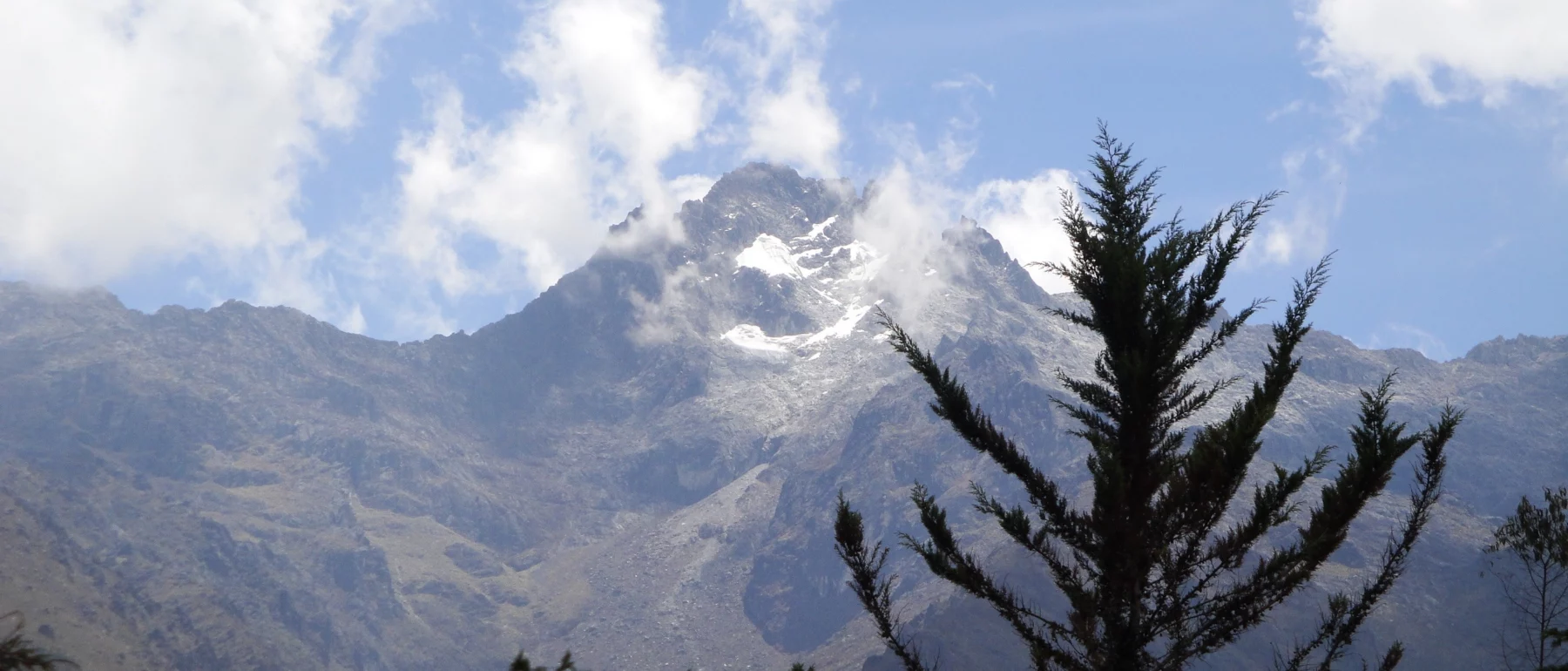
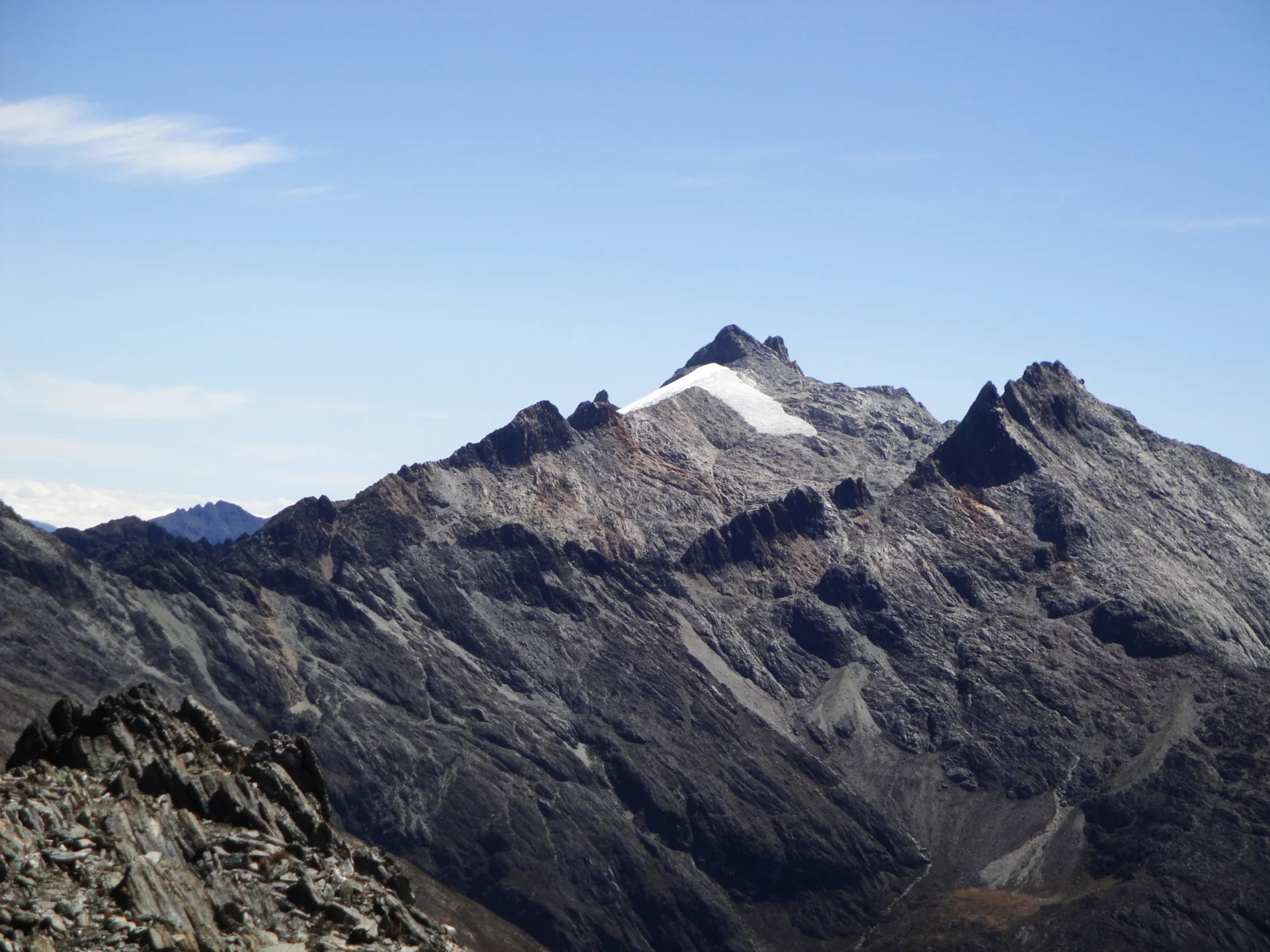
It all started back in 2012. At the time I had lived in Mérida (Venezuela) for almost 30 years, first as a student and then as a professor at Universidad de Los Andes. When I arrived, two glaciers could be seen from the city standing guard high in the Sierra Nevada, at near 5,000 meters, stubbornly white below the scorching tropical sun; one more was hidden behind the high peaks but tourists taking the cable car could easily spot it, in Humboldt peak. I distinctly remember the morning back in 1990 when an enormous fissure split in two the smallest of them, La Concha (the Shell), and how quickly it disappeared afterwards. It was sad and overwhelming, and it was also clear that the other white mass, at Bolívar peak, would follow suit. Nobody could at the time imagine the Sierra without its white shrouds, not here in the so-called City of Eternal Snows. People would hope that next rainy season would recover them, it was just unthinkable for anyone to lose them.
Anyone, that is, except Andrés Yarzábal, a microbiologist at the university. “There is life inside that ice, a unique microbiota in each glacier”, he told me, “and we have to study it before it disappears forever”. I had no idea. To me, a glacier was a sterile mass of ice, but then, I was just a theoretical physicist that only recently had become fascinated by biology. The idea that each glacier contained unknown organisms, living a slow, tough life for thousands of years inside the ice, and that all that was very soon coming to an end, was mind-blowing.
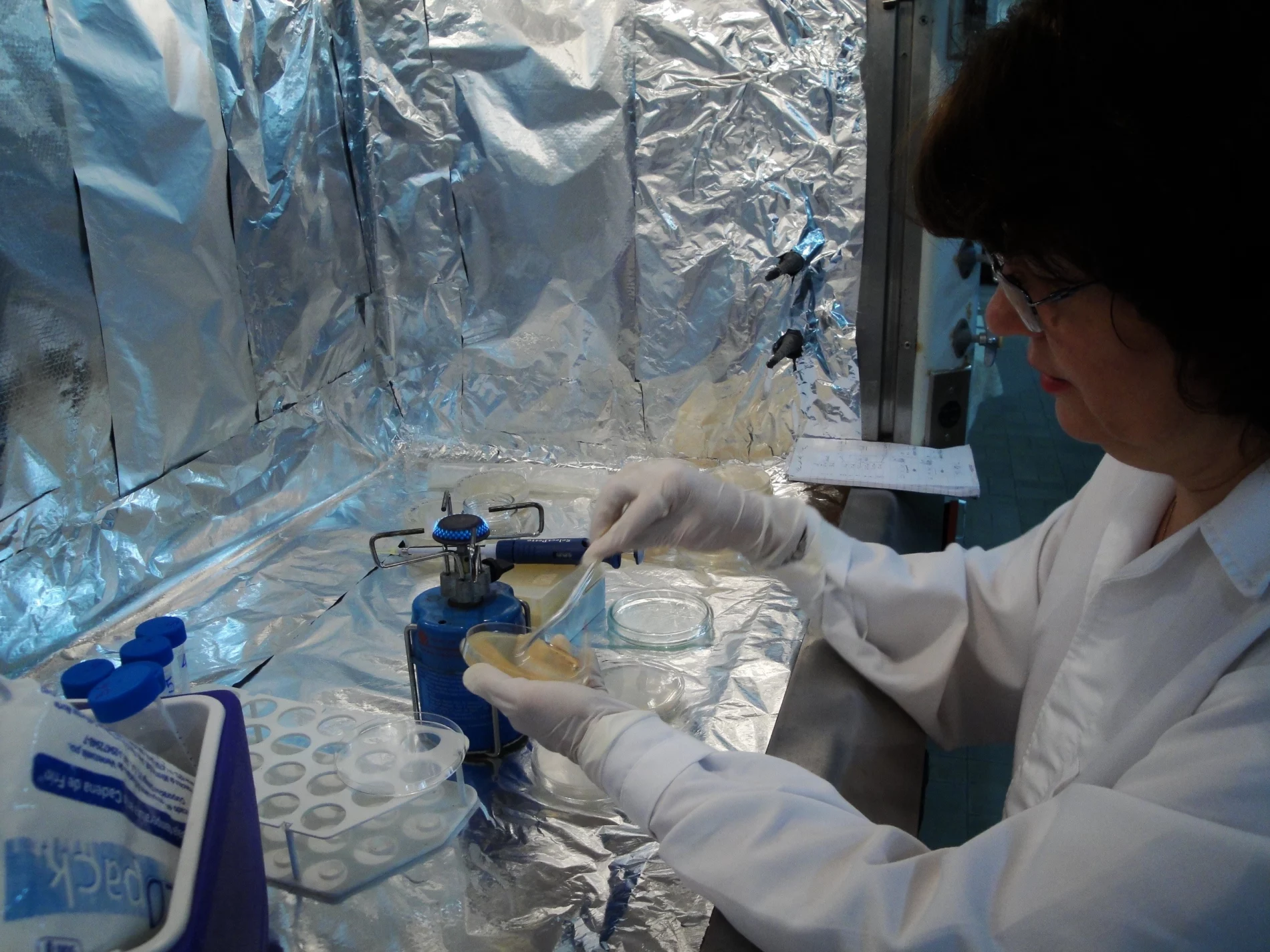
María Ball processing ice samples.
Photo: Courtesy of Alejandra Melfo and the Vida Glacial Project
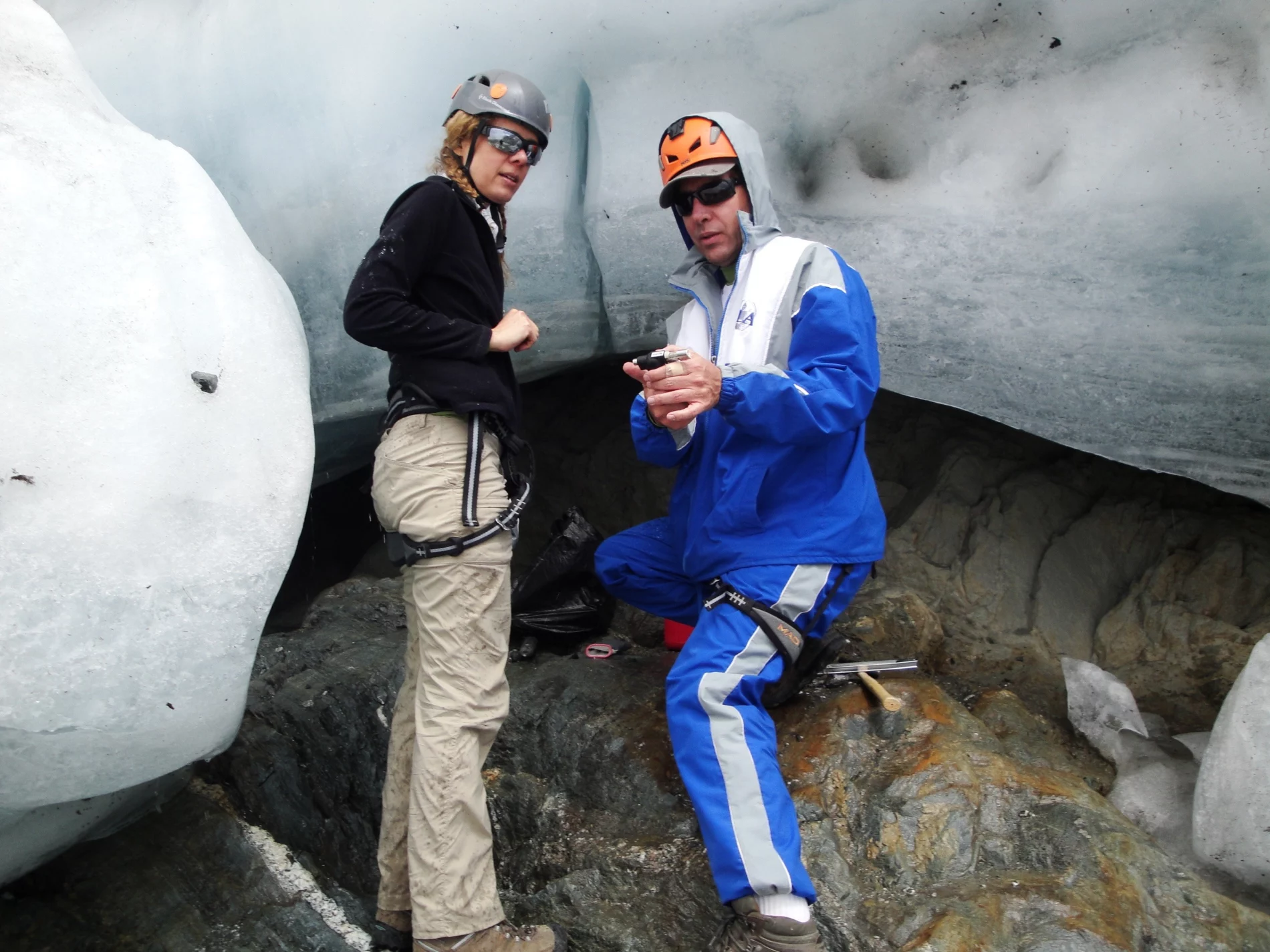
Andrés and his colleague María Ball set up a project to study the microbiota in the two remaining glaciers, at Humboldt and Bolívar peaks, and I did all I could to convince them that a theoretical physicist could be useful in the project: I simply had to be there. They somehow believed me, and I became part of the Vida Glacial, Glacier Life, project. Between 2013 and 2015, we collected sterile samples from both glaciers, and prepared and impressive collection of microorganisms. Some of them we studied, some were kept carefully frozen for future generations.
It was an amazing adventure, that feeling of bearing witness to a unique event, of sharing with the tiny bacteria the sadness of seeing the glaciers disappear, and with them a whole way of life. There were glaciers for thousands of years, there would not be for thousands more, what was the probability of us living exactly in between those ages?
Alejandra Melfo and Andrés Yarzábal collecting samples at the Bolívar glacier.
Photo: Courtesy of Alejandra Melfo and the Vida Glacial Project
Unfortunately, our microbe collection shared the doom of the glaciers: the prolonged crisis in the country meant that it could not be kept frozen constantly, and we still don’t know how many of them perished. Andrés and Mary, as many researchers in the country, had to emigrate. Eternity ended in the City of Eternal Snows, as the last glacier seen from its streets disappeared in 2021. But just as a new ecosystem formed in the slopes of the peaks after the glaciers, so a new project was born form the old one: the study of primary succession in the last Venezuelan glacier. And guess what: I managed once more to convince my biologist colleagues that all they needed in the new team was a useless theoretical physicist.
The Humboldt glacier as seen from the cable car in 2013.
Photo: José Manuel Romero (courtesy of Alejandra Melfo)
Alejandra Melfo is a theoretical physicist-turned-ecologist out of love for the mountains, based in Mérida, Venezuela. She has been involved in research and public communication work around the Sierra Nevada glaciers, including the “Last Venezuelan Glacier” project.
She collaborates with Adaptation at Altitude-Andes and the Consortium for the Sustainable Development of the Andean Ecoregion (CONDESAN), a regional non-governmental organization that works in an integrated, informed, and cooperative manner to conserve, restore, and responsibly use the resources of the Andes Mountains, supporting the sustainable development of its people.
SEI is part of the consortium of seven partners in the Adaptation at Altitude program, which aims to increase the resilience to climate change in mountain comunities and ecosystems. Alejandra’s piece is also available on the Adaptation at Altitude program website as part of its “Glaciers in the spotlight” series.
Program / The Adaptation at Altitude program seeks to help mountain communities adapt to climate change.
Feature / SEI's Kate Williamson and Rosie Witton discuss new insights about climate change adaptation in mountains, a region of growing policy and research attention.
Journal article / This article analyses trends in efforts being implemented worldwide to help mountain regions address the impacts of climate change.
Journal article / This paper is the first step towards achieving automated monitoring of rapid environmental change in permafrost using satellite data.