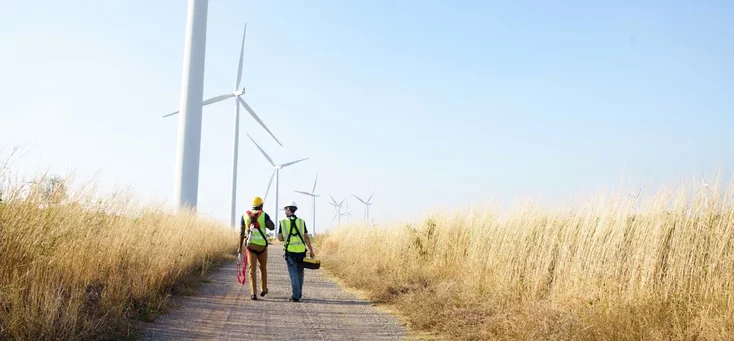
With SEI’s support, the Association of Southeast Asian Nations (ASEAN) produced a renewable energy long-term roadmap that will serve as a regional blueprint for countries transitioning to renewable energy. The roadmap is guiding the selection of targets for the next phase of ASEAN’s energy policy alignment, the ASEAN Plan of Action for Energy Cooperation 2026–2030.
Within the next decade, renewable capacity in the power sector is expected to increase rapidly. Around 2030, renewable capacity should surpass fossil fuel capacity as coal and oil decline while cleaner alternatives continue to grow. To support this transition, this report recommends major investments in grid modernization and system flexibility, which are essential for meeting rising electricity demand.
The roadmap highlights two critical frameworks that would enable deeper regional cooperation. Further developing the ASEAN Power Grid would allow countries to share electricity, improving the reliability and affordability of renewable energy. Additionally, expanding intra-regional biofuel trade would strengthen energy security by reducing dependence on foreign energy sources and preparing ASEAN for future supply disruptions.
However, scaling up renewable capacity alone will not be enough to significantly cut emissions. The report emphasizes that governments must adopt cross-sector policies guided by market incentives to address the main barriers in reducing industrial emissions. Together, these strategies should position ASEAN to transition toward a more resilient and low-carbon energy future.
SEI served as the lead energy modeller for the study, developing the model with the ASEAN Centre for Energy.
Tool / The Low Emissions Analysis Platform (LEAP) is a powerful, versatile system for energy planning and climate change mitigation assessment.
Tool / The Next Energy Modeling system for Optimization (NEMO) is a high-performance, open-source optimization tool designed to answer energy policy questions.
Project / The ASEAN (Association of Southeast Asian Nations) Renewable Energy Long-term Roadmap is a blueprint for increasing the implementation of renewable energy.
Feature / SEI researchers trained Thai energy planners in LEAP and NEMO as part of the country's efforts to achieve net-zero greenhouse gas emissions by 2065.
Feature / For the first time, the ASEAN Centre for Energy developed the report entirely in-house, with assistance from SEI’s Low Emissions Analysis Platform.
Project / SEI is working to develop a ready-to-use modeling framework to examine which set of measures ASEAN countries may take to reach their net-zero goals.