part of Power in balance
In regions affected by climate stress, rapid urbanization, and persistent inequality, how we define poverty shapes how effectively our policies and investments respond to real needs. A multidimensional view of poverty that looks beyond just income must underpin solutions to bring real change.
Power in Balance Episode 5: Multidimensional poverty and WASH
00:00:04 Introduction
Welcome to Stockholm Environment Institute’s Power Imbalance, Conversations on Sustainability and Justice, where we explore how power imbalances create and sustain social and environmental inequalities in the light of intensifying environmental, biodiversity, and climate challenges.
What can we do to tip the scales for a more balanced, just, and sustainable transition?
00:00:23 Charmaine Caparas
What does it mean to be poor in a world shaped by overlapping environmental, social, economic, and political crises? In this episode of Power in Balance, we dig into why poverty can’t be captured by income alone.
00:00:54 Charmaine Caparas
Drawing from WASH, environmental health and gender equality research, our guests, Tracy Morse, Dani Barrington, and Nelson Ekane, unpack the many interconnected factors that shape vulnerability such as exposure to environmental risks, safety and dignity in accessing water and sanitation, gendered roles in time burdens, and the unequal power dynamics that influence who gets to make decisions and who is left behind. Today we will discuss what we miss when we measure only what is easy to count, and why dignity, quality of access, and lived experience matter just as much as infrastructure.
Tracy, Dani, and Nelson, welcome to the podcast.
Transition Music
00:01:51 Charmaine Caparas
You know, before we get into the deeper side of our discussion, I want to first set the stage. What does it mean to be poor and who decides?
I sort of want to get your idea on the framing of multidimensional poverty in the context of WASH and environmental health. My first question is for Nelson: Nelson, in a world of poly-crises, what does poverty really mean beyond income measures?
00:02:21 Nelson Ekane
Thank you, Charmaine. Poverty is a wicked problem. In the field of planning, this implies a complex problem of social and cultural policy with unknown number of potential solutions. Such problems cannot be objectively defined or do not have optimal solutions. As a result, defining poverty as lack of money or in monetary terms, as used by many organizations including the World Bank, is limiting, and I would say misses other important aspects including the root causes of poverty.
00:02:58 Nelson Ekane
Multidimensional poverty encompasses three dimensions: the monetary poverty and access to education, which involves empowerment and access to basic infrastructure services such as water, sanitation, and hygiene, (WASH) that also entails actions that improve health and well-being. A major challenge in dealing with wicked problems is to identify the root causes of the problems and figure out how to tackle them.
00:03:26 Nelson Ekane
Of course, monetary deprivation is most often manifested as symptoms of systemic problems, which themselves have political, geopolitical, historic, and socio-cultural dimensions. Intersecting inequalities are most easily discernible in the developing contexts where institutions are weak, financial resources are scarce, and governance structures are not fully functional. Because this results in poor outcomes in terms of lack of trust and publicly acceptable policies.
00:03:59 Charmaine Caparas
Thank you, Nelson. Now, from an environmental health lens, Tracy, what do income-based poverty metrics miss about people’s lived realities?
00:04:10 Tracy Morse
I think one of the things that’s important for me is first to define environmental health, especially when we talk a lot about environmental protection and planetary boundaries. People often think is environmental health as the health of the environment, which is of course very important, but rather environmental health is how the environment is impacting on human health.
00:04:29 Tracy Morse
And in terms of a profession, going back to what Nelson was talking about, polycrisis and wicked problems, those of us working in environmental health have a really good basis of looking at that whole system of thinking about how different aspects of whether it’s food hygiene, community WASH, safety of communities, impacting on the community as a whole. But when it comes to that idea of measuring poverty, as Nelson touched upon, we tend to think about it as monetary value. We talk about people being within different lines of extreme poverty, but none of that takes on board their day-to-day lived experience that they’re going through.
00:05:09 Tracy Morse
So the research that we’ve been doing across sub-Saharan Africa, to bring that to life a little bit, when we think about environmental exposure to the burden of disease, that tends to sit most heavily at the feet of those who are the poorest in any kind of setting. And that can be high income or low-income settings as well. A lot of my work has been focused in Malawi, for example. So communities which are in high density housing areas or urban slums are exposed to waste piles because there’s no proper waste collection. They’re exposed to polluted rivers, which they’re using not only for day-to-day crossing and moving around, but also for washing clothes, for other domestic purposes as well.
00:05:56 Tracy Morse
These kinds of things bring that burden to life, so poverty is putting you in that situation, but exposing you to much more high-risk disease and long-term health implications from exposure to that environment as well. And that’s only being compounded by the results of climate change accelerating more and more in many lower income parts of the world at the moment.
00:06:20 Charmaine Caparas
Dani, in your research on sanitation and lived experience, whose perspectives tend to be excluded from dominant poverty conversations?
00:06:31 Dani Barrington
This does seem to be a pretty common theme that any programming touted as being participatory and saying that it’s going to listen to those who are the most affected in terms of developing solutions.
There’s two big issues with this. Even though everybody’s saying these are very participatory programs we’re putting in place, often that engagement is really tokenistic. Coming into a community or an area and saying, we’ve decided that you need to have a program of getting everybody a toilet, which might be something that people value, but it might not be their most pressing priority. They weren’t involved in actually identifying what is it that your community needs right now. Or it might be that it is something that people are interested in but not necessarily bringing people in early enough and giving them more small scale, tokenistic ways of contributing later on and claiming as participatory.
00:07:24 Dani Barrington
So perhaps saying, we’ve decided that your community needs to have rainwater harvesting tanks, and now you can decide which houses they go on, instead of actually working with community members to begin with to figure out what their real issue is and how to move forward. And another thing that we often see is that even when there is engagement with local people, particularly those who are quite vulnerable and living with their basic income, it’s still the people with the most power in those situations who are having their voices heard. So often it’s people like committee members of a community group, and they’re the ones who are engaging in the programming or the research, and their voices are being heard. So they are able to influence decisions, they’re able to advocate for their needs and the needs of the people closest to them. But often we aren’t hearing from the people who are the most vulnerable in communities—so the poorest people, people living with disabilities, people who are lower caste, women and then particularly gender minorities.
00:08:32 Charmaine Caparas
So Nelson, let’s go back to you. How do power and exclusion shape who gets to define poverty and whose realities actually become visible.
00:08:46 Nelson Ekane
So part of the problem, as I already indicated earlier, is that poverty is a direct outcome of inequalities and unequal distribution of and access to resources, power, and opportunities. You find that the ruling and administrative class that constitutes a bourgeoisie—whose power has been accrued either historically or by other means—have as main preoccupation to reproduce themselves, to maintain dominance and privileges. These elites exert systemic control over the vulnerable and less privileged. This is a situation that we find globally and even in those countries considered poor.
00:09:25 Nelson Ekane
And more specifically for countries considered poor, you find that the quality of government is an issue. Institutional models in these countries do not correspond with the civilizational structures of the countries, and this creates serious governance challenges. As Dani mentioned, this is particularly a problem at actually the macro level where decisions are made without including the less privileged. Of course, we find that the solutions in those cases are not inclusive and hence not sustainable.
00:10:00 Charmaine Caparas
Thank you. Tracy, Dani, and Nelson, that has set us up really nicely in our discussion for today.
So now I think there’s one dimension that’s always linked when we talk about multidimensional poverty, and that is dignity. So, Tracy, my question is for you. How does the concept of dignity shift our understanding of poverty and WASH?
00:10:31 Tracy Morse
I think one of the problems is we all sit in our silos, don’t we? So as environmental health or WASH people, we think that is the most important thing that people need in their lives often. We come in saying, “But what you need is toilets!” or “What you need are hand washing facilities!”
I can allude back to over 25 years ago when I first started working in sub-Saharan Africa, and I thought that way, you know, we need toilets as a solution. If we can just help households to get toilets, then everything will be fixed. And I think one of the very quick learning curves I had was I was not thinking about where the value of that sanitation system or hand-washing system or basic wash practices sat within other household priorities. So, if you’re talking with households that are sitting in extreme poverty, multidimensional challenges that they’re dealing with, and you’re coming saying, “No, but what you really need is a toilet,” and they’re saying, “No, what I really need is food. I don’t know what I’m eating for dinner tonight.” “What I really need is a uniform for my child to be able to go to school so that they can try and get us out of poverty later on,” and so on and so forth. And a toilet was very low down that list of priorities for that household when there were other spaces that they could go, for example, to defecate or urinate. I think what we often have to do is take ourselves out of our little boxes and think about what are the overall priorities and take time to understand the priorities of those households.
00:12:06 Tracy Morse
Talking back to also what Dani was saying, going beyond those kinds of countable outcomes: when we look at funding for WASH programming, it’s based on how many boreholes, how many water points, toilets, how many hand-washing facilities. It doesn’t talk to the actual practice in day-to-day or whether these toilets are lockable, they allow a teenage girl, for example, to go to the toilet to lock the door to feel safe. That’s really important in urban sanitation systems in terms of not only dignity, but also the safety of women going in and using sanitation facilities. I think it very much talks back to that issue of, yes, “Do you have access?” but also “Can I use this thing safely, privately, in a way that is accessible and acceptable to me based on my economic situation, my cultural beliefs, the social beliefs of the community around me as well?”
00:13:07 Charmaine Caparas
Thank you, Tracy. That is a good segue to the next question. Nelson, why isn’t access enough? And what does quality functionality and dignity look like in WASH service delivery.
00:13:22 Nelson Ekane
I think I will highlight two important things: Context and cultural matters. Solutions have to be contextual, take into consideration the norms, codes of conduct, generally informal institutions in a specific context. And that is a major challenge we find in the WASH sector. Essentially it is not only about access, in which case numbers of toilets that are being built or delivered, but also if these toilets dignified, providing comfort and convenience, and are being used as intended by those target populations.
00:14:01 Nelson Ekane
There are three aspects to raise there when you talk about providing facilities. One is when it comes to excreta management and hygiene provision, it’s more about containment of the waste, and then there’s also aspects of comfort and convenience. And of course, our definition of sustainable sanitation has three: socially acceptable solutions must be contextual, technically appropriate, it must be co-designed. So it fits, people can use it—user-friendly—and economically viable and affordable by most of the people, even those that are considered poor.
00:14:39 Charmaine Caparas
Thank you, Nelson. Dani, what hidden aspects of poverty are revealed when we look at dignity and sanitation?
00:14:48 Dani Barrington
The human right to sanitation is not just about having a toilet, but making sure that it’s safe, accessible and everything.
A really amazing work that illustrates as well is about a decade ago, the work that Diane Coffey and Dean Spears were doing in India, and really focusing on the fact that having a place to shit is not necessarily equal to dignity. A lot of people were talking about when they were openly defecating out in nature, that felt to them much more dignified than having a smelly, dirty, difficult to empty pit latrine at the household level.
00:15:24 Dani Barrington
In high income countries, we think of a toilet as a place where we can go in peace, right? We think of it as a place where we can escape to from our kids (if you’re me), from the world, from the conference, from work, and it’s generally like a nice, sanitary, clean place. But that’s not necessarily what sanitation looks like for a huge amount of people, partly because we don’t really think about this dignity side of sanitation. We’re too focused on it from a utilitarian perspective of separate the person from the excreta.
00:15:55 Dani Barrington
And then all of these issues just become compounded for people who menstruate, because they need not just a place to go to the toilet and perhaps change their menstrual materials, but they also need to be able to do that privately and hygienically, and then they need to be able to dispose of or wash and dry these materials. People who are already dealing with a lack of resources, they’ve also got another thing to then navigate. And this comes back to, I think, Nelson was talking about intersectional vulnerabilities before. So it’s living with all of these compounded things and trying to deal with sanitation and menstruation on top just gives you another thing to navigate in terms of your own dignity.
00:16:39 Charmaine Caparas
Thank you, Dani. Tracy, can you share an example where improving dignity, not just infrastructure, has significantly changed outcomes for the community.
00:16:51 Tracy Morse
So a few years ago, we ran a program called the Hygienic Family in Malawi. It was really focused on trying to reduce diarrheal disease in children under the age of five, particularly looking at the impact of complementary food. So, as children are moving from breastfeeding into eating solid foods, how is that potentially increasing their exposure to pathogens and to diarrhea? Children are exposed in lots of different ways, so we’ve got multiple areas that we need to try and address to bring that exposure and transmission down. But what tends to happen is we go in and we think we already have the solutions and we’re just trying to convince people to change their behaviors.
00:17:36 Tracy Morse
What we did was spend acts about a year doing formative research with communities, so talking with women, caregivers, but also men who are the holders of purse strings of many of the households in a Malawian setting, and make decisions about where money or infrastructure is put around the house. And I think it really brought home to us that we were asking people to perhaps wash hands with soap, which sounds like such a simple thing for many households to do. But we were in a setting where the majority of households didn’t necessarily all have soap every day in their house. What soap they did have was prioritized for washing laundry or used for bathing so that children can go to school, people can go to work, but to use that soap for hand washing every day, it was too much of a precious resource.
00:18:24 Tracy Morse
We had to really think about minutia within our solutions of, well, how do we get to a point where there’s soap available for hand washing at critical times? So we worked with those families to understand their lived experience, to co-develop solutions with them, and that brought a lot of dignity into the situation because they felt that their voices were heard and that their lived experience was valid in terms of the development of the solutions that was for them as well.
We also brought in community members to be the ones who delivered the intervention. These were people who lived there who were already valued members of the community, they were giving the advice and we were supporting them. They were respected members of the community, we were building skills in them, and so they were being paid to do this work on a day-to-day basis as well.
00:19:17 Tracy Morse
And I think the last thing that was important for us there, and one of the best impact that we had, was we created a safe space for caregivers to share when things went wrong or when they were seen as failing in terms of managing to put these hygiene practices into place. When we came to the end of the project, we didn’t just measure observations of good practices, infrastructure, we also measured social capital within those groups of women at the beginning of the study and at the end.
We have to bear in mind when we do these interventions that it’s about more than infrastructure, and more than practice, it’s also about building a sense of community and support for some of the most vulnerable people in the world.
Transition Music
00:20:07 Charmaine Caparas
Listening to the three of you set the context of multidimensional poverty with WASH perspectives, I’m kind of getting that context actually shapes what we perceive as poverty. I wanted to ask Dani, in your experience, how do local norms shape what poverty means in WASH contexts?
00:20:32 Dani Barrington
So a few weeks ago, a bylaw came into effect in Vanuatu, and it was a Sheffield Council bylaw called the Pest Control of Food Establishment bylaw. What it did was it banned women from cooking and selling food whilst they were menstruating. So it meant that women—particularly those who were living on very low wages—selling at roadside food stalls or in the market, suddenly there was this thing on their head that cooking and selling food wouldn’t be allowed when they had their period.
There were questions around, well, how are you actually going to enforce this? Are you going to go around and actually ask every woman or check when she goes to the toilet?
00:21:16 Dani Barrington
Within a few days and then weeks, it was struck down by the Prime Minister. A big part of it wasn’t necessarily the dignity side of things, but just like that these women are already struggling financially, and you want to put another thing in their way, which they have no control over. So this prejudice that people who menstruate can be facing on a day-to-day basis because of cultural beliefs or because people who have more power, and often that is men, but there are also women who enforce these things onto other women really impacting on their ability to live their lives with dignity and be able to put food on the table for their kids and all of that.
00:21:58 Charmaine Caparas
Thank you, Dani. Tracy, now I turn to you. How do environmental risks like unsafe water or exposure to diseases intersect with inequality that actually deepens vulnerability?
00:22:14 Tracy Morse
Households who are living in poverty tend to have less access to water, and it’s not just about water quality that people need to have, it’s also about the quantity. So, if water is far away or you have one person who can collect water, you have a limited amount of water in your household to practice good hygiene, for example.
00:22:32 Tracy Morse
People living in more poverty tend to also cohabitate with their livestock, chickens, goats, pigs, all kinds of animals, which again are exposing households to zoonotic diseases and contaminating the environment. But we also have that lack of other services like waste collection that take the exposures out of the environment in a way to somewhere else and make you a little bit safer. There’s quite a bit of work now looking at antimicrobial resistance, for example, and exposure in these vulnerable communities.
00:23:05 Tracy Morse
We see the antimicrobial resistance present in rivers that are running through these areas that are being used for multiple purposes: washing utensils, clothes and day-to-day bathing for some households as well. That exposure is just compounded by their poverty, by the fact that they don’t have alternatives to be able to do their day-to-day activities. They don’t have that opportunity to go and use a safer water source, one that’s closer to the house. They are exposed and not only their households, but also public spaces, whether that’s schools or markets.
00:23:44 Charmaine Caparas
Thank you, Tracy. Nelson, my next question is for you. From your work in environmental research, how do climate impacts, livelihoods and governance combine to shape multi-dimensional poverty?
00:24:01 Nelson Ekane
As a public concern, I think these basic needs warrant strong government intervention and aspects, for example, water provision should be, in my view, that my work in most parts of Africa—mostly the eastern and southern part—should be a security issue and should get more priority than it has gotten so far. However, you find that there is a problem of lack of adequate resources, strategic planning, ineffective service delivery, and monitoring and evaluation of outcomes—these are problems that still prevail.
00:24:37 Nelson Ekane
Moreover, the sanitation, more generally the WASH sector, has been surrendered into the hands of mostly international organizations that are playing a major role in filling gaps at the national level in most of the countries where the problem prevails. That, I think, is an issue that makes the problem more complex. But in terms of the consequences, we find that the vulnerable in society, hardest hit we see a lot of disease amongst our group, and that actually impairs the productive ability of people to keep working, keeps them out of school. I think these debilitating consequences have impacts on human development in general and undoubtedly exacerbates poverty, as I would say, making this group of people more susceptible to the impacts of climate change.
00:25:30 Charmaine Caparas
A multidimensional lens reveals complexity. Dani, in your opinion, how do we balance this with the need for actionable insights?
00:25:41 Dani Barrington
I think what’s really important here is that we research, we program and we plan through cycles of reflection and action and constantly questioning what it is that we’re doing.
I saw this great quote on LinkedIn a few weeks ago, and it was that “Participatory work doesn’t take more time, it just tells the truth about how long good work takes.” And so it might seem like it takes longer to do this work where we are constantly talking to people about what they need and bringing in our own insights and bringing on new people and perhaps changing our priorities as we go. But if you go in there and do something really quickly and dirty and how you want to do it as an outsider, most likely it’s going to fail anyway, and then you will just have to start the whole cycle again. So if we do things properly the first time, it might be expensive in the short term, but it’d be hopefully more effective in the long term.
00:26:37 Charmaine Caparas
Now we’re sort of moving into more how research methods actually shape what is seen in poverty. And so, Nelson, my question is for you. Why is mixed method or reflexive research essential to understanding multi-dimensional poverty?
00:26:55 Nelson Ekane
Who tells the stories, who actually creates the knowledge? I think that’s an important question, which I think challenges the academics of those regions where the problem is greatest. We need to rethink how things are done theoretically and conceptually, and of course, practically. I think some of these things both Daniel and Tracey have mentioned earlier in terms of process—how we do things.
00:27:20 Nelson Ekane
Theoretically, I would say we need to engage with critical social sciences, including also political sciences, and question the bourgeoisie social sciences that is taught in most curricula. As far as strengthen qualitative data collection: practice participatory and inclusive research, including, of course, those people that we are interested in solving their problems in the framing and design of the research that we do.
00:27:48 Nelson Ekane
There’s also an important aspect of communication of the research we do. I know as researchers, an ambition is to publish academic papers, but there is also an important duty that researchers have to take seriously: to be able to take these results, findings, or key messages back to this target population, inform them about what was found and what it means and what implications that have for them and their society. I think these are key aspects that I would raise.
00:28:16 Charmaine Caparas
Dani, how does positionality shape what we notice or prioritize or miss when it comes to WASH?
00:28:24 Dani Barrington
Up until the early 2000s, most WASH engineers were men. They were across the fact that we needed drinking water and water for bathing, for agriculture, and that ideally, we needed a toilet. But the men really weren’t noticing the lack of menstrual hygiene facilities, places for women and girls to change their pads or whatever cloth they’re using and wash it or dispose it. And it wasn’t really until women started becoming more common as wash engineers that they started noticing, and so it wasn’t that the male wash engineers were purposefully not focusing on this—it just had not crossed their mind.
00:29:08 Dani Barrington
Then I became a wash engineer in the early 2010s, and of course, as soon as I started working with communities, people started saying, actually, what are the women going to do about the pads? And then we kind of had a bit of a reckoning over a few years because so many of us who were female wash engineers were talking about menstrual hygiene. And then the sexual and reproductive health people and the critical social scientists started saying, “Hey, it’s not just about having something to bleed on or in and dispose of it and having a toilet. It’s actually also about having knowledge, access to healthcare, a stigma-free environment, being able to participate when you want.” That’s when we really moved from talking about menstrual hygiene to menstrual health.
00:29:49 Dani Barrington
It’s kind of been those people coming at things with best intentions, but their positionality might mean that they are not quite figuring out that whole story until other people get involved. And so, I just think it’s a good example of, “Oh well, I didn’t come at that from a place of arrogance, it’s just I came from a place of ignorance and being open to learn more.”
00:30:11 Charmaine Caparas
Tracy, what have participatory or community-led approaches revealed that traditional methods would have overlooked?
00:30:21 Tracy Morse
Well, first of all, I find participatory methods so exciting and so interesting—I think I should have been a social scientist. It’s fascinating, sometimes what you learn from people and the things that you don’t expect. What it’s given me over the years is a real appreciation for the fact that everyone has that lived experience, that knowledge, they’ve built coping strategies, mechanisms, ways of doing things that we need to acknowledge and are sometimes the most easy route to a solution.
00:30:55 Tracy Morse
What participatory methods have also shown me is often organizations, governments come in with like, you either have to have a bucket with a tap and soap for hand washing or nothing else is acceptable. The reality is, especially when you’re looking at the kind of links with poverty is, well, there are actually lots of ways on a ladder towards that bucket with a tap and soap—have other options for how we can deliver that.
00:31:22 Tracy Morse
We have a programme at the moment through the National Institute for Healthcare Research in the UK, but it’s all focused on health and wellbeing for early adolescents in Malawi. The thing there, and going back to what Dani was talking about earlier, is it doesn’t just talk about WASH for adolescents, it talks about WASH and how that relates to adverse childhood experiences, sexual reproductive health rights, to how young people see their wellbeing.
00:31:48 Tracy Morse
I think what’s been really exciting about this piece of research is using methods like PhotoVoice, which enables young people to go out with cameras, take photographs of things that they think represent their day-to-day lives, whether that’s their poverty, their WASH situations, and come and tell us then the stories about these photos that they’ve taken in their words. We’ve used a lot of arts-based methods—it helps us to build this narrative, but also a means by which marginalized people in the community can communicate their concerns in a good way. Because if you put an adolescent or a disabled person, for example, up in front of the community, regional leadership or national leadership, they’re not going to feel comfortable with that. But using these participatory methods helps to bring their story to life and helps them communicate their story really well. And now we’re building those stories into these intergenerational dialogues, where young people are sitting with policy makers and sharing those narratives to help shape future policy.
00:32:57 Charmaine Caparas
In our discussion today, we started with, what does it mean to be poor? Who decides? Why does dignity matter in all of these conversations in all of these work on WASH? We’ve also delved into context that actually shapes poverty. We’ve touched on methods, in doing research, in doing community projects.
So with all of these that we have discussed today, I think the key element is the ending. How does all of these research actually connect to action? Like, what do we need to do? Who needs to do it? I am very interested in hearing from the three of you.
00:33:39 Dani Barrington
I published something last week, actually, just a little reflection on SDG 6 (Clean water and Sanitation), and I titled it, Cut the Crap: Partnership is a buzzword, not a current reality. I guess that’s my big thing is like, stop pretending that we’re doing it already and actually buckle down and involve people properly, listen to voices of the least powerful and work in partnership genuinely and not just to tick a box.
00:34:07 Tracy Morse
Which is incredibly hard as well, right? So a large rant of mine is that we should be working in an interdisciplinary or transdisciplinary way in the sense of bringing in those community voices and things as co-researchers and helping to draw that out. Our adolescent health and wellbeing is a transdisciplinary programme. I think that’s one of the biggest challenges I’ve faced—leading that programme is actually getting people to genuinely work in an interdisciplinary way. Not just say that we have a team of different experts that bounce off each other, but genuinely to be listening to one another and co-developing methods. When that does happen, you see these little sparks of really good long-term, sustainable, acceptable solutions coming out.
00:34:52 Tracy Morse
Going back to Dani’s point earlier, it takes time, and we need to accept that it can take one or two years for that team to start working really well together. That sounds like an inordinate amount of time for that to happen, but it is so important and a big part of that for me as well is around trust. We need to build trust with our communities that we’re working with, that we’re actually really listening to them and feeding back.
00:35:21 Nelson Ekane
And just to summarize that, of course, sustainable access to WASH is a prerequisite for development and should be considered as a security issue, I would say, where the problem is greatest. And that would imply that it should receive the attention that it deserves national, in policy as well as in budgeting. The governments definitely would need to play a major role, making sure that there’s access and informal institutions in this context are incorporated in the formal institutions. Because as I mentioned earlier, the institutional models in most of these countries actually doesn’t respond adequately to the needs and preferences of those contexts.
00:36:04 Outro
Power in balance: Conversations on sustainability and justice. For more information, visit our website, www.sei.org
Tracy Morse
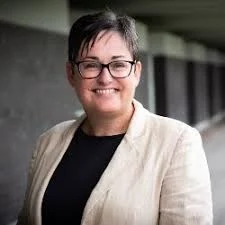
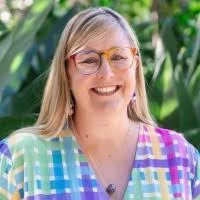
Professor of Environmental Health
Dani Barrington
Senior Lecturer on Global Health
This episode of Power in Balance explores poverty from a multidimensional perspective, drawing on evidence from Water, Sanitation and Hygiene (WASH), environmental health, and governance research. Linking to global conversations, including International Women’s Day 2026, the episode centers on rights and justice for women and girls, specifically access to basic services and the power to be involved in decisions that affect their lives and livelihoods.
Poverty is often tracked using income thresholds, but this narrow definition often misses many critical dimensions.
Nelson Ekane, SEI Research Fellow, describes poverty as a wicked problem: complex, intersecting, and rooted in structural inequalities. It touches climate, the environment, and governance, requiring a much broader analysis.
In the context of WASH research, Nelson explains that a multidimensional perspective shows how deprivation cuts across education, health, political participation, and access to essential services. This lens also highlights how intersecting inequalities related to gender, class, race, or disability determine who is at most risk.
Defining poverty as lack of money is limiting and misses other important aspects—including the root causes of poverty.
Nelson Ekane, SEI Research Fellow
How we define poverty matters. Policy frameworks often reflect institutional priorities instead of lived realities. Where service delivery is fragmented or under-resourced, women and children are often most affected.
Income-based measures often overlook daily exposure to risk, according to Tracy Morse, Professor of Environmental Health and Head of the University of Strathclyde Centre for Sustainable Development. In the podcast, she highlights the burden of disease in informal settlements and high-density urban areas, where poor waste management and unsafe water increase vulnerability.
The danger of measuring just GDP is that we’re not thinking about the other exposures people have—especially in that environmental health aspect.
Tracy Morse, Professor of Environmental Health, University of Strathclyde
In Malawi and similar contexts, households may depend on polluted rivers for washing and domestic use, live near unmanaged waste, or lack reliable access to water. These conditions are often absent from income statistics, yet they have inmpacts on health, resilience to climate shocks, and long-term development.
Women and girls often experience these impacts differently. They are more likely to collect water and manage caregiving and household hygiene. When services fail, their time burdens and exposure to risk increases.
A multidimensional approach can reveal patterns of deprivation, ensuring that the social, environmental, and political dimensions of poverty are recognized and addressed.
WASH programs often measure success by the number of toilets built or boreholes installed. But access alone does not ensure safety, privacy, or acceptability.
Dani Barrington, Senior Lecturer on Global Health at The University of Western Australia, notes that even when participation is emphasized, it can remain limited in practice.
Often we aren’t hearing from the people who are the most vulnerable in communities, so the poorest people, people living with disabilities, women, and gender minorities.
Dani Barrington, Senior Lecturer on Global Health at The University of Western Australia
Local norms and power dynamics shape whose voices influence decisions. In some cases, policies or bylaws reinforce stigma or restrict economic participation, such as when menstruation-related norms limit women’s ability to work. These dynamics show how rights, justice, and service provision are deeply interconnected.
Dignity in sanitation involves more than infrastructure; it requires facilities that are safe, culturally appropriate, and usable. It also depends on involving communities early in identifying priorities, rather than consulting them after decisions are made.
Participatory and mixed-method approaches, such as PhotoVoice or community dialogues, can reveal concerns that standard surveys often miss. They also provide opportunities for adolescents, caregivers, and marginalized groups to share their experiences meaningfully.
The guests highlight three priorities: strengthening interdisciplinary collaboration across health, governance, and environmental research; embedding community engagement throughout project cycles; and communicating findings to affected communities and policymakers in accessible ways.
Sustainable access to WASH must be a core development priority, reflected in national policy and budgeting. Building trust and long-term engagement with communities is essential to move beyond symbolic participation toward genuine partnership.
A multidimensional perspective on poverty is crucial. It does not replace income measures but complements them by ensuring that environmental risk, dignity, and decision-making power are central to how we understand and address poverty and bring about long-term solutions.
This episode is part of the Power in Balance series, a podcast about sustainability and justice, anchored upon SEI’s work on Gender Equality, Social Equity and Poverty (GESEP).
Initiative / The Gender Equality, Social Equity and Poverty Initiative explored the links between gender, social equity and justice, power and sustainability.
Perspective / Inherently connected, the nutrients needed on the fields are the same nutrients that sanitation systems could capture and reuse.
Project / Does granting rivers legal rights help people and nature? This study analyzes the Atrato, Whanganui, and Turag rivers to find fair, effective governance.
Journal article / This study shows how climate adaptation planning for sanitation in Nairobi reinforces inequality by favouring sewer systems over equitable solutions.