The authors present a critical examination of 10 common claims made about the effects of controlled burning and rewetting of heather on UK peatlands. Their findings indicate that the majority of these claims are not based on robust data and often rely on ill-defined terminology. Decision-makers must re-examine the strengths and limitations of the evidence base and avoid generalizations about burning and rewetting to ensure they select the most effective land management strategies.
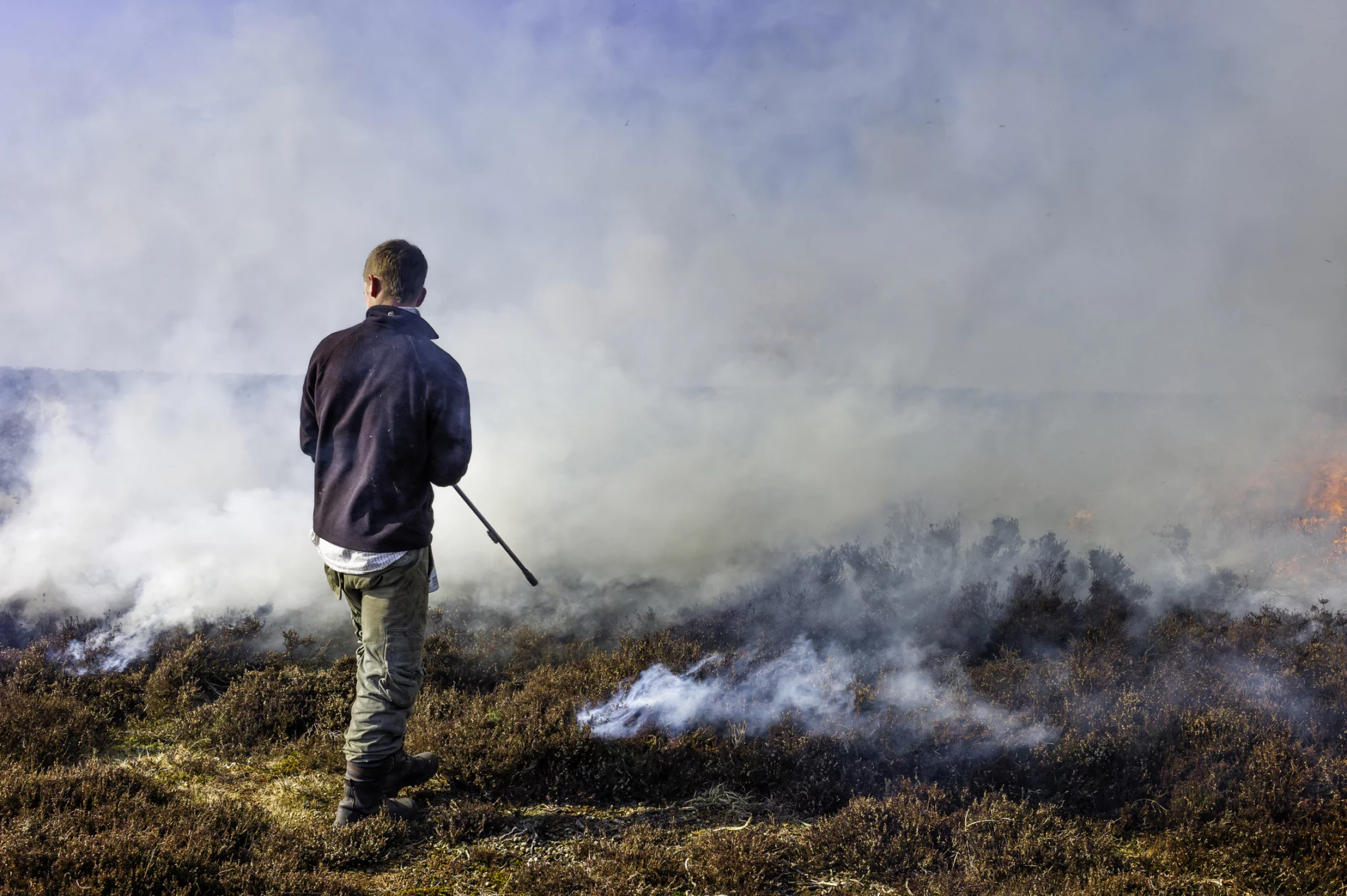
A controlled burn taking place in the North York Moors, UK.
Prescribed heather burning as a peatland vegetation management tool is a controversial topic, but discussions around it are not always adequately informed by the evidence base. In this paper, the authors address 10 claims made by governmental organizations, NGOs, popular media and researchers about the effects of prescribed burning:
The researchers found that the majority of these claims are unsubstantiated, rely on ill-defined parameters, or extrapolate from particular sites. Few of the claims, if any, were grounded in robust or consistent data, said the authors. In light of these findings, they recommend a reassessment of recent reviews of peatland management policies.
The team suggested a number of actions to improve the evidence base and better understand the realities of this contentious subject. Addressing each claim in turn, they suggested ways to refine methodological approaches and improve the definition and contextualization of key terms. They also emphasized the need for studies to account for monitoring varying timescales of different management approaches and their complex and interrelated effects on moorland biodiversity and carbon sequestration.
Journal article / This paper critically reviewed a UK government advisory agency's publication which aimed to synthesise evidence on prescribed fire for peatlands management.
Other publication / This report presented a comprehensive picture of the first ten years of work in what is hoped will be a twenty-year study.
Journal article / Researchers conducted workshops and questionnaires with international experts to standardize and consolidate the data collection process in peatland research.