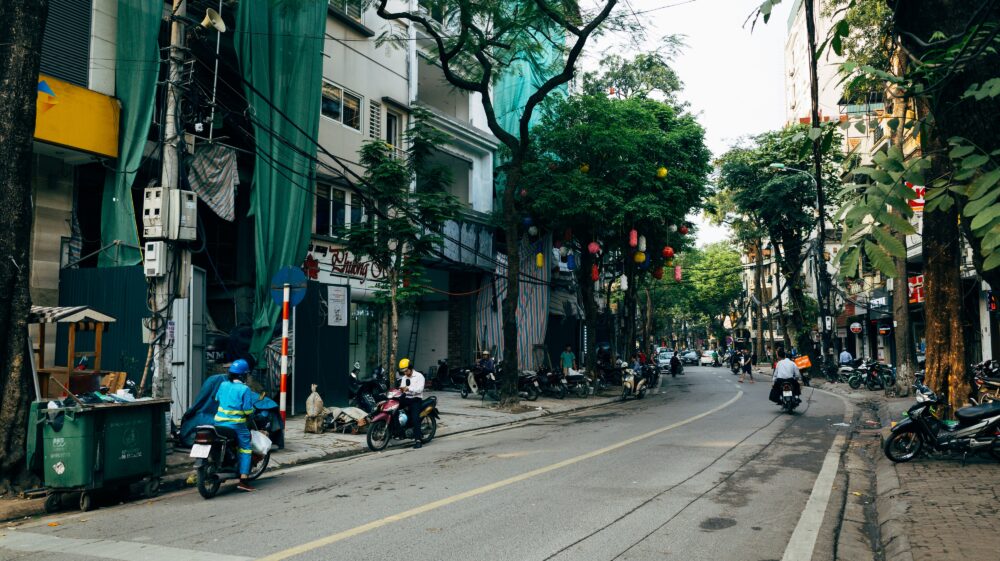
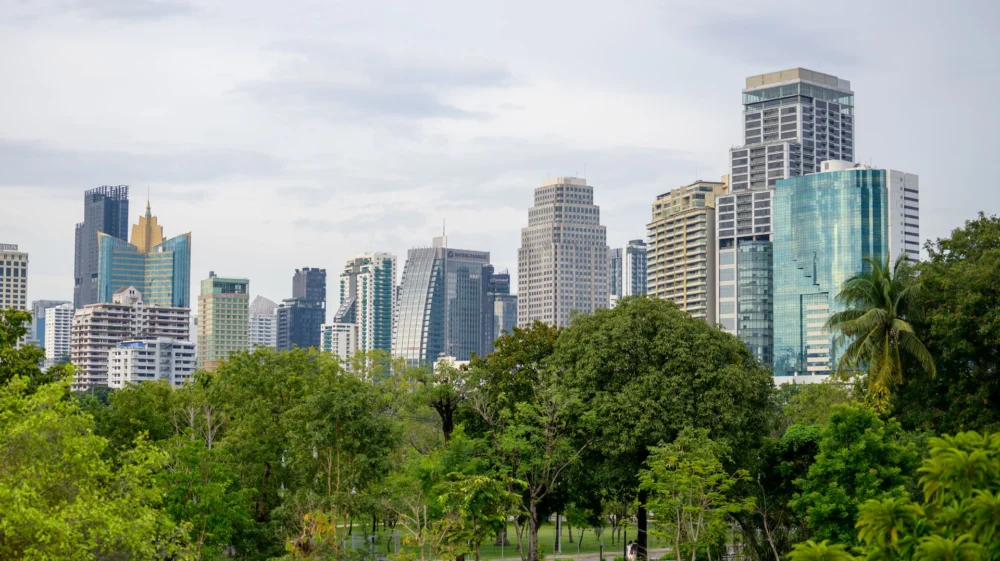
Drawing on examples from cities around the world with a focus on the Global South, the authors explored different framings of justice such as Rights to the City and highlight modalities of development which bring synergy between social equity and poverty reduction, drastic reduction of greenhouse gas emissions, and decent work. Themes in this study include built space and urban form, public transportation, decentralized energy, and the implications of the informal systems which are prevalent in cities of the Global South. Some key findings of the study are as follows:
Density is important.
- Some degree of density is necessary for sustainability. The more spread out a city is, the more transportation will be needed, which means more emissions. This will also impact the inclusion of those without access to private transportation.
- “15-minute city” models of urbanism which have gained traction in recent years, spurred particularly by the COVID-19 pandemic could increase equitable access to jobs, services, and amenities and support vibrant, community-centric spaces while reducing emissions.
Gaps remain for decent green jobs in cities.
- The authors find a lack of systematic identification of green jobs and sectors at the urban level. Addressing this gap could help cities to simultaneously improve urban liveability, reduce emissions and improve people’s material standards of living.
- However, they also note that green jobs are not necessarily decent jobs, such as in the case of informal waste workers who often face hardship, discrimination and exclusion from social security systems. Strategies for green job creation need to place social equity at the forefront to ensure that transition benefits both people and the environment.
We should be wary of over emphasis on technological transition.
- In Just Transition theory and practice, there can be a tendency to focus on technological transition which can obscure local needs and, in some cases, lead to maladaptive impacts. For example, while electric vehicle rollout holds promise for decarbonization, it will not reduce private vehicle ownership or congestion.
- In line with this critique, there is a risk that certain narratives of urban development such as the “smart city” might depoliticize the concept of transition, linking it from workers and communities, and rather toward the hands of private actors. The researchers argue that the just city can encompass the smart city – provided that these agendas are premised on principles of justice.