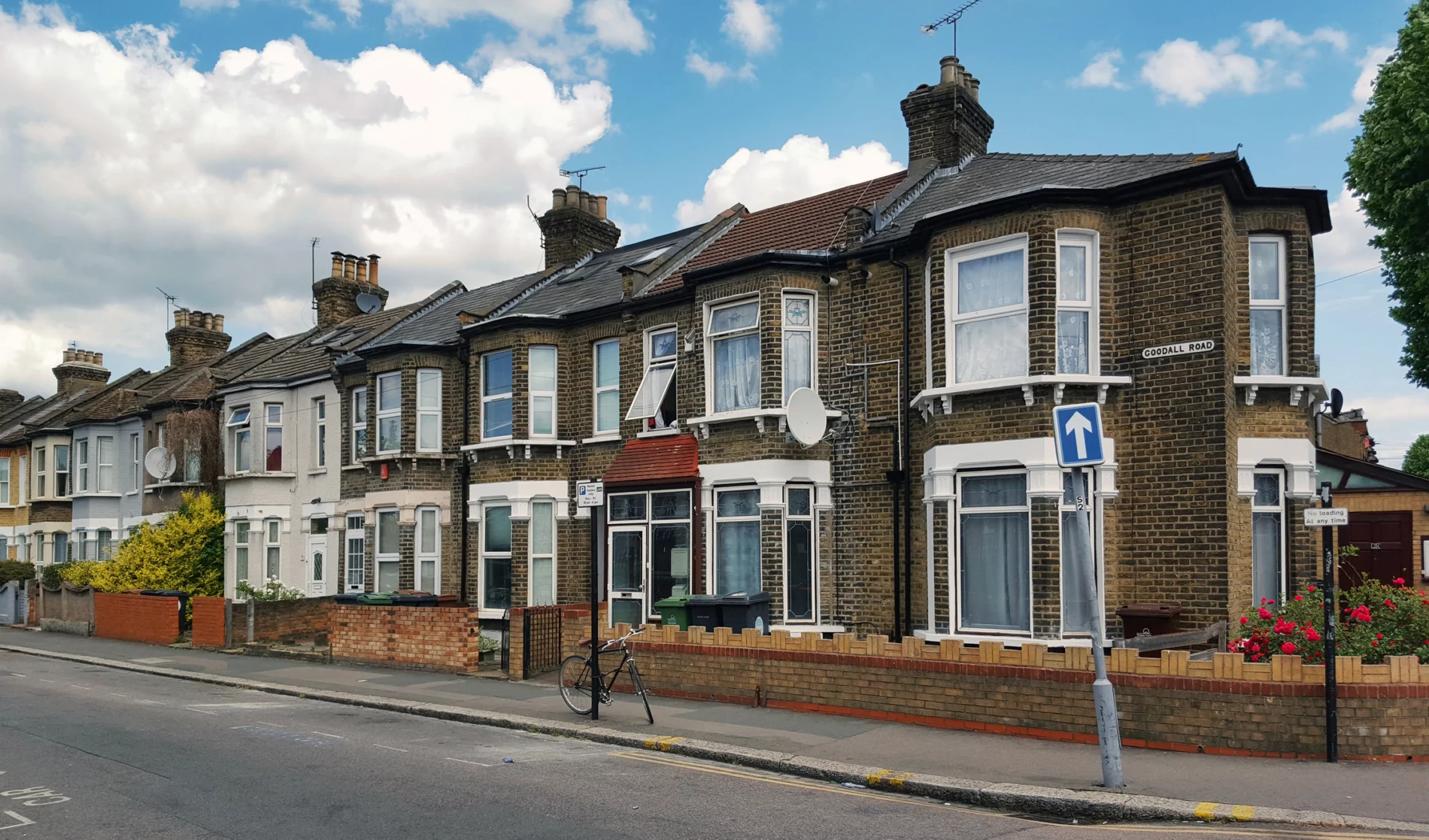
Incomplete and fragmented data is hampering systematic retrofit planning in the UK. In this paper, the authors investigated whether currently accessible property information and street-level imagery could help overcome this barrier. Their findings suggest that publicly accessible housing data and machine learning hold genuine promise for large-scale urban retrofit planning.
Computer visioning technology can use street level imagery to identify data like building age or wall construction type.
Nearly 60% of buildings in the UK carry poor energy performance ratings. Retrofit interventions can improve buildings’ energy efficiency: a necessary intervention given that buildings account for approximately 34% of global CO2 emissions. However, incomplete and fragmented data is hampering systematic retrofit planning in the UK.
In this paper the authors explored what building and retrofit-related data could be inferred from data which is already available, such as Google Street View or Energy Performance Certificates. They then investigated whether these could be combined with computer visioning models to assess and categorize characteristics like wall construction classification (directly relevant for fabric-first retrofit work) and architectural style classification (serves as a useful proxy for the age of a building). They found that computer vision models performed well when tested on the datasets they were trained on.
The authors also convened a workshop to examine challenges surrounding building data collection and integration, with project partners, retrofit organizations and consultancies, an architectural practice and local government officials. Participants shared that inconsistent data formats, limited inter-organizational data sharing and a lack of hybrid data gathering approaches hampered smooth retrofit planning.
The authors concluded that publicly accessible property data, street-level imagery and computer vision can assist with large-scale retrofit planning: they can generate useful evidence in early planning stages where information about large numbers of buildings is lacking, incomplete or difficult to integrate. However, practical application will require improved datasets, greater standardization, and continued human oversight. When handled well, publicly accessible data is a viable evidence-gathering resource for retrofit planning.
Other publication / Retrofitting can be about more than just energy efficiency; it can enhance nature connectedness, circularity and can heighten a sense of ecological citizenship.
Other publication / An ambitious initiative providing highly affordable housing in exchange for citizens making their communities healthier, greener, stronger and more joyful.
Journal article / Explores how ecological citizenship is communicated, understood and implemented by stakeholders, and considers how to promote wider use of the practice.