The authors and editors of this volume challenge traditional assumptions about economic growth, and develop the elements of a reoriented macroeconomics that takes account both of environmental impacts and of social equity.
Policies including carbon trading, revenue recycling, and reorientation of private and social investment are analyzed, providing insight into new paths for economic development with flat or negative carbon emissions. These issues will be crucial to macroeconomic and development policies in the twenty-first century.
What are the likely economic effects of climate change? What are the costs of substantial action to avert climate change? What economic policies can be effective in responding to climate change? The debate has broad implications for public policy. However, it also raises fundamental questions about economic analysis itself, and moves issues of environmental policy from the microeconomic to the macroeconomic level.
Taking global climate change seriously requires a re-examination of macroeconomic goals. Economic growth has been closely linked to expanded use of energy, primarily fossil fuels. The assumption of continuing economic growth, in turn, leads economists to discount future costs, including the generational impacts of climate change. Challenging conventional concepts of growth implies different development paths both for rich and poor nations.
This volume brings together contributions from scholars around the world to address these issues.
Journal article / Drawing on policy reviews, surveys and interviews, the research explores challenges in addressing interconnected climate risks across regions and sectors.
Perspective / Conservationist policies could be more effective if they respected the spiritual beliefs that already guide forest use, preserve biodiversity and livelihoods.
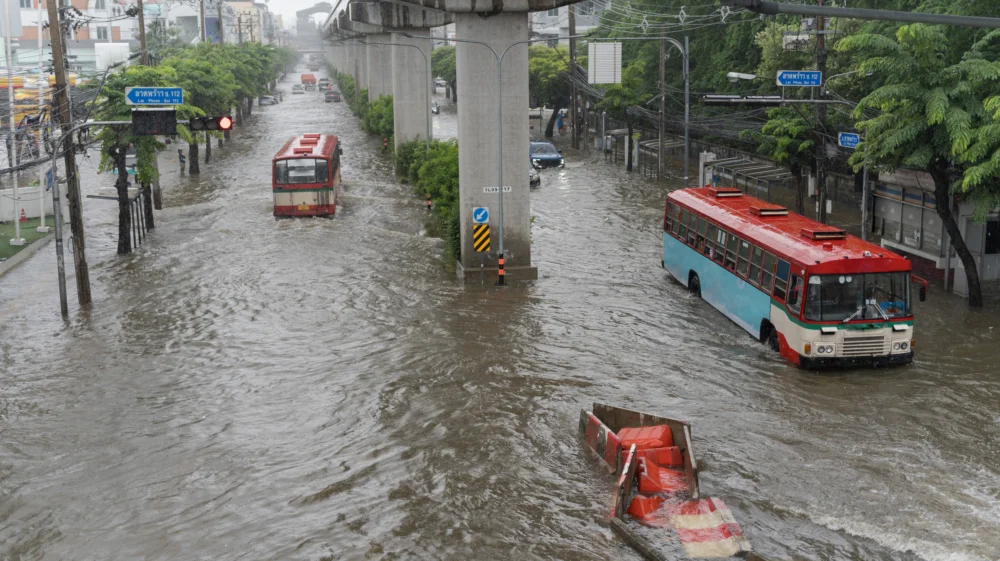
Perspective / Flooding in Bangkok in late September exposed a critical gap: forecasts identified the threat days in advance, warnings and preparedness did not translate fast.