part of Environment and policy in Asia
In global conversations on climate resilience, two pillars dominate: high-level finance and technical engineering. We speak in “cubic metres of concrete,” “standardized climate indicators,” and “carbon offsets.” Yet a critical third pillar remains largely invisible in professional frameworks, despite being the primary engine of successful local action. That pillar is CARE – that is, climate adaptation, resilience, and empowerment.
00:00 – 00:24
Welcome to SEI Asia’s podcast on environment and policy in Asia. In this podcast series, we invite experts to discuss the many critical and complex environmental challenges in Asia, and how to find solutions through policy and partnerships.
00:35 – 01:23
Preeti: Good afternoon, good evening, good morning to our listeners around the world. Welcome to this first episode of Adaptation Action, brought to you by the Adaptation Research Alliance. In short, the ARA. I’m your host, Preeti Abraham, Program Operations Lead at the ARA Secretariat based in Bangkok. In a world increasingly faced with extreme weather events around the year, locally led adaptation has become the motto for responsive, inclusive and people centered climate change adaptation. The ARA’s own adaptation research for impact principles are closely aligned with locally led adaptation, and, at present, over 130 organizations around the world have endorsed these principles.
01:24 – 02:04
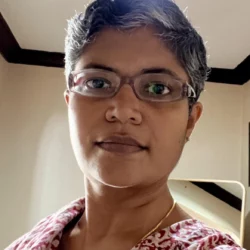
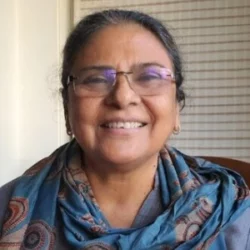
Preeti: In this first episode of Adaptation Action, we want to explore one of the rather invisible aspects that makes locally led adaptation possible. The aspect of CARE. We are joined by three expert practitioners, Sheila Patel, a stalwart in the area of working with people who live informally in cities. Sheila is from India and she’s the founder of Society for Promotion of Area Resources Centre (SPARC) of the Roof Over Our Heads (ROOH) campaign and Slum Dwellers International, a transnational social movement of the urban poor. Sheila, would you like to say hello to our listeners?
02:05 – 02:06
Sheela: Hi, everybody.
02:07 – 02:29
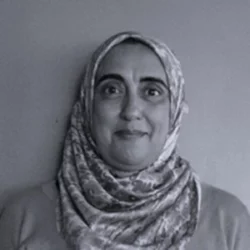
Preeti: Thank you, Sheila. Next we have Shehnaaz Moosa, a trailblazer who was the first woman of color in South Africa to earn a PhD in chemical engineering. She serves as a director at South South North and is the CEO of the Climate and Development Knowledge Network (CDKN). Shehnaaz?
02:30 – 02:35
Shehnaaz: Thank you, Preeti. And just to add, I’m still based in Cape Town, South Africa.
02:36 – 03:05
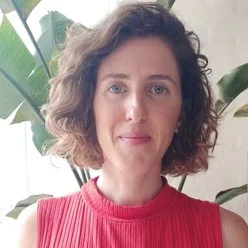
Preeti: Fantastic. Thank you for joining us today. Finally, we are joined by Victoria Matusevich from Argentina. Victoria is a leading champion of LLA with a strong emphasis on improving access to climate finance. She’s a program manager at Fundacion Avina- a philanthropic foundation rooted in Latin America and working in the global south. She leads the BASE initiative, which aims to enhance access to climate finance for local communities. Victoria?
03:06 – 03:10
Victoria: Hi, thanks for the invitation. I’m happy to be here with you all today.
03:11 – 03:55
Preeti: Great to have you here, Victoria. Thank you. So the four of us are going to explore what it means to practice locally led adaptation as Care. What needs to change for Care to be centered in LLA debates and action? And how can activists, leaders and champions act with care for each other and for those they represent? So we’d like to understand what it means, what it looks like in day-to-day adaptation practice. So first let me come to you, Shehnaaz. How does care show up in your work? Particularly when you manage delivering complex climate finance and resilience programs in the African context through networks like CDKN.
03:56 – 05:09
Shehnaaz: Preeti, I must say, I really like the subject because it’s not often that institutions, organizations talk about care. But what we’re looking at is that especially locally shehnaaz adaptation, it’s about building solid, genuine relationships. It’s about listening deeply and also prioritizing the needs and the voices, especially of those who are most affected by climate change. And I think often what we’re seeing is that managing and delivering quite complex projects and resilience programs means that you’re not only making sure that the resources reach the local actors, but also that you start creating spaces for the leadership and agency, because often these grassroots organization have as their foundation. Deep care for each other and in the African context, what we found is that by investing time in Co designing projects with your grassroots organizations with your communities.
05:10 – 06:27
Shehnaaz: And also being responsive to their feedback, but really responsive, not saying you’re responsive and then actually not being responsive. And you need to be also adapting your processes as they feed back to you so that they are accessible and really inclusive. What we’ve seen with our networks like CDKN is that we had to embed care into the program and it shows up as our commitment to transparency, accountability and the ongoing support to ensure that adaptation solutions are not imposed, but that they emerge collaboratively and by centering care, that is what it is about, because that then fosters trust, it strengthens resilience and it actually empowers your local champions and that drives the lasting change. I do think that Sheila, because, and I just want to add here, a lot of Sheila’s work over the years has had care deeply, deeply embedded in it. So I’m really privileged to be sharing this platform with Sheelaji. Back to you, Preeti.
06:28 – 06:58
Preeti: Yeah, thanks, Shehnaaz. Thank you for really bringing, articulating so clearly what care looks like in your day-to-day work and how it’s really empowering your work. Sheela, since Shehnaaz already mentioned that you have been involved in this work for a long time and involving care as a principle of your work in climate change adaptation. We’d like to hear from you. So in your work among informal settlements, how do you see care as a principle of locally led adaptation?
06:59 – 07:44
Sheela: So first of all, Shehnaaz, thank you for your compliments. I need that when I’m fighting with donors and evaluators and researchers, because very often our world is all top down. It’s not only top down from professionals to communities, but it’s also top down North to South. Somebody else develops theory, somebody else has to write proposals, somebody else has to give them money, and the accountability structures are all dumped on communities because they are the beneficiaries, and now it’s not politically correct to say beneficiaries. So we end up imposing so many things on people whose lives are already so difficult and complex.
07:45 – 08:52
Sheela: So for me, the most important element of care is the deep commitment to the rights of those who face the challenge. To believe that those of us who come to examine, understand and work with those issues that they face really care about their opinions, really care about who they are, what is the reason why they make flawed choices? And how do we navigate a path that enriches not only their knowledge and the ability to articulate their challenges, but also to acknowledge the amazing ingenuity, especially, you know, when you talk about women and care, it is synonymous because women are the ones who are at the center of the care economy even in other terms.
08:53 – 09:38
Sheela: And so to help these relationships to be really equal produces the symbols of care that I think we are talking about. So I’ll elaborate on the details later, but I think that as a person who has both worked on the production of the LLA principles and also have a deep commitment to the adaptation research work that we all champion. I think this embeddedness of demonstrating care by giving people, giving women, giving communities deep acknowledgement of who they are and what they are doing as amazing is the first symbol of care activity.
09:39 – 10:21
Preeti: Thank you. Thank you so much, Sheelaji. I’m really glad that you brought up that aspect of women being at the center of the care economy and I really feel that, that is why care is sort of invisibilized, unless we mention it explicitly in the foreground in our climate change adaptation work. So that’s great and you also mentioned how top down the whole architecture of our system is especially when it comes to funders, donors, etcetera. So I think that’s a nice point to bring in Victoria, who is with the philanthropy and so Victoria, I would love to hear from you. What does care look like when you seek to fund local solutions ?
10:22 – 11:43
Victoria: Thank you Preeti for the question. And before jumping into to the answer, I want to stress something that resonated when Sheila was speaking and that we are here like three women from the Global South talking about care. So I I think an interesting point for us to to pick up on and answering the question, I think that in Avina we don’t see ourselves as actors who arrive with all the answers or resources to fix something from the outside but instead we try to operate more like a connector and a listener on creating that space where trust and open conversations and mutual understanding can grow. I think that one of the biggest challenges we face in global climate action is avoiding unhealthy power imbalance. Resources often flow from the global North to the global South, and if we are not intentional, that dynamic can reproduce inequality. So for us, the key is to center in relationships. We start to get to know the local actors and the communities we work with and understanding what they cherish. I think that is crucial for us to make sure that the relationship can be as fair and as equal as possible.
11:44 – 12:35
Victoria: And when we talk about climate change, that is something that we care a lot of, specifically in the BASE initiative that Avina coordinates. I think that evidence and data are essential, but they are not enough. People don’t make decisions based only on numbers. They make decisions based on meaning and emotions and their lived experience. So that is why we support and we focus on helping processes develop where communities can connect climate impacts to what they’re already feeling and seeing: the changes in rainfall, the food systems or their livelihoods. So we combine scientific knowledge with traditional and observational insights to show not just how the climate is changing, but how it’s impacting people’s lives.
12:36 – 13:36
Victoria: And by doing this, not only we focus on the physical changes, but also explain the social, the economical and the cultural consequences. We also recognize that while long-term planning is essential communities facing daily challenges need support that feels relevant now, not in the future, in the present moment. And that is why we approach, why our approach focuses on delivering immediate and tangible benefits that build trust and engagement throughout time but also while helping communities prepare for the future with this grounded and local evidence. And to finalize, I think that philanthropy has an important role, not to impose solutions but to strengthen the local capacity amplifying the local voices and supporting this collective pathway that bbringsus towards a more just and sustainable future.
13:37 – 14:27
Preeti: Thank you, Victoria, for that very thoughtful response. I’m so glad that you highlighted the importance of not just measuring the physical evidence, which is often the typical donor funded style of, you know, addressing any climate change adaptation work on the ground, but also taking into account the importance of people’s feelings, their emotions, their social context and their cultural context. That really makes me wonder, do current adaptation systems undermine care? You know, even when their intentions are good, even when they want to do something positive for the communities? What do you think?
14:28 – 15:31
Shehnaaz: I must say I really love systems because it I I think it’s just my engineering background. When you see everything as a system, from people to machines to everything. Everything is a system. So I think this question I’ve been, reflecting on it in other situations as well and I’m talking now from my experience and the work that we manage especially in Africa is that often care is undermined in these systems and and there are many reasons for this. So one that I think is is at the forefront is that often institutional frameworks and your funding mechanisms that drive adaptation work. They prioritize measurable outcomes and outputs. They look for scalability, they look for speed over nuance and basically relational aspects that define genuine care is completely missing from that.
15:32 – 16:30
Shehnaaz: So often donors will fund you for a short period and in that time you can’t create any. meaningful relationship. So what we end up with in these. So you then end up because the system is like that, you end up with a process that is rigid, top down and disconnected from realities. And because it’s so rigid, you try and shift it, it will break. Communities are not consulted. Sometimes they are, but then they’re not equal partners. So for me, care is then reduced to a procedural step, right? If you want to include it in systems like these. It then becomes an item to be ticked off rather than an ongoing commitment to supporting and uplifting those who are the most vulnerable. And actually they have agency also, and I might be talking too much, so just tell me when I am, but I feel quite passionate about this.
16:31 – 17:42
Shehnaaz: We find that this lack of sustained, meaningful engagement and task building between your institutions, your funders and your local actors, it erodes any potential for care to flourish. So when your adaptation program or intervention is designed with no time, or even resources dedicated to understanding your local context, or where you fail to adapt that program based on what you’re getting from your community. You then end up imposing a solution that is not going to endure, and it’s actually this transactional approach that undermines completely the very essence of care. Care requires patience, humility and a deep willingness to learn and evolve with the communities because you’re part of that process. And if you honestly are serious about bringing care into that system and process, it’s going to take effort on your part as a donor or a project implementer.
17:42 – 18:46
Shehnaaz: And I feel this very much resonates with what Victoria and Sheila have said, because we need to start moving away from seeing care as secondary to your efficiency, your effectiveness. It needs to be made explicit and we need to rethink our fund, our funding models to start supporting flexible, locally driven initiatives that put people at the centre and especially your women and youth. So I think I went on a bit of a speech there, but really Preeti. We need to shine the light on it because my sense is it’s that elephant in the room when we’re trying to move fast and saying we’re moving fast because climate is this huge issue and we’re ignoring the people and actually the care and care for the system as well.
18:47 – 18:59
Preeti: And I totally get where you’re coming from. I have a feeling Victoria and Sheila might also echo those same concerns. What do you say, Victoria?
19:00 – 19:59
Victoria: Yeah, definitely. I really resonate what Shehnaaz was sharing and I’m also really passionate about this. How can we think and develop new ways of funding that put people at the center, right? And I think that we all know that climate finance remains to fail to reach local communities, right? It still relies on heavily rigid project formats, these short timelines, these standardized indicators, these really complex compliance requirements. And what Shehnaaz was saying, and I cannot agree more, is that the systems that provide a framework that can help us organize can at the same time be rigid. And what is really rigid can break and the systems tend to prioritize what is easy to measure and report over what actually matters to communities. And as a result, care often gets pushed aside.
20:00 – 21:27
Victoria: So even when funders generally want to support communities, the system they operate within can create a distance because decisions that are made far from the territories affected by climate impacts and also that funding cycles rarely align with the rhythms of nature and the ecosystems or how society evolves and local organisations are often required to adapt themselves to donors, language, logic and reporting structures rather than the other way around. And I think that’s and perhaps I’m sure Sheila also has more to share, but that needs to change. I think that this is where care begins to erode. Not because people don’t care, but because systems reward control, speed, uncertainty more than trust learning and relationship building and I think I also believe that another challenge is how adaptation success is defined. We always talk a lot about MEL systems and how systems focus on refined outputs instead of adaptive capacity, local knowledge, or even dignity. And when adaptation becomes a checklist rather than a process, it can overlook what communities actually value and cherish and need in order to thrive under these changing climate conditions.
21:28 – 21:45
Victoria: Practicing care in adaptation means asking different questions, not only how much funding is deployed, but how it is deployed, who has decision-making power, whose knowledge is recognized, and how much flexibility exists for communities to respond to uncertainty and change.
21:46 – 22:13
Preeti: Yes, thank you, Victoria. I I totally agree. It’s a systems issue, but it’s also then a massive ask also to be resetting the systems. Though before I go to that ask, I would like to check in with Sheelaji. Sheelaji, what does your decades long community led organizing reveal about how our systems enable or sustain adaptation beyond technical interventions towards centering them on justice and equity?
22:14 – 22:45
Sheela: It’s too bad I have to stop talking in 3 minutes. This is my swan talk. The first thing we have to remember and recognize is actually nobody cares about poor, invisible communities and philanthropy and governments throw sprinklings of money with lots of demands and expectations. And all of us who are the intermediaries are trying very hard to stretch that accountability framework to work for community.
22:46 – 23:50
Sheela: I think the time has come for us to start doing things in a way that does not just do what donors want you to do. How do we start off by looking at what will make communities and their women centered focus strong enough for their voices to be sustained over decades? To face the challenges that both Shehnaaz and Victoria were talking about. All of us who are intermediaries, our voices will not work and what I have done in my life, which I’m most proud of, is I have learned that numbers make a difference. Volumes of communities committed to focusing on issues that matter to them is the first recognition of caring for what matters to them.
23:51 – 25:14
Sheela: The second thing is to create a network that is both of communication, solidarity, knowledgecreation that produces evidence that challenges all the nonsense that is coming top down. That is centralised, that is like a cookie cutter. Somebody does some PhD somewhere and produces some systemic or monitoring or whatever system and it gets imposed on us. You need to sign off on that. We have to break these shackles. And so the first thing for me is how do we create sustained networks of people facing the same problem with values? That I believe both LLA principles and what we do in adaptation research resonate, which is produce powerful, strong, aggregated evidence that challenges what does not work and how to produce what works and that adaptation requires a transformation of all development investments that have a climate science perspective. There’s no separate development and there’s no climate change separate.
25:15 – 26:48
So climate science has to inform development investment and I think that directly ARA does that in my belief, if we actually give people the power to make that representation through evidence and smart representation. And that LLA principle reminds all the 130 organizations that we so proudly talk about, which have signed off to actually see whether they fit into, those principles, even halfway, I think most of them don’t even come at, you know, if you take zero to 10, I don’t think they even come to three.
So I think measurement has to be accountable on all sides. You have LLA principles have the courage to say we’re not doing this. And I think that the role that Shehnaaz has with the CDKN network that Victoria, has in Avina’s work, all of us admire because of how democratically it works with grassroots movements. And so I think we represent different ends of the spectrum, but we need to work together to networks like ours to push this envelope and not be subservient and say, oh, please give us money or right now there’s a money crunch, so let’s compromise. We might as well give up and let people do what they do well smartly, which is to survive. Thank you.
26:49 – 27:45
Preeti: Indeed, I mean, I think I’ve heard from each of you one or the other variation of the need for the system change to center people in our climate change adaptation work to center the principles of trust, of accountability and of reducing that dependence on measuring those same old statistics that we have used for any and every development project throughout the world. That really brings me to the next question: So what needs to change? What needs to change in finance, in institutions and power relations so that care is really central to bringing a careful approach in locally led adaptation? Maybe I’ll start with Victoria, because you sit closest to that mechanism of funding such work and then we’ll take it from there.
27:46 – 28:23
Victoria: Great. I think that philanthropy has a unique role to play in reshaping how adaptation finance works today. I think that we as a philanthropic foundation and other foundations, we are very well positioned to take risks, to remain flexible and to
place trust in the allies we work with, and that is a very critical entry point for helping to transform the current funding climate system towards one that is more caring, more inclusive and more effective for locally led adaptation.
28:24 – 29:43
Victoria: And I want to add an extra element when we talk about trust, because I think that that is an issue that appeared also in what Shehnaaz and Sheila were also sharing and I think that Trust needs to be thought of as a two-way process, something that is both given and received. On the giving side, we often offer trust through flexible funding grants with our partners that they could adjust their activities or reallocate resources as needs evolve on the ground and this flexibility acknowledges that climate impacts are dynamic and the local actors are the ones that are best places to respond in real time, but also we will trust not only offering but receiving trust. And this means that when we Avina, for instance, want to test new approaches and challenge existing ways of working,we need our partners also to be willing to take this risk with us, and that is only possible when partners trust each other enough to experiment, to learn and occasionally to fail together.
29:44 – 30:34
Victoria: And I think that this is something that we do not talk enough about. About how we make mistakes and we openly share with our colleagues and the system as a whole. We are perhaps more prone to share success stories and things that work, right? But for several reasons, we are not as comfortable to talk about when things went wrong and mistakes we have made. And this is something that if we connect more also to this humanity and this humility, I think that we all as a collective system would benefit from each other. I think I’ll leave it there to hear more about what Shehnaaz and Sheila think about this.
30:35 – 31:14
Preeti: Thank you, Victoria. It’s really beautiful that you brought up this whole point about the two-way trust that is so crucial to really make this work and also this important point of sharing our failures. I think we do it to some extent when we talk about the challenges we face. And how those have been overcome. But I get your point. Maybe those stories of failure would be also much more impactful and making clear where exactly change needs to happen. But, moving on, over to Sheela or Shehnaaz, if you would like to share your thoughts on what needs to change.
31:15 – 32:07
Shehnaaz: Preeti, can I? I’d like to go because it actually latches on to this thing about trust and sharing things that didn’t work. So, I mean often we talk about this, we say, must we have a failure first and you realise how scared people are of the repercussions of failing, of things that didn’t work because there’s actually no trust and and what I feel often is missing is this willingness by the donors, etcetera, to acknowledge past shortcomings. So they’ll come again and just carry on doing what they did before, whereas the sense is that if you acknowledge these shortcomings, you then strengthen because the communities then feel empowered because they see that their feedback is being reflected back into the program with adjustments.
32:08 – 32:57
Shehnaaz: So they are really co-creators and not just tokens or passive recipients. I think also often what we, I mean we talk about it in in closed rooms, but what we don’t confront head on are these power imbalances and it’s these power imbalances that keep your systemic inequities in place. It perpetuates it. And unless we can name those imbalances and talk to them and work with them, I think we’re stuck in some sort of an echo chamber and I’m going to hand over to Sheelaji because I know she, I think we feel the same way here. And I want to give her some of my time to talk to this. Over to you, Sheelaji.
32:58 – 34:11
Sheela: I’m just laughing here because this is the first thing I often say to people who want to give us money. And my first thing to say is, do you want me to tell you beautiful things or can I tell you all the lying, cheating and stealing that often happens and you work with very poor communities. And I say the same thing to very poor communities, that we are intermediaries. We are even the young professionals who work with you are not facing the same challenges that you do and is our relationship one where we skirt over everything to make the money flow or we actually dig deep into finding what is the crisis and how we’re going to do the solutions and like Shehnaaz said celebrating risk taking, celebrating mistakes, celebrating why lying and cheating occurs, why bribes are given, are very important things to understand the systemic failures that produce the inability of poor people to rise to transform their lives.
34:12 – 35:59
Sheela: And what we find is every failure, every mistake, everything that we did not anticipate and which bombed on us reduces the most powerful transformations that doing great things don’t work. So I run this campaign called ‘Roof Over Our Heads’ and many donors tell us just put a picture of a nicely retransformed rebuilt house and you’ll get lots of funding. And I said- No! poor person’s house is pretty. It has to be resilient, it has to deal with extreme weather, and very often it looks humble and ugly in your eyes. If you can’t tolerate it, you shouldn’t be working with him. But I think that this is at the crux. You know both what Victoria said and Shehnaaz says is important. There is immaturity on both sides of the table, the donors and the NGOs that make proposals. It is such a pleasure to meet Victoria. I want to meet you on a funding table one day because saying what your vulnerabilities are talking about the help you need, to transform what you’re doing is as much a commitment that a person providing funds has to do as the one who executes the challenges and the communities also. How do we look at resources? How do we look at agency? How do we look at failure? All these things are very important and I think that we, you know, it’s amazing. I’m doing this now for 50 years.
36:00 – 37:12
Sheela: A decade after the World Water Week or decade of water or whatever it was called in the 70s, it was found that in India all the wells were dug in the chief’s backyard. Took 10 years to do that. But you hid it. Donors hid it. Governments hid it. But it was a conspiracy of hiding things and therefore I think social movements, networks of NGOs and aggregations of membership like what you’re doing in ARA and LLA and all the other movement building knowledge processes, we have to break these myths.
We have to accept that making change happen, doing it caringly, doing it with humility are tough things and we need to hold hands. We need to learn new language. But most importantly, we cannot do cute projects anymore because in their cuteness we want to produce perfection. In perfection, there is a fallacy that it cannot be multiplied.
37:13 – 38:03
Sheela: So if we create large networks and movements, we create aggregations that are not only at a geographic area but trans geographies, then there is immense confidence that somebody’s failure will contribute to 20 other people’s transformation.
And I think that values like caring, values of dignity, values of long, sustained relationships require courage, consistency and capacity and I think all of us who are intermediaries, we have to sort of stick these things like badges on ourselves to say we can’t do without this.
38:04 – 39:20
Preeti: Indeed, and I think at the ARA, this is something we strongly espouse and I clearly hear this call coming from all of you to really attack that power imbalance to really, as Sheelaji, put it just now, to break the myths, to reimagine and redefine what success or what failure means in our work to really center our communities. And to acknowledge their knowledge, their practices, their wisdom in guiding our work and making a real difference, not the cute difference that passes donors desks. I hear you, Sheelaji, but also at the same time, this is such a huge area of work. There is so much to unpack. I hope we do get to speak with all of you one more time and delve even deeper. But at the present moment, I would ask each one of you to probably leave us with one key message that you would like all ARA members, practitioners, researchers and policymakers to take away from this discussion. May I start with Victoria?
39:21 – 41:12
Victoria: Of course. Well, this is a tough one to put together in just one or two minutes, something for our listeners to to keep on thinking because I kept on thinking while I was hearing Sheela and Shehnaaz asked. And I think that the role and the responsibility that each of us play in the ecosystem has to be not only think we not only have to think about this role once more, but also how to act on this role in a different way and in our best capacity understand which is the role that we want to play and we are most well positioned to play to make the change that we need. And I want to stress something that that kept resonating when Shehnaaz was speaking about this echo chamber, I think that we need to push forward to more intentional collaboration, especially in a moment when many organizations, even within the same niche, are competing for increasingly scarce resources because if we want systemic impact, fragmentation is something that we need to actively move away from. And I also believe that we need to be bold and we need to trust each other more. We need to move away from the pursuit of these perfect solutions that Sheila was talking about. But instead, learn by doing and this implies embracing the fact that making mistakes are part of the journey, and that flexibility allows us to evolve and better adapt to this changing world. So I’ll leave it at that. Thank you.
41:13 – 41:17
Preeti: Thank you, Victoria. May I ask Shehnaaz for your final message?
41:18 – 42:05
Shehnaaz: Yes, thank you, Preeti. Firstly, I’m deeply grateful for this conversation, especially with with the three women I truly admire. So thank you for that. And then I think for me just in closing is to say that if we are committed to local adaptation, it has to be grounded in care, trust and justice. And once we center these values, your practitioners, researchers and your policy makers will then start creating adaptation strategies that are indeed equitable and that respond to the needs of the communities and that in itself will then start fostering transformative change. So again, thank you for having me as part of this discussion.
42:06 – 42:20
Preeti: Thank you, Shenaz. Moving to Sheelaji. What would your final words be? I know, I know you have a lot to say and I I’m sure we would definitely need one more episode, but your final words here. Thank you.
42:21 – 44:04
Sheela: So first of all, you guys promise us that we will continue more of these discussions between the three of you and the three of us, because this conversation requires a series with lots of examples. Lot of inspirational ideas and I think that what I have learned is aggregation is power. Knowledge has to be democratized, and we must believe that everybody has knowledge and insights that are precious, that need to be respected and aggregated. To challenge the inequality that is trapping people. I believe that in the area of creating resilience through adaptation, science must inform people’s choices in the simplest and most uncomplicated way. And we can do it. And I think that should be the focus of a lot of us who want to democratize how development can be informed by knowledge of climate and science, because otherwise you are doing all the things that are going to be disruptive, negative and wasteful. And I think that transforming research and making it democratically available, not just top down, but a lot of things that we can learn that people tell you that this is nonsense, but we don’t want to hear it because we have some other theory.
44:05 – 44:54
Sheela: How do you democratize conversations? How do you democratize how knowledge gets explored or exciting? And I think we can, if you guys can pick up more specific focus strategies that we can share with people who give money, people who run intermediary institutions for social movements, for policy makers. I think that’s a very important way to produce partnerships, collaborations and for feeling liberated to learn from everybody, you know, not to be restricted into a little narrow circle to say, oh, those people are bad, those people don’t know anything, you know, instead of doing that very exciting so we should keep this on.
44:55 – 45:22
Preeti: Thank you, Sheelaji. We’ll definitely try. I’m sure this is a spark that has been lit and hopefully it will inspire more actors, more people to come forward and incorporate it in the work, have conversations around it and do much more around it. But for this first episode, a big thank you to all three of you for sharing your valuable insights and wisdom and suggestions. We hope to keep this going. Bye bye.
45:22 – 45:23
Shehnaaz: Bye bye.
45:24 – 45:25
Victoria: Thank you.
45:26 – 45:30
Thank you for listening to SEI Asia’s podcast on environment and Policy in Asia. For more information on these topics, guests and our work, please visit our website on www.sei.org.
In this first episode of the SEI Asia miniseries on adaptation action hosted by the Adaptation Research Alliance (ARA), three experienced leaders from the Global South: Sheela Patel (Founder of SPARC and Slum Dwellers International), Shehnaaz Moosa (Director at South South North and CEO of CDKN), and Victoria Matusevich (Programme Manager at Fundación Avina) explain why prioritising care is not a “soft” social preference, but a rigorous necessity for effective Locally Led Adaptation (LLA).
For climate practitioners, researchers, and donors, the shift towards a care-based model demands a fundamental change in how we define expertise, risk, and success.
Sheela Patel
Founder of Society for Promotion of Area Resource Centres (SPARC)
Shehnaaz Moosa
Seasoned leader overseeing strategic initiatives at SouthSouthNorth (SSN)
Victoria Matusevich
Program manager at Fundación Avina
The current institutional structure of climate aid is based on transactions. We fund a project for 12 to 18 months, expect measurable outputs, and then move on. As Shenaz Musa pointed out, this “checkbox” approach undermines the very foundation of resilience.
True adaptation requires a relational commitment. Care, in a professional context, means investing in the long-term social fabric of a community before a single brick is laid. It also involves recognising that trust is a prerequisite for technical success. If practitioners are not given the time or budget to build deep relationships, the resulting “solutions” often fail to endure once the funding cycle ends.
One of the most provocative points raised during the discussion was Sheela Patel’s critique of the “pretty” project. There is a widespread pressure in the development sector to create “photogenic” success stories for donors—rebuilt houses with fresh paint and smiling beneficiaries.
However, Patel argues that this aesthetic focus often conceals a “conspiracy of hiding” failures. In the reality of informal settlements, resilience isn’t always attractive; it is functional, incremental, and often “ugly” by conventional standards. When we prioritise the appearance of success over the process of survival, we create “cute” pilot projects that cannot be scaled. To progress, we must stop funding boutique experiments and begin funding large, interconnected networks where knowledge and failure are shared openly.
In the traditional funder-grantee relationship, trust is often one-sided: the community and NGOs must prove their trustworthiness through detailed reporting and compliance. Victoria Matusevich introduces a “two-way trust” model. In this approach, the funder also demonstrates trust by offering significant flexibility. Climate impacts are unpredictable; a plan made in January might be outdated by June due to a local flood, cascading risks, or a changing social environment. Care-based adaptation requires funders to have the “courage to fail together” with their partners. This involves reallocating resources in real-time and viewing “failed” experiments as valuable data rather than administrative burdens. Learning what doesn’t work is as important as discovering what does. Embrace the courage to follow through on what drives remarkable innovation and transformation; everyone must fully participate with trust.
There is often a tension between “top-down” climate science and “bottom-up” community knowledge. The podcast guests argued against the extraction ofknowledge and for the democratisation of this evidence to produce real insights and learning that remain with the communities. While technical data is vital, it must be translated into a language and actions that inform local choices.
Communities are not just “recipients” of climate science; they are practitioners of practice-based evidence. They have a keen understanding of local microclimates and social support systems. A care-focused approach recognises that a community’s “feelings” about their changing environment are just as scientifically important as a rainfall chart. We must stop viewing traditional or experiential knowledge as “anecdotal” and start treating it as the primary guide for development investment.
Finally, we must recognise that the burden of adaptation often falls on the “invisible” care economy, which is —mainly sustained by women. In informal settings, women handle water, food, and social safety nets during and after climate disasters.
A care-focused adaptation strategy explicitly funds the social infrastructure that supports this labour. This might include funding communal kitchens, childcare centres, or women’s collectives. Securing the community’s life-support systems fosters the stability needed for long-term climate resilience.
Focusing on care within Locally Led Adaptation is not about being “nice”; it is about being effective. It involves addressing the power imbalances that sustain systemic inequities.
As we progress towards COP31 and beyond, our challenge as a professional community is to stop asking “How much concrete was poured?” and start asking “How was the decision made, whose knowledge was recognised, and did we act with the humility to listen?”
Resilience is not formed merely by materials. It is developed through care.
Project / The Adaptation Research Alliance (ARA) is a global coalition responding to the urgent challenges faced by vulnerable communities from climate change.
Feature / At the Bangkok Climate Action Week 2026, SEI Asia will showcase research and build pathways for climate action through science, dialogue, and engagement.
Media advisory / SEI invites journalists to a media briefing where its experts will share their perspectives on key topics ahead of the UN Biodiversity Conference (COP17).
Past event / The SEI-hosted Adaptation Research Alliance, with support from SEI Africa, will host the workshop to connect adaptation research with policy and practice.