This article offers lessons from Labuan Bajo, one of Indonesia’s leading tourism destinations, for turning circular economy policy into local action.
Across Southeast Asia, governments are embarking on ambitious strategies for the “circular economy” including national roadmaps and international agreements as part of efforts to build sustainable and resilient economies.
ASEAN has adopted the Framework for Circular Economy for the ASEAN Economic Community (AEC) in 2021 to guide Member States in integrating circular economy principles into national policies and regional cooperation.
Yet, one of the greatest challenges remains translating policy commitments into effective implementation on the ground. Tourism offers a unique opportunity to bridge this gap because it intersects with multiple priority sectors. Tourism destinations from the Philippines to Cambodia, Lao PDR, and Thailand are exploring circular solutions to strengthen local economies while tackling the tourism industry’s heavy environmental footprint: from mounting waste to huge resource consumption.
But what does it look like when these strategies are made to work, and what does it take for success? SEI’s research in Labuan Bajo, Indonesia revealed some challenges and opportunities for turning circular economy into local action.
Labuan Bajo makes a compelling case study due to its rich marine biodiversity, strategic importance within Indonesia’s tourism development agenda. The rapid tourism growth makes it an ideal setting to see how national circular economy ambitions are translated into local action.
Indonesia has made significant progress in placing the circular economy on the national agenda. The more difficult task is turning that vision into practical action. Although tourism is not listed as a standalone priority sector in Indonesia’s National Circular Economy Roadmap and Action Plan 2025-20451, it touches everything from food systems, plastic packaging and construction materials to electronic equipment and textile products. This interconnectivity makes tourism hubs like Labuan Bajo an ideal setting to assess how circular economy policies work on the ground.
I highlight three critical takeaways for successful implementation of circular economy policies that maybe relevant beyond Labuan Bajo.
One of the strongest takeaways is that circular economy objectives intersect with tourism, environmental management, waste governance, infrastructure development, and regional planning. When these policy areas are designed or implemented in silos, the result is fragmented responsibilities and missed opportunities. Strengthening coordination across sectors is therefore fundamental to effective implementation.
2. Local capacity matters
Local institutional capacity becomes critical as policies alone cannot deliver circular economy outcomes if local authorities lack financial resources, technical expertise, monitoring systems, and organizational capacity. Tourism destinations differ widely. Our findings make it clear that recognizing local realities and integrating national policy objectives with local and indigenous knowledge, and community-led initiatives can ensure practical and inclusive solutions are implemented.
3. Local wisdom is already available
Circularity does not always require new technologies or complex interventions. In many cases, communities already practice circular solutions rooted in local knowledge. In Labuan Bajo, for example, one common practice is the repurposing of organic waste as livestock feed: this local tradition aligns with the circular economy’s 9R framework, particularly the principle of Repurpose.
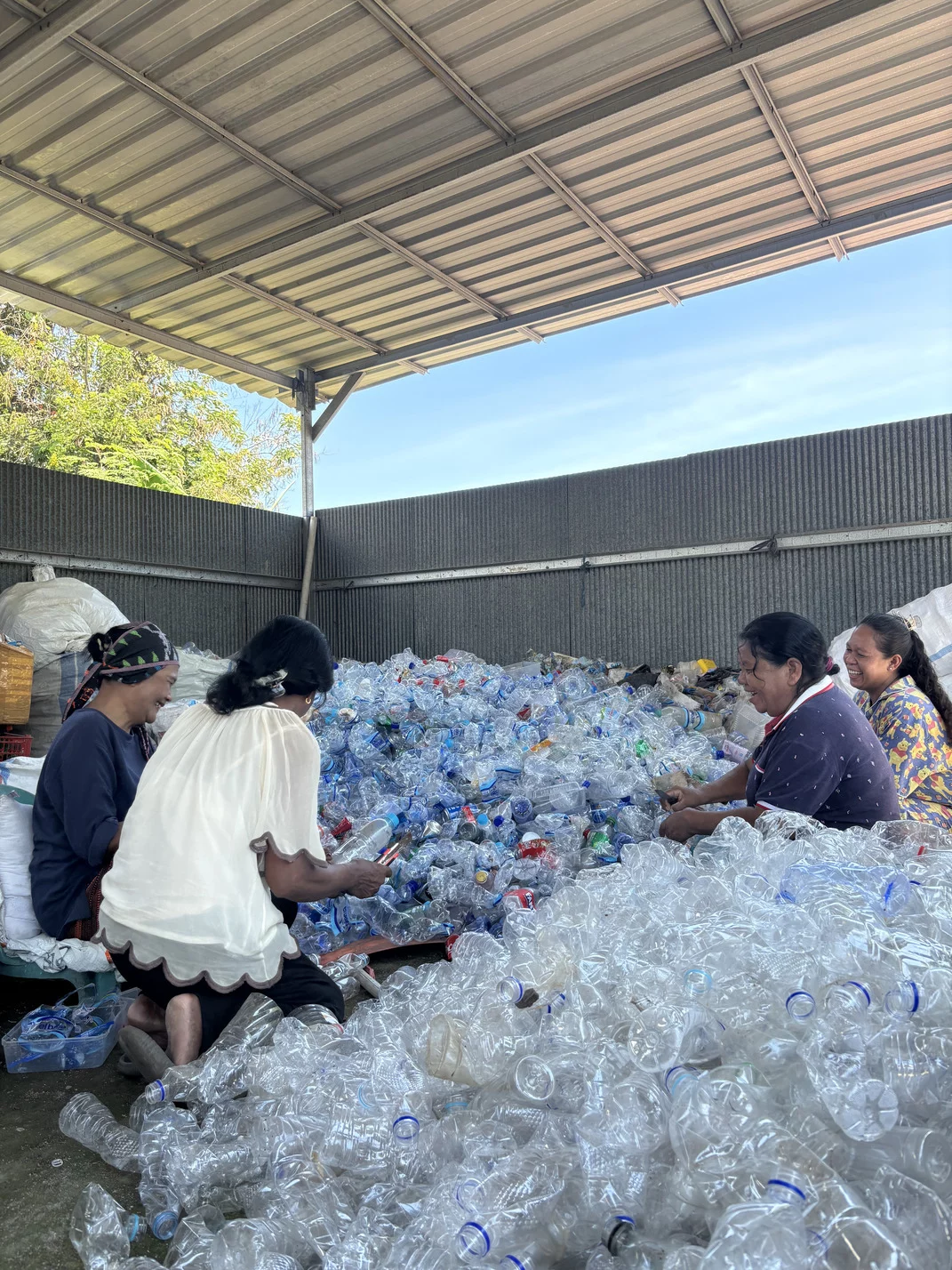
Plastic waste treatment by Komodo Sampah community. Photo: Aurelia Aranti Vinton.
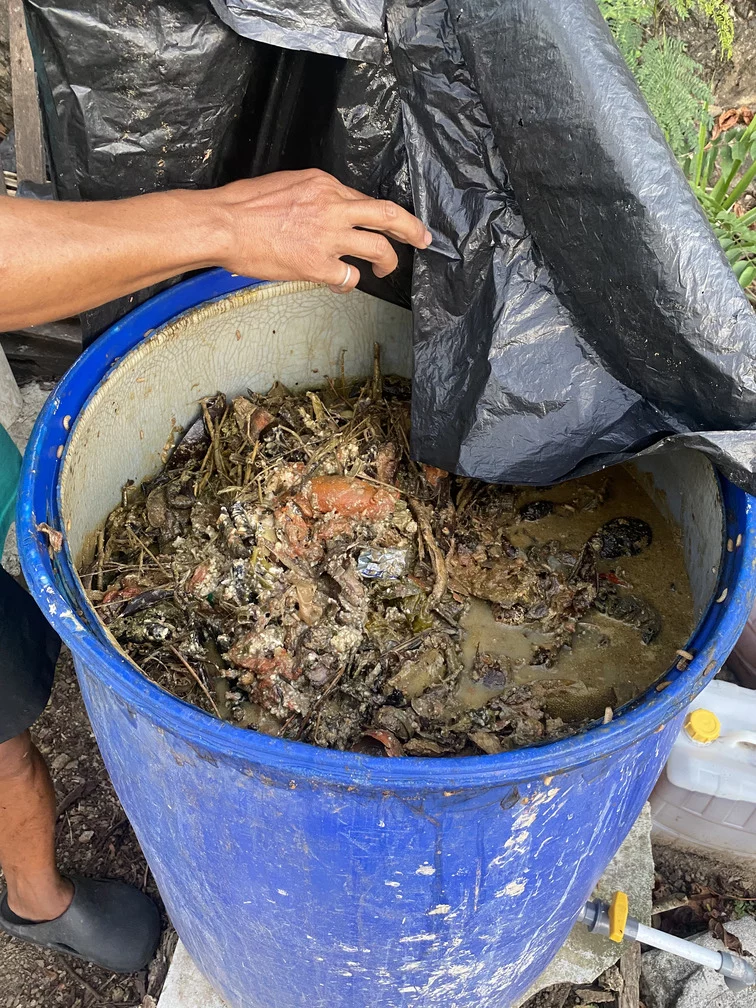
Organic waste treatment by the hospitality industry. Photo: Aurelia Aranti Vinton.
As ASEAN governments continue to push circular economy policies, the focus is shifting from institutional and governance conditions to implementation. Success should not be measured solely by the number of policies adopted, but by how far policies strengthen coordinated action, build local capacity, and generate lasting environmental, social, and economic benefits.
The lessons from Labuan Bajo provide valuable local evidence to bridge the gap between policy ambition and practical implementation of circular economy transitions across Southeast Asia.
This piece is based on the field research conducted as part of my master’s thesis during my internship with SEI (February to April 2026). The research assessed the implementation of circular economy policies in one of Indonesia’s priority tourism destinations, Labuan Bajo. SEI’s ongoing ASEAN Circular Economy project is working with regional partners to strengthen policy coherence and support the effective implementation of circular economy policies across ASEAN.
Project / This new project will support ASEAN’s shift to a circular, climate-neutral economy through policy, knowledge and capacity building.
Journal article / A 40-year village study in Thailand shows how migration, return and circulation shape the country’s ongoing agrarian transition.
Journal article / The authors argue that monitoring and evaluation for nature-based solutions (NBS) should be treated as a collective learning process.
Feature / From Tallinn to Bangkok, everyday journeys reveal who moves freely in the city and who faces barriers along the way.