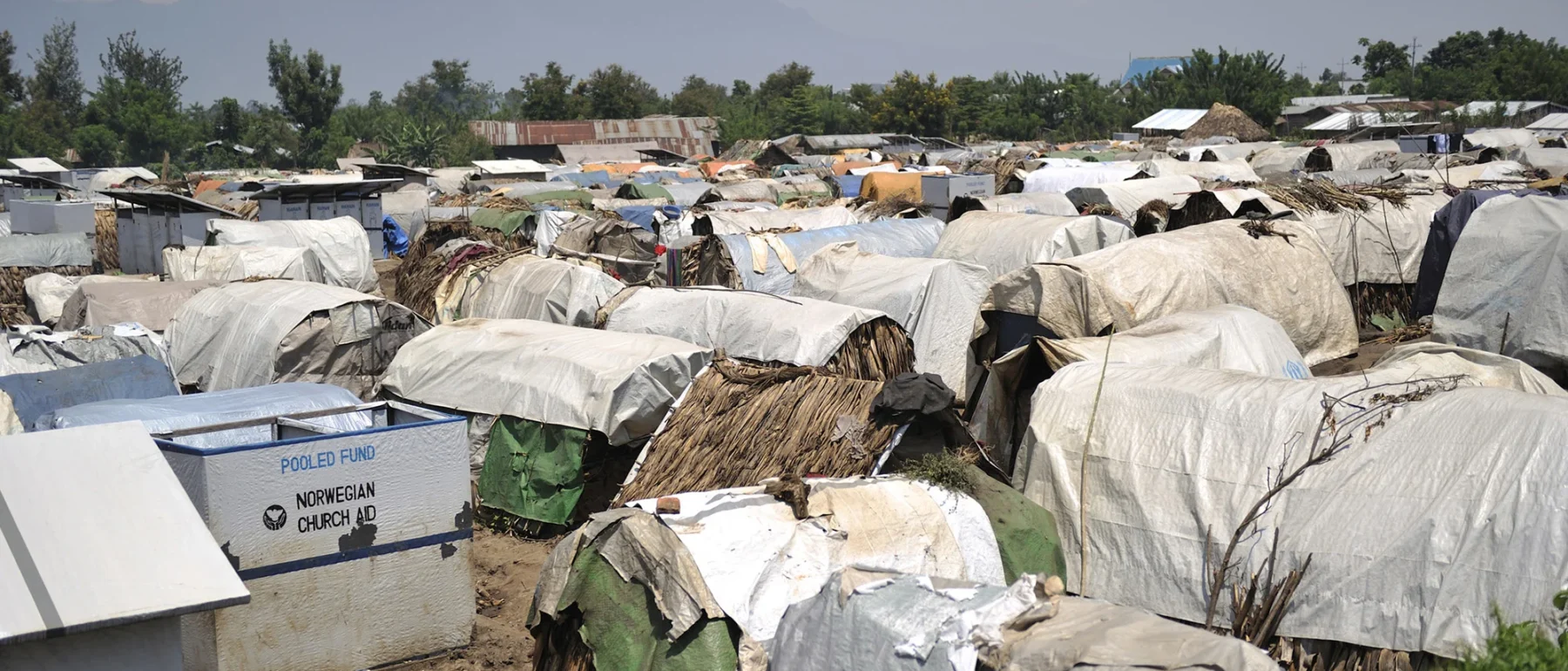
In a world where humanitarian emergencies are neglected and underfunded, pooled funds can help direct attention and resources to crises that might otherwise be overlooked. New research on the Central Emergency Response Fund (CERF) finds that bilateral donors often allocate more humanitarian funding to countries after CERF has provided support. This suggests that CERF can help “crowd in” bilateral funding to the same crises by influencing where scarce resources are directed. This finding has important implications for humanitarian donors, both bilateral and multilateral, as well as humanitarian practitioners.
A central issue in humanitarian aid and finance is that some crises continue to attract funding while others remain underfunded. In an era of backlash against international organizations, many question if the United Nations (UN) is fit for purpose to catalyse aid. This is highly problematic given that the number of people in need of humanitarian assistance has nearly doubled from 136 million in 2018 to 252 million at the beginning of 2026 (OCHA, 2026), and the number of people forced by conflict to flee their homes has increased from 73 million in 2018 to 118 million at the end of 2025 (UNHCR, 2026).
A recent study (Dellmuth, 2026) examined whether CERF allocations are followed by changes in bilateral humanitarian funding allocations by donors in the Development Assistance Committee of the Organisation for Economic Co-operation and Development (OECD). The study finds robust evidence that bilateral donors allocate more humanitarian aid to countries after CERF has provided funding. In other words, by drawing attention to humanitarian emergencies, CERF draws a crowd for financing.
The study (Dellmuth, 2026) also helps explain how this effect may work. CERF allocations can reduce uncertainty for donors by signalling where rapid-onset or underfunded emergencies require attention and where additional funding can be used effectively. This finding holds true even when considering a number of other factors, such as humanitarian needs, conflict, trade or economic development. It also does not depend on the size of the donor and is robust across additional tests considering other multilateral aid flows and statistical elements such as endogeneity (in simple terms, the risk that the model may have missed an important factor) and fixed effects (accounting for the unique characteristics of each donor and recipient country, which cannot be measured directly).
Some humanitarian emergencies have always been more underfunded than others, even before the recent funding cuts by some of the world’s largest humanitarian donors, such as the US, Germany and the UK, and the growing practice to earmark multilateral funding, which leaves international organizations with little room for manoeuvre and impacts on their efficiency (Heinzel & Reinsberg, 2024). In 2025, the best funded UN-coordinated humanitarian response plan, for Ukraine, was funded at a level six times higher than the worst funded plan, for Honduras (OCHA, 2025).
Recent cuts are taking place in a difficult political and fiscal environment. Donor governments face domestic budget pressures, competing security and development priorities, and growing scrutiny of multilateral institutions. Acknowledging these constraints matters: the case for pooled funding is not that donors can ignore fiscal realities, but that scarce humanitarian resources should be allocated as effectively, impartially and flexibly as possible.
A second study shows that donors include a mix of considerations in their decision-making on funding allocations (Rost & Clarke, 2025). They provide funding where needs are the most urgent and most severe, although some aspects weigh heavier than others. For example, humanitarian response plans receive more funding in contexts with high numbers of refugees, but the number of internally displaced people has less of an impact. Sometimes, donors also take their own political and economic interests into account.
The most consistent finding, across a battery of robustness tests, was that media coverage is strongly associated with funding coverage. On average, a response plan for a humanitarian crisis for which 100 000 news articles were published per year (as was the case for Syria in 2016 during the peak of the conflict with the Islamic State) had a funding coverage 24 percentage points higher than a response plan in a crisis with only 100 articles.
This does not mean that media coverage is the only factor donors consider, but it indicates that visibility matters: crises that receive more international attention tend to be better funded. This finding from a large statistical analysis aligns with what directors and senior policymakers of large donor countries said in interviews that were part of another research study (Scott et al., 2022).
The two studies we present point to a common problem and a possible solution. First, research on humanitarian response plans shows that funding is highly uneven and that media coverage is the most consistent factor associated with better-funded appeals. Second, new research on CERF shows that pooled fund allocations can help draw bilateral donor funding toward the same countries. Taken together, the studies suggest that CERF can provide a more principled institutional signal in a system otherwise shaped partly by visibility, politics and media attention.
Humanitarian pooled funds – like CERF at the global level and country and regional funds also managed by the UN Office for the Coordination of Humanitarian Affairs (OCHA) – were set up to bring the decision-making on funding allocations closer to humanitarian crises. The idea was that humanitarian professionals – the Humanitarian Coordinators at country level and the Emergency Relief Coordinator at UN Headquarters – would allocate funding based on the needs of affected people. An earlier study shows that this is indeed largely the case for CERF and OCHA-managed country funds (Dellmuth et al., 2021).
The research above aligns with what the humanitarian country teams that receive and implement CERF funding report: almost all of them say that a CERF allocation helps them to mobilize funding from other sources. Operational evidence points in the same direction. By the end of 2025, CERF-funded anticipatory action frameworks had mobilized USD 50 million in co-financing from other humanitarian donors and partners (CERF, 2026). While this does not prove that all co-financing would not have happened otherwise, it is consistent with the broader finding that CERF allocations can help mobilize follow-on support. This “crowding-in” effect means that CERF can have catalytic influence beyond the value of its own grants by helping shape where other humanitarian funding goes.
In 2016, donors and humanitarian organizations agreed in the “Grand Bargain” (Inter-Agency Standing Committee, 2016) that most funding would be provided with as much flexibility as possible, reducing the practice of “earmarking” where funding is tied to specific activities, which can be inefficient. The implication of our research for humanitarian donors and practitioners is that pooled funds like CERF not only support this agreement directly, but also indirectly by catalysing funding from other sources. Following CERF funding decreases costs for donors, increases funding visibility, and can help alleviate human suffering in underfunded and deteriorating crises in line with the humanitarian principles.
These findings yield key insights and recommendations for bilateral and multilateral humanitarian donors, as well as humanitarian practitioners.
1. Use CERF allocations as early signals of urgent humanitarian need.
Donors should treat CERF and other pooled funds as strategic coordination instruments, not only as emergency financing mechanisms. In practice, this means using CERF allocations as early signals of deteriorating or neglected crises, especially where bilateral donors prefer not to rely entirely on media reporting. Donors can build this into their allocation procedures by creating pre-agreed budget lines that are considered when CERF makes an allocation.
2. Protect flexible funding for pooled funds.
Donors should increase the share of flexible and lightly earmarked funding. The evidence suggests that pooled funds help correct some of the visibility bias in humanitarian finance by directing resources toward underfunded emergencies. Flexible funding increases operational efficiency and can also strengthen the humanitarian system’s capacity to respond according to humanitarian needs.
3. Track follow-on funding more transparently.
Practitioners, donors and OCHA should continue documenting and communicating the catalytic effects of pooled funding systematically, along with using different channels to inform donors about ongoing crises in which the CERF invests. Humanitarian country teams can support this by recording when CERF funding helps unlock further contributions by bilateral and other multilateral donors, or when it leads to faster donor decisions.
4. Use pooled funds to counteract visibility bias.
Because media coverage is strongly associated with appeal funding, humanitarian actors should use pooled funds as part of a broader strategy to draw attention to neglected crises that receive little to no media coverage or are not political priorities. CERF cannot eliminate political and media biases in humanitarian financing, but it can provide an institutional signal grounded more closely in need.
This research has been funded by Formas grant 2022-00855.
The views expressed herein are those of the authors and do not necessarily reflect the views of the United Nations.
CERF. (2026). CERF Annual Results Report. https://cerf.un.org/sites/default/files/resources/CERF_ARR_2025.pdf, page 29, 21 June 2026
Dellmuth, L. (2026). How the Central Emergency Response Fund crowds in bilateral humanitarian aid. Global Studies Quarterly, 6(2):ksag082. https://doi.org/10.1093/isagsq/ksag082
Dellmuth, L., Bender, F., Jönsson, A. R., Rosvold, E. L., & von Uexkull, N. (2021). Humanitarian need drives multilateral disaster aid. Proceedings of the National Academy of Sciences of the United States of America, 118:e2018293118. https://doi.org/10.1073/pnas.2018293118
Heinzel, M., & Reinsberg, B. (2024). Trust funds and the sub-national effectiveness of development aid: evidence from the World Bank. World Development, 179:106609. https://doi.org/10.1016/j.worlddev.2024.106609
Inter-Agency Standing Committee. (2016). The Grand Bargain: a shared commitment to better serve people in need. Inter-Agency Standing Committee, UN Office for the Coordination of Humanitarian Affairs. https://interagencystandingcommittee.org/grand-bargain
Rost, N., & Clarke, J. N. (2025). Why do governments fund some humanitarian appeals but not others? Development Policy Review, 43(1):e12819. https://doi.org/10.1111/dpr.12819
UN High Commissioner for Refugees (UNHCR). (2026). Refugee data finder. https://www.unhcr.org/refugee-statistics (accessed 23 June 2026).
UN Office for the Coordination of Humanitarian Affairs (OCHA). (2025). Coordinated plans 2025. Financial Tracking Service. OCHA. https://fts.unocha.org/plans/overview/2025 (accessed 21 June 2026).
OCHA (2026). Humanitarian Action. OCHA. https://humanitarianaction.info/ (accessed 23 June 2026).
Feature / Kenya has launched its first National Bioeconomy Strategy, becoming one of a small number of African countries with a dedicated national bioeconomy strategy.
Perspective / New research reveals that much learning happens at earlier stages of the project cycle.
Journal article / Systematic review of European marine multifunctionality through a policy-mix lens.