The new director in Bangkok is a veteran of SEI’s U.S. Centre who has done research and capacity-building in Thailand, Vietnam, Indonesia and China and already works closely with the Asia team.
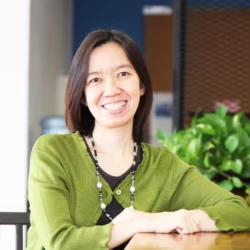
SEI has chosen Eric Kemp-Benedict, 47, whose work focuses on designing and deploying analytical tools to support sustainable development, to lead its Asia Centre, in Bangkok, Thailand. He assumed his new duties on February 15, succeeding Annette Huber-Lee.
Established in January 2004, the Asia Centre plays a key role in SEI’s mission to bridge science and policy to support sustainable development. Along with conducting research, the SEI Asia team works to disseminate knowledge, build local capacity, and strengthen institutions to help the region move towards pathways that are more equitable and sustainable. The centre includes a mix of nationalities, ethnicities and backgrounds and is actively engaged in partnerships and networks across the region.
Prior to becoming Asia director, Kemp-Benedict was a senior scientist in SEI’s U.S. Centre in Boston and leader of SEI’s Rethinking Development research theme. He had already spent much of the past year in Bangkok, supporting the centre through a period of transition. He had done field work and capacity-building in several Asian countries before, and had built a strong connection with the Asia Centre while working with Deputy Director Chayanis Krittasudthacheewa on a project in Northeast Thailand, part of a larger study called “Exploring Mekong Regional Futures”. At her request, he sought a year-long secondment to Bangkok, starting last spring. He was chosen as director after a months-long international search.
“Eric has a solid research background and has demonstrated outstanding strategic leadership skills,” said Johan L. Kuylenstierna, executive director of SEI. “He has strong professional networks, both globally as well as in the region, and will therefore play an important role in building the SEI Asia Centre as well as in the overall leadership of SEI.”
“Eric has been a very strong supporter to several SEI Asia projects,” Krittasudthacheewa said. “He has a rare combination of skills and is a pleasure to work with, always happy to help others and to push young researchers to develop their careers. His contributions have not only led to high-quality scientific work, but strengthened our centre and enhanced our relationships with strategic partners in the region. He also feels strongly about addressing inequality, which is very relevant and challenging in this region.”
A diverse background in research and teaching
A native of Texas, Kemp-Benedict earned a B.S. in physics at the University of Texas in Austin and a Ph.D. in theoretical physics at Boston University before joining SEI-US in 1997. For five years, he conducted diverse research focused on long-term sustainability planning, then left to earn a physics teaching degree while working as an independent contractor. From 2002 to 2009, he taught physics at the Fenway Pilot High School in Boston. While still teaching, in 2006, he returned to SEI-US, as a senior scientist.
Kemp-Benedict’s work at SEI has included scenario development for the Center for International Forestry Research; the Global Scenario Group; the United Nations Environment Programme (UNEP) Global Environment Outlook; the Comprehensive Assessment of Freshwater in Agriculture, and studies in West Africa, the Baltic Sea, the Mekong River basin, and China. He is also a co-author of the Greenhouse Development Rights framework, which aims to allocate the burden of climate change mitigation in a manner consistent with the principle of “common but differentiated responsibilities and respective capabilities”.
In his facilitation and capacity-building work, Kemp-Benedict has actively developed and applied tools and methods for participatory and study-specific sustainability analyses. As a scenario modeller, he has specialized in the development of application-specific models within a participatory framework. More broadly, his work has looked at poverty and income distribution; social dynamics; water, livestock, and land use, rural livelihoods and, most recently, links between income inequality and sustainability.
“Eric has been a leading analytical thinker on how to equitably share the burden between rich and poor of achieving a transition to a sustainable future,” said Charles Heaps, director of SEI-US. “We are delighted that the energy, initiative, collegiality and leadership he showed here will now be applied in helping SEI contribute to Asia’s future sustainable development.”
SEI’s top representative in Asia
In his new role, Kemp-Benedict will be responsible for research, administrative and financial leadership of SEI Asia and be the main contact for key partners and donors. He will also be part of SEI’s international management and help coordinate its interactions with headquarters and with SEI colleagues worldwide.
“The Asia Centre has faced several challenges in its first few years, including significant turnover – and yet it has still done impressive work, such as hosting the SUMERNET [Sustainable Mekong Research Network] Secretariat, which really embodies SEI’s mandate of bridging science and policy,” Kemp-Benedict said. “Now, thanks to a strong core staff, we have a highly functional and growing Centre with talented and motivated researchers. I see many opportunities ahead of us and look forward to working with this excellent team.”
SEI report / This report analyses the extent to which African policies and practice aid the value and trade of critical minerals for the continent's renewable energy future.
Journal article / This research compares forecasting models for predicting heat-related health impacts across Sweden, using data from all 21 counties.
Event on 28 September – 29 September in Nairobi / The SEI-hosted Adaptation Research Alliance, with support from SEI Africa, will host the workshop to connect adaptation research with policy and practice.