A professor of Global Sustainability Governance at Utrecht University and a member of SEI’s Science Advisory Council, Biermann is the first political scientist to receive the prestigious award.
The award recognizes Biermann’s groundbreaking contributions to advancing global governance systems to address the most pressing environmental challenges of our time. Traditionally, the Volvo Environment Prize has honoured natural scientists, but Biermann’s pioneering work on the UN and Sustainable Development Goals (SDGs) highlights the crucial role of political science in global sustainability efforts.
“The scientific understanding of the global environmental crisis is clear and unequivocal. What we lack are effective and equitable political institutions to address these numerous challenges. This year’s Volvo Environment Prize highlights the critical role of political science in identifying innovative pathways for more effective and just global sustainability governance,” said Biermann, who is a member of SEI’s Science Advisory Council (SAC).
As part of the SAC, which advises SEI’s Board on essential research directions, Biermann’s expertise in global sustainability governance is critical and he plays a key role in shaping the institute’s research priorities and ensuring its continued leadership in interdisciplinary sustainability research.
Biermann’s recognition as the first political scientist to receive this prestigious award highlights the growing importance of interdisciplinary approaches to sustainability. His research also emphasises the importance of global collaboration in the social sciences, bringing together scholars from around the globe for joint research projects on environmental and sustainability governance.
Biermann’s work has been instrumental in redefining global governance frameworks, especially those of the UN and other international organizations, to better address critical issues such as climate change, biodiversity loss and sustainable development. His research stresses the urgent need for stronger and more effective governance systems to mitigate environmental risks and ensure long-term sustainability. With growing pressures on the planet’s natural systems, Biermann argues that without swift and cohesive governance reforms, the world risks falling short of crucial sustainability goals.
We lack effective political institutions to address these challenges. This prize highlights the critical role of political science in finding pathways for just global sustainability governance.
Frank Biermann
In 2005, Biermann founded the Earth System Governance Project, a pioneering transdisciplinary network focused on sustainability governance. This large global research community has developed a variety of impactful study projects and policy proposals to drive the global sustainability agenda forward.
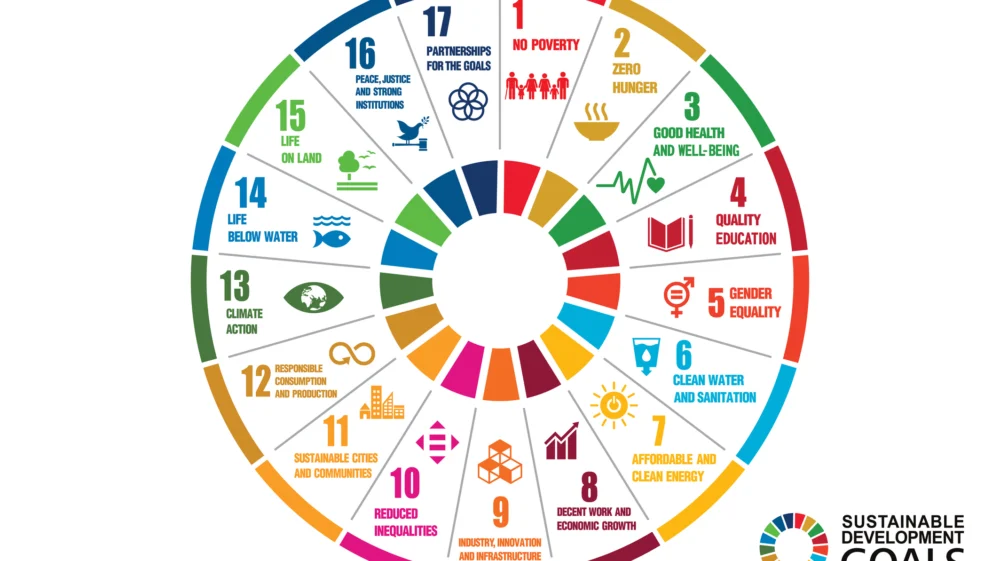
One of Biermann’s most significant recent research areas has been the effectiveness of the SDGs, adopted by the UN in 2015. After reviewing 3,000 studies on the political impact of the SDGs, Biermann and his team found that while the goals have raised awareness, they have yet to catalyse the transformative changes necessary to achieve true sustainability by 2030.
Looking ahead, Biermann has called for a fundamental rethinking of global governance beyond 2030. He advocates for stronger international institutions capable of addressing the world’s escalating environmental crises. Biermann stresses that, without more cohesive and coordinated global action, “achievement of the 17 Sustainable Development Goals and other international agreements will prove unlikely to materialize.” He continues, “Governments need to join forces to agree on fundamental reforms in the global governance systems that are no longer fit for purpose for the challenges of the 21st century.”
The jury for the Volvo Environment Prize praised Biermann’s leadership in advancing the understanding of how international institutions can mitigate global environmental risks. In their citation, they stated: “Frank Biermann has been defining new pathways for international environmental governance in a period of global change. His research has significantly enhanced our understanding of how international institutions can improve our collective ability to mitigate global environmental risks and adapt to inevitable changes.”
Now in its 35th year, the Volvo Environment Prize is one of the world’s most respected environmental science awards. The official prize ceremony will take place on 15 October 2024 at Eric Ericsonhallen in Stockholm.
Biermann will give a seminar at the Royal Swedish Academy of Sciences in the afternoon before receiving the prize, “Social sciences in an era of rapid global change”, where he will discuss his research and the complex role of political science in interdisciplinary, international research collaboration. The seminar is free and open to the public, but registration is required.
For more information about the Volvo Environment Prize and this year’s laureate, visit the official website.
Composed of leading international researchers, the Science Advisory Council advises on research priorities and follows up on our scientific achievements.
Collection / Discover how SEI is transforming global sustainability and operationalizing the SDGs through innovative methods and tools.
Journal article / As SDG implementation lags behind, this article explores five governance areas asking how to strengthen the global goals.