A year after moving to Bangkok to lead SEI Asia, Marie Jürisoo reflects on the opportunities and challenges in bridging science to local and regional decision-making. We spoke with her about ceremony and directness, what Asia has taught her about partnership and where the centre goes next.
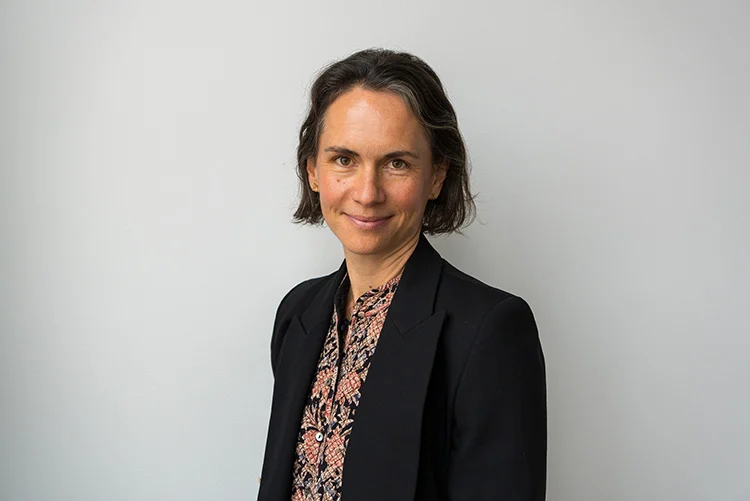
Marie Jürisoo.
Photo: Mia Shu / SEI.
You first appeared in Meet SEI in 2018, as Operations Director. What brought you from Stockholm to Bangkok?
The short answer is that after seven years as Operations Director, I got itchy feet and wanted to experience and contribute to SEI from another angle. The longer version is that as Operations Director, I worked on pretty much every aspect of leading, steering and developing SEI as an organization globally. The Centre Director role appealed to me because it felt even more tangible – an opportunity to apply all that experience at a different level of the organization.
Asia also holds a special place in my heart. I partly grew up in Hong Kong, have lived in a coal-producing region of China and originally joined SEI as a “China watcher”, explaining the drivers behind China’s climate and energy policies.
You’ve spoken before about SEI’s strength being that we are reliable, collaborative partners. What has that looked like in practice this year?
My first year with SEI Asia has flown by in the best possible way. I’ve gained a deep understanding of the region, our partners and their priorities, and learned how we can work together to deliver sustainable development solutions that are both practical and rooted in research.
One example from the past year is our Wetland Monitoring Tool training for Thailand’s Department of Water Resources. It was genuinely a joint effort and shared investment: improving monitoring, providing professional training and putting scientifically robust models to practical use on real-world challenges. Another is our work with the Bangkok Metropolitan Administration. There, SEI has helped broaden the emerging debate on congestion charging beyond traffic and emissions to include equity, affordability, accessibility and public acceptance.
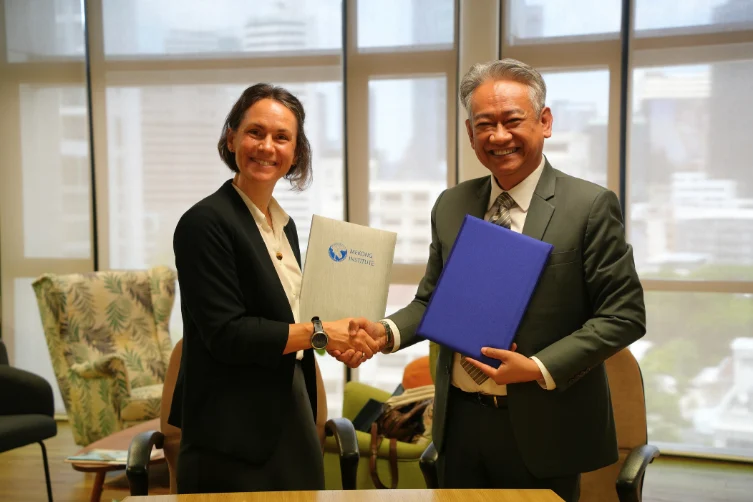
SEI Asia has also continued to deepen its partnerships in Thailand and across the region. Earlier this year, for instance, we signed a new five-year memorandum of understanding with the Mekong Institute. Our Inclusive Climate Finance for Vulnerable Communities in the Asia-Pacific (ICCAP) project also moved into implementation, working with government and civil society partners in Laos, Bangladesh, Nepal, Cambodia, Fiji and Bhutan. Together, these give a glimpse of SEI’s growing engagement in the region.
Marie Jürisoo and Suriyan Vichitlekarn, Executive Director of the Mekong Institute, at the signing of a memorandum of understanding between SEI Asia and the institute.
Photo: Noraset Kunjara Na Ayudhya / SEI Asia.
How have your experiences in both Asia and the Nordics shaped your leadership?
This year has taught me a ton about myself and my leadership style. My colleagues often describe me as very clear and direct. This can be both a good and a bad thing in an Asian cultural context where smoothness and harmony are highly valued. I’m also quite fast and like to move at a rapid pace, which again isn’t always in sync with the Thai way of doing things. My mixed Nordic and Asian background makes me aware that these traits need to be balanced – by working closely with competent people and through well-designed organizational structures and processes.
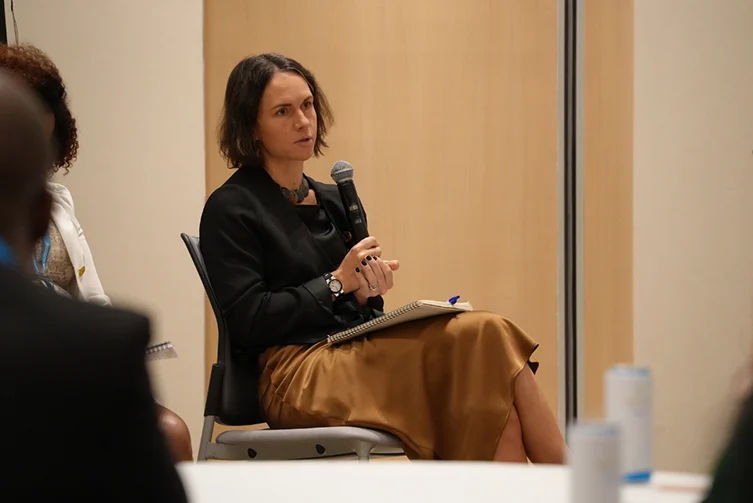
Jürisoo speaking on a systems leadership panel at the IWA Water and Development Congress and Exhibition 2025.
Photo: Teerawan Atipattrakul / SEI Asia.
What has surprised you the most about this role?
While I’ve held leadership roles at SEI for many years, the ceremonial side of being Centre Director in Asia was new to me. In the past year alone, I’ve given more opening remarks, posed for more photos and handed over more appreciation gifts than I ever thought possible.
Over time, I’ve come to understand that these ceremonial moments are a crucial part of building relationships. They often open the door to more honest and open conversations. A recent example was the Joint Steering Committee Meeting with Thailand’s Office of National Water Resources, which brought together representatives from more than 20 government agencies. I think my Nordic directness and relaxed, informal approach helped foster dialogue, trust and genuine partnership – something that might not have come as easily through a more traditional approach.
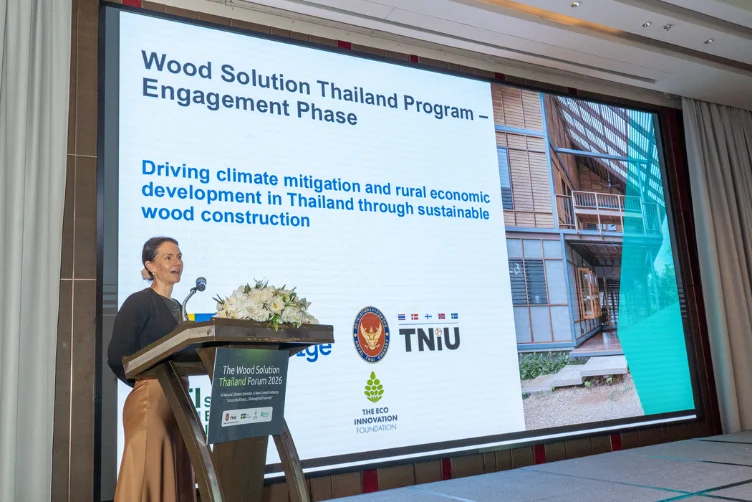
Jürisoo speaking at the Wood Solution Thailand Forum 2026.
Photo: Thai-Nordic Innovation Unit (TNIU).
You also hold a global role as SEI’s Deputy Director. What’s it like doing that from Bangkok?
In any global organization, I think it’s very healthy to step back from headquarters and see the organization from another angle. Being based in Asia means I can continue my global Deputy Director role while seeing first-hand, every day, how SEI Asia draws on its dual identity. We are a trusted local partner in Thailand and Southeast Asia, and we also benefit from SEI’s global networks and expertise in sustainable development.
I try to bring this perspective to both roles, so that the global view enriches our regional work and our local insights inform our global strategy. It also shapes how I contribute to leading and organizing SEI’s work – which, again, looks different from Bangkok than from Stockholm.
What are your priorities for SEI Asia going forward?
First, we will continue to strengthen SEI Asia’s role as an intermediary, bridging science and decision-making at community, local, national and regional levels. SEI leads with science, and our niche is producing solid research that is useful beyond academia. We must stay true to this mission, especially at a time when science is more contested or other priorities compete for funding. In all contexts, but perhaps more so in Asia, developing science in partnership with users and stakeholders is key to ownership, uptake and continuation beyond the life of a project.
Second, we want to build more partnerships with societal changemakers who put sustainability in Asia at the top of their agenda. We are already seeing a shift – among philanthropies and foundations, for instance – and we are adapting to engage with a wider range of opportunities.
Third, we will continue to strengthen SEI Asia’s internal organization: building robust and resilient leaders, and recruiting motivated, brave and smart people who share our organizational goals. At SEI, our people are at the heart of what we do.
Finally, what do you look for in the people who join SEI Asia?
I look for people who are entrepreneurial, self-driven and curious about the world around them. Asia is a region that relies heavily on partnership and working together. That makes striking a healthy balance between focused time for thinking and writing, and the constant flow of engagement opportunities, a key skill to master.
Meet SEI / Meet Marie, SEI Operations Director who began her SEI journey as an intern in 2008. Here she shares highlights and advice from her SEI journey so far.
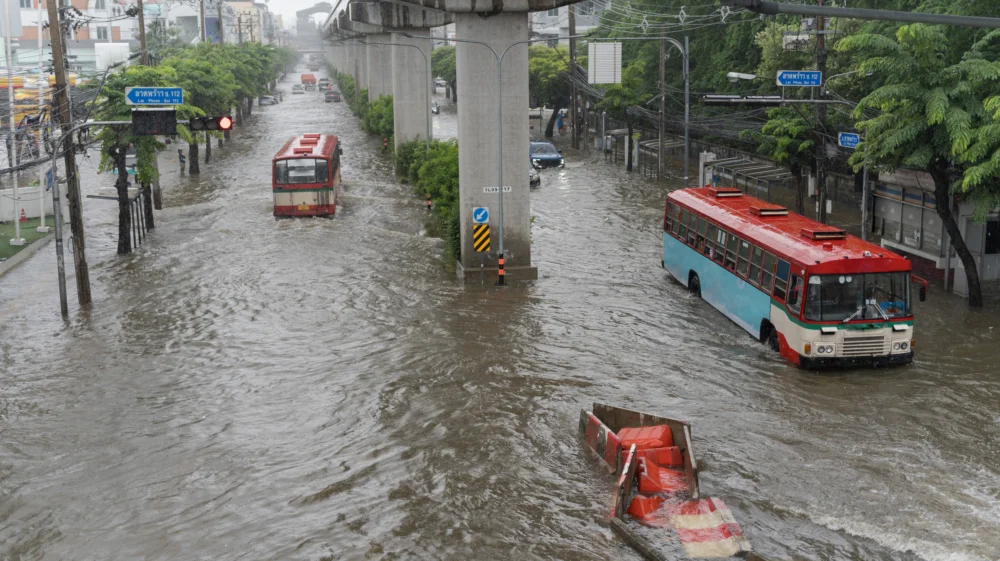
Perspective / Flooding in Bangkok in late September exposed a critical gap: forecasts identified the threat days in advance, warnings and preparedness did not translate fast.
Event on 08 December / In this fourth CS Co-labs discussion session we will explore the use of digital tools in different aspects of citizen science projects.