part of Power in balance
In this episode, SEI’s Katarina Inga talks to Sámi reindeer herder and cultural bearer Jörgen Stenberg and Canadian scholar and longtime Indigenous rights advocate Ted Chamberlin to explore the deep ties between land, culture, and storytelling. Research, resistance and solidarity across Indigenous communities can tip the balance towards a just future.
The transcript has been lightly edited for length and clarity.
00:05 Introduction
Welcome Stockholm Environment institutes power imbalance conversations on sustainability and justice, where we explore how power imbalances create and sustain social and environmental inequalities in the light of intensifying environmental biodiversity and climate challenges. What can we do to tip the scales for a more balanced, just and sustainable transition?
00:25 Introduction: Katarina Inga
The green transition and the global scramble for critical raw materials have intensified the demand for land activities such as mining and wind farms. It has also intensified the need to protect Indigenous human rights and land rights as governments and developers look to Indigenous territories to expand their operations. Indigenous populations worldwide face similar struggles and can have much to learn from each other.
My name is Katarina Inga and I am a researcher in the Rights and Equity team at SEI. Today, we talk to Edward (Ted) J. Chamberlain – Professor Emeritus of English and Comparative Literature at the University of Toronto, and Jörgen Stenberg – a Sámi expert, poet, joiker, and a reindeer herder.
For Indigenous Peoples around the world land and culture are closely connected. But governments and courts seldom give Indigenous culture and storytelling the weight they deserve in land claims. Ted has worked to support Indigenous rights in Canada and abroad for more than 50 years. We ask him what progress has been made and how the struggles of the First Nations differ from those of the Sámi.
01:37 Ted Chamberlain
They differ in the seeming determination of the government here not to recognize Sámi rights and Sámi territorial sovereignty control over their land and self-determination. And it differs from many of the places I’ve been to. Some of them are even further back from where we would like everyone to be, which is listening to each other. But many of the others are moving ahead especially with formal land claims that go to trial. It doesn’t always end in a positive result. But if it doesn’t, it almost always gets appealed. And then that appeal is appealed. And then it goes to the Supreme Court of Canada. And the Supreme Court over the last 20 years has been extraordinarily attentive to the issue of land rights and has given decisions that have transformed the opportunities and the possibilities for a number of indigenous organizations working together.
The Supreme Court has confirmed territorial sovereignty for them, for a variety of reasons. One is that that they were once parties to a treaty and the Supreme Court has said you don’t have to have to display territorial sovereignty. The government could not have signed a treaty with you unless they were tacitly acknowledging your sovereignty.
So it has moved ahead in Canada in remarkable ways. Ways I never would have thought we’d achieved when I started on this 50 years ago. And in each case, of course, it takes a lot of resources and time for the First Nations to do what they need to do to get the attention they need and to get it on the record at the trial stage, which is to do that mapping of the territory and tying it to, continuous occupancy stretching back a long time.
And then the trial can often take two or three years and be exhausting. And create a real challenge for many of the elders, especially the faith keepers and the knowledge keepers, who by protocols often of their nation should not be telling their stories out to a wider public. So it’s real determination and courage on the part of the elders and determination by the Nation to make it happen. But it often it leads its way to some, really nourishing helpful Supreme Court decisions which trump everything.
It makes things look hopeful in Canada and one of the things that I recognized as a challenge in Sweden right now.
04:29 Katarina
Courts in Sweden have also been used for protection and recognition of land rights and the right to self-determination, but spiritual aspects are less often relied on in these claims. The most notable case is the Girjas case, which resulted in the landmark decision by the Supreme Court of Sweden granting the Girjas Sámi community the right to issue hunting and fishing licenses within their district. But there’s still a long way to go.
04:27 Jörgen Stenberg
But our land rights today in Sweden is almost a joke as I see it, and the way forward is by taking things to court. Of course, there have been some movements in the right way with the Sámi rights in Sweden. Particularly – or almost only – because of the Girjas court case. But I feel in many ways we are kind of far behind.
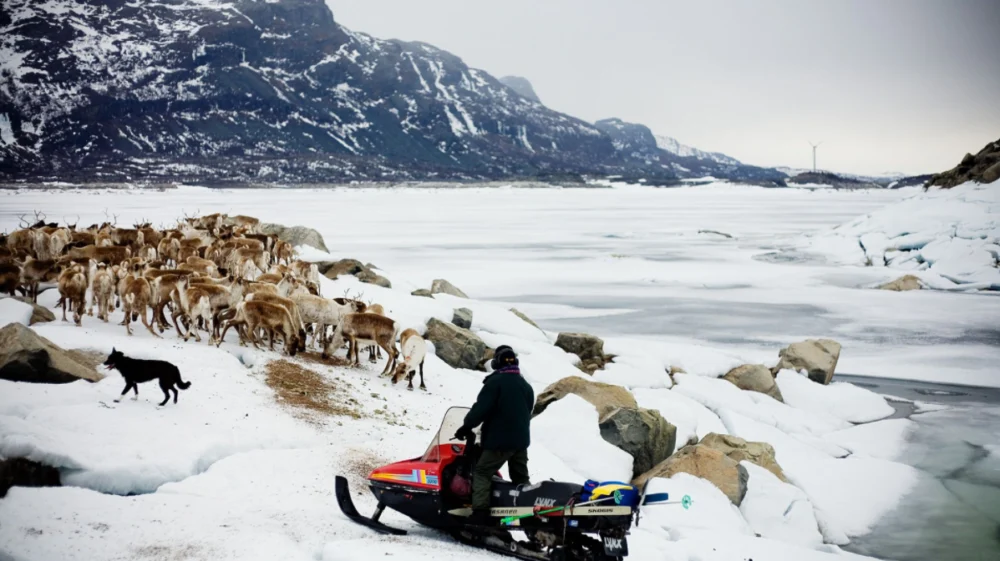
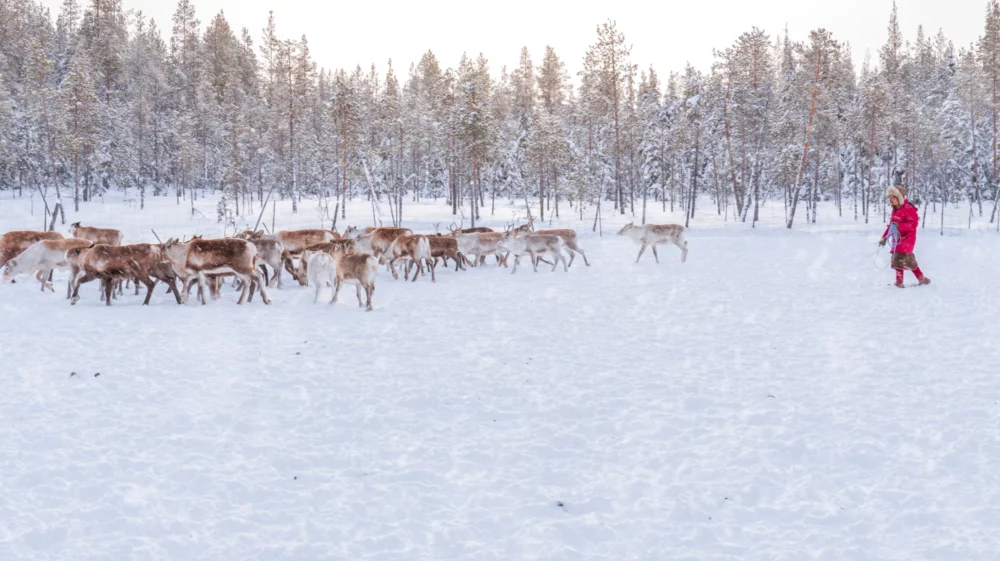
We are the only people in the whole world that in so strong way combine our right to the land with the animal, with the reindeer. And that’s because the reindeer is very important and carries a lot of the culture. When you look back 2 or 3000 years ago in the stone age in this area, the reindeer was not so common. But we as a people were here and used the land.
Other people’s struggles are more about the man, the persons, the people’s land in a spiritual way and in a religious way. Why we’re not doing it so much is because the spiritual and religious things have been banished for such a long time. So there’s a stigma in that, because if you talk about it, then you’re not serious, so to speak.
06:24 Katarina
Despite this stigma, cultural ties to land and nature can sometimes take on a religious meaning. Like religious traditions, cultural practices are shared across generations through storytelling, and like religious traditions they can guide people on how to live, act, and interact with the world around them.
06:40 Jörgen
The storytelling and the way you’re raised and learn how to behave in nature – the storytelling has an educational purpose also.
One of the stories and one of the ways to behave I heard when I was a little boy is to knock three times on the tree before you cut it down. You can knock on it so it knows it’s going to get cut down. And I didn’t quite know deeper exactly what the meaning was, it was just like a thing to do – like a lot of things [we do] are – but the more I understood about that, [the more I realised that] this is combined with the thinking that the spirit of the tree should leave the tree and not fall with the tree to the ground. So you warn the tree.
And then you see, what is a religion? You always think that in a religion, you have to know the ceremonies. If you’re a Christian, you have to know the Bible, and you go to the church, there are so many things in the picture of being a Christian. But with Christianity it’s totally ok to not know anything about anything at all, not even behave like that, but still be a Christian, and that that is your religion. But you can know about how to behave in nature, how to treat a treat a tree when you cut it down and many other things like that, that, in fact is, a kind of a ceremonial acting combined with religion. But we don’t see it as a religion because we’re not supposed to be religious in that way, because it has been so forbidden for such an extremely long time.
Through thousands and thousands and thousands of years since the day the man became a man – one day when we stopped being a frog – we had a need to be spiritual. And when we take back the right to talk about those things and take back the right to be [spiritual] people, then we can heal as a people, I think, but also preserve the land better in land struggles.
09:08 Ted
That’s very powerful stuff, really, is.
09:10 Katarina
Protecting land and nature is becoming more difficult as the green transition puts increasing pressure on Indigenous territories and resources for new developments. This can negatively affect not only the environment and livelihoods but also the mental health and even the safety of those who serve as custodians of the land.
09:29 Jörgen
Often people who are more spiritual [have] worse mental health. It’s a it’s an issue, I would say. Because if you are raised with that [belief] that you should knock on a tree three times to so that the spirit of the tree can move and you have that as a way of living, what does that person think when he goes over a clear cutting area? That is 10,000 [trees]. It [does] something to the mind and to the thoughts of people and that’s also why in the group we rarely talk about those things.
10:18 Ted
That’s so terrible. And the clear cutting [itself] is terrible.
10:20 Jörgen
Many times – I know several times in the beginning – when the windmills came, we said yes, even though we knew that it would be chaos. Just because we didn’t have the strength to take the struggle for the land.
But when you’ve become the part in this society that says no to everything then your neighbours don’t like. And you get into discussions. And you can see on social media that “reindeer herding should stop to exist” and so on. And then you get that aspect in in the way also about how it affects your family and how it affects your children.
11:09 Ted
What Jorgen describes is familiar to a lot of communities that, for the sake of children, for the sake of families and things, take jobs, take the opportunity to do things and get paid for them that they might not want to take but need to.
I’ve heard from a number of people just how much is going on of a pretty dreadful sort with the mining and various other things that’s happened in Canada. The resistance to it, though, has been very strong by the First Nations. They’ve put up blockades, they’ve gone to jail because of those blockades and to stop some of those developments and they continue to do so.
They’ve managed to destroy the possibility of certain kinds of mines being put in certain sorts of places. The strategy they’ve often used is to somehow do – what might not be possible for the Sámi – which is to create a question over whose territory that is. And that puts what the lawyers call a “cloud on the title” to the land. And it means for big development projects, the people backing the development say “I’m sorry, we’re not putting a billion dollars into that if there’s a chance that it’s not your land.” – they’re talking to the government, in this case.
The government is increasingly under pressure not to give permission if it’s territory that the Indigenous nation claims – may not have proven yet, but claims – it’s just a doubt that can do, as in Canada, done wonders to protect the environment because the big corporate money won’t go to a project that has some of that kind of risk in it.
And governments conspire with – that’s the only the only word I can think of using – with the big developers. Partly, they say, “well, you know that’s going to be good for the country as a whole”, but it’s not good for the Indigenous nation there. It’s not good for the environment. It’s short-term stuff.
13:15 Katarina
Meanwhile, in the European North, despite evidence that windfarms, mines, and hydropower plants disrupt reindeer herding migration routes and feeding grounds, more developments are planned. Direct agreements between developers and Indigenous communities are emerging as a way to negotiate the terms of these new developments, but there is often an imbalance in negotiating power and our recent research shows that such agreements have mostly negative consequences for the reindeer.
So, can developments and Sámi interests be balanced in a fair way?
13:50 Jörgen
I can’t balance this. It’s totally impossible.
In my reindeer herding area, we have eight big windmill farms. I think we have six windmill companies that are [currently] talking to us to build more.
We have eight old mines and search for new ones everywhere. To handle that as a reindeer herder is impossible in so many ways. Because we don’t have the energy to raise our voices. We are always reacting on somebody else’s initiative.
We are 12,13 reindeer herders. We’ve made small groups so that one group works with forestry, one group works with windmills, and one works with the mining. So we are a couple of persons in each group. But most of us are in several groups at the same time, so it’s totally exhausting!
Now we have made demands to get paid for our time. But even if we get paid, it’s a big problem because that is something that isn’t part of our life, our reindeer herding life. I would say it’s a sort of a mental collapse in that way.
In the end, all the decisions you make and what you say to the windmill industry or whatever it is, isn’t always what’s best for the reindeer. And we are talking on behalf of the reindeer and, of course, the culture.
15:41 Katarina
Research can help lighten the burden placed on Indigenous communities that Jörgen talks about. He points out how GPS trackers on reindeer, represented by red dots on a map, can help track trends and changes in their movement over time to prove that their habits and health are affected by human activity such as mining.
16:01 Jörgen
We have one big mine that has been in use where we have had GPS on the reindeer since 2008, I think. You can see the pattern from all those GPS through all the years: it’s a red dot and the whole the whole area is totally red except around that mine. There is a five-kilometre radius from the mine where there have been two GPS reindeer since 2008, so it’s a 10 kilometres wide area [that the reindeer avoid].
16:40 Katarina
Similarly, our own recent research on hydropower licences in Sápmi gathered data on the ways hydropower negatively impacts reindeer herding and highlighted how government agencies and companies can protect Indigenous Sámi rights.
How else can research help tip the scales to keep power in balance?
16:59 Ted
I’ve got a quick answer. It can help if they listen to indigenous scientists. Talk about people with indigenous knowledge, I call them indigenous scientists. They know more than many of the Western trained scientists do.
Collaboration is where it’s where it’s got to go. They work together with no particular authority given to the settler scientists.
17:25 Jörgen
I think we have seen [research to be] very important. For example, if I continue with the windmills: we saw with our eyes how the reindeer herding and the herd changed its way of using the land and we could talk a lot about the changes, but we would never have been able to explain it without the researchers. When the researchers came, we had data. The thousands and thousands and thousands of the data points from the GPS, for example. And then you see patterns, how they changed. And then we understood that what we saw with our eyes was just a little bit of the problem. We didn’t have the whole. It was much worse than we thought it was.
Sadly, even if our knowledge is that we say exactly what we see, our words are never enough. And with the researchers, we get another level to the way to explain the things.
We have a tradition of oral storytelling. And that’s good. It has a lot of strength in it. But we also have to have it written for research purposes so that we get more data on paper. But our energy is too low.
We must be better to talk about the importance of research so that the youth and those who don’t want to work in the reindeer herding, [can] still work for the reindeer herding, but in other ways, so it’s not just people from the outside researching about reindeer herding or the Sámi, but that we do it ourselves.
19:30 Katarina
Looking back at the progress made in recognizing Indigenous rights and the new challenges that come with transitioning away from fossil fuels, what can we hope for in the future?
19:42 Ted
Well, I’ve been working in in the area – not as an indigenous person, but as an outsider, but always with Indigenous communities, Indigenous individuals – and in the 50 years since the early 70s that I’ve been doing this I see good things happening. I see changes, so I like to hold on to that optimism.
I certainly think, overall, it’s a time of hope and possibility, but we’ve got to make that possibility happen, and that’s going to take collaboration.
What I think should happen more, is the communities around the world talk to each other, to learn from each other – not to imitate each other or anything of that sort – but just to learn strategies of dealing with governments, for example, or international pressures. Or, what is the case with some Indigenous People, with the poverty that some suffer from with the destruction of their lands.
20:49 Jörgen
Most days I have no hope. I must say that. I really don’t and because there are such big interests and powers that are working against [us].
And when I’m in my darkest moments and don’t see those opportunities, then I think about human rights struggles all over the world throughout time. I don’t think so many black people in the southern part of the US had so much in hope in 1958, 1961,1932 or so. And women in Sweden before 1920 should’ve had the right to vote. It was not natural at all. And the apartheid system in South Africa.
Mankind has always pushed other people down. That’s part of mankind to do, sadly. Even 2000 years ago they colonized each other and took each other’s belongings and so on. But the struggle against that and the fight for human rights is also a part of mankind and something mankind has always done.
Even when you don’t think anything will happen, when it’s the worst, when you don’t see any opportunities at all, then the fight for human rights can go down to just being alive that day. To choose to live can be your fight for human rights. It doesn’t change this world, but it would if everybody managed to do that.
It’s easy to get stuck in thinking that thinks it’s impossible, but the youth come with new energy and new willingness to see possibilities to the to the reindeers and then you get even I get energy from that.
And then we have to get better [at talking to each other]. Each Sámi society is kind of an island and we don’t talk about things with each other. For example, those hard things about the mental issues and so, you don’t make want to make yourself weak and talk about the weaknesses. There we have to be better to find strengths and join each other in the fights.
23:38 Katarina
Even if slow, there has been some progress in protecting Indigenous rights, but more needs to be done. Key to these efforts are court decisions and evidence of harm where research, Indigenous science and acknowledging the importance of Indigenous culture and oral storytelling can make all the difference. Sharing successes and setbacks within and between Indigenous communities to learn from international experience can also go a long way. We thank our guests Ted and Jörgen for walking the talk and sharing their insights.
24:11 Outro
Power in Balance: Conversations on Sustainability and Justice. For more information, visit our website www.sei.org
J. Edward Chamberlin
Professor Emeritus of English and Comparative Literature
Jörgen Stenberg
Reindeer herder, poet, joiker
J. Edward Chamberlin is Professor Emeritus of English and Comparative Literature at the University of Toronto, and an Officer of the Order of Canada. He was senior advisor to Canada’s Royal Commission on Aboriginal Peoples, has worked on native land claims in Canada, the United States, South Africa and Australia, and has lectured widely on literary, historical and cultural issues. He has written over a dozen books, including If This Is Your Land, Where Are Your Stories? (2004) and Storylines: How Words Shape Our World (2023).
Jörgen Stenberg is a father of three and a reindeer herder. Reindeer have always been central to his life, and in his efforts to protect their habitat, he has long used the traditional art of joiking. In recent years, he has also turned to poetry as a means to support this cause.
Photo: Boberger
Project / The project's aim is to explore how to ensure inclusion of Sámi reindeer herding communities in the review of environmental licenses for hydropower.
Project / An empirical investigation of "extraction contracting" between green transition industries and the Indigenous Sámi peoples.
Project / Green transition has become a catch-all solution, but it's not without its trade-offs and conflicts. We seek to highlight them to ensure a just transition.
Perspective / Conservationist policies could be more effective if they respected the spiritual beliefs that already guide forest use, preserve biodiversity and livelihoods.
Press release / New Trase data analysis highlights the need for stronger supply chain transparency as domestic demand grows and export data gaps widen.
Journal article / This research maps evidence on how physical and transition climate risks affect real estate valuations, drawing on 130 academic and grey literature sources.