part of Environment and policy in Asia
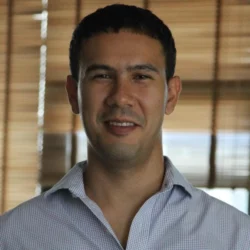
The first episode of SEI Asia’s podcast series “Environment and policy in Asia” explores how cities in Asia are approaching climate governance with Dr Danny Marks, Assistant Professor of Environmental Politics and Policy in the School of Law and Government of Dublin City University.
0:06 – 00:20
Welcome to SEI Asia’s podcast on environment and policy in Asia. In this podcast series, we invite experts to discuss the many critical and complex environmental challenges in Asia, and how to find solutions through policy and partnerships.
0:25 – 01:24
Hey everyone, I’m Rajesh Daniel from SEI Asia. I’m joined today by Dr. Danny Marks, who is currently an assistant professor of environmental politics and policy in the School of Law and Government of Dublin City University. Danny’s research interests include political ecology, environmental justice, climate governance, and disaster risk reduction. He is especially interested in urban and environmental governance in Southeast Asia. So, Danny, welcome to the SEI Asia pod.
Today, we wanted to chat with you on matters relating to urban climate governance in Asia. What can be done better in terms of urban planning, in the context of climate change and climate adaptation, but also especially we wanted to focus on cities. We hope this resonates with your own background in researching urban and climate governance topics.
01:24-01:52
Thanks Rajesh, I’m very happy to join this podcast by SEI, gives me a chance to discuss a number of issues by working on for the past few years. This intersection of urban governance and climate change holds special interests for me. I’ve conducted research on a number of issues related to it, including urban flood, governance, urban heat, island, reducing emissions from urban transport, as well. So, I look forward to discussing those issues with you.
01:53-02:47
Excellent. So, Danny, a little bit of context, before we dive into specific issues, we do know that cities are often seen as sites for the worst activities and kinds of behavior that contribute to climate change. They encourage car use, they build huge networks of roads, large malls. In fact, a recent UN study showed that although cities cover less than 5% of the globe, some 70% of global resources are consumed in cities, and also more than 70% of global greenhouse gas emissions. But cities are not the only bad guy, they also hold great potential. We do know that many cities, especially in the north are introducing and implementing climate mitigation and adaptation policies. Of course, it is also a matter of scale, they are doing it because they’re smaller, but these can be scaled up. So, there is a good there is a bad. What are your thoughts, Danny, on this dichotomy?
02:48-05:11
It’s a good question. I think these statistics are definitely suggest that cities are at the forefront of addressing climate change. I mean, both in terms of mitigation, but also adaptation, we remember that 90% of cities are coastal ones. When sea level rises, although they’ll be affected more by flooding and coastal erosion. But also, it’s clear from the recent IPCC report is that urgent, rapid, and large-scale action is needed to reduce emissions. Cities can play a key role in reducing emissions, since they controlled transportation networks, building codes, and water and power lines. But also, what’s clear is that this issue is particularly pressing in Asia, majority of the world’s carbon emissions originate in this
region. But also, a number of countries are highly vulnerable to climate change and including the cities within these countries. I mean, for example, Bangladesh, Philippines, Vietnam, and Cambodia, regularly show up in the list of countries which are most vulnerable to climate change. In this region as the most urbanizing region in the whole world, 60% of the growth in urban areas will take place in Asia, over the next few decades. But to go back to your question about this dichotomy, cities are the future, particularly here in Asia. The majority of future humans will live in cities. And so, it makes sense that our solutions to climate change will take place in cities too. The cities can also be the solution because mayors are more directly accountable to their people to their constituents, and they face the voters more directly. But also, cities are flexible, and they can move quick more quickly than national governments can in terms of rolling out new projects and policies. They can also help set the agenda for elsewhere and at the national level. And finally, cities can experiment on climate solutions. So just to start off, there are a number of ways that cities can quickly reduce their carbon footprints, and in particularly encouraging urban density as one way for, so making cities
greener, more walkable and implementing nature-based solutions are also a way forward. And some of these solutions are win-win because they don’t only reduce carbon emissions, but they also make this these cities more resilient to climate risks.
05:12-05:39
Excellent. That shows both the potential and, as you said, the vulnerability of cities. Before we go into the action part, because it said that, as the IPCC report says, urgent rapid action is required. When we talk about climate and urban governance, what are the gaps in knowledge that we still need to figure out, especially in Southeast Asia? And how do you think they can be addressed?
05:40-09:08
Okay, so unlike in the US, and to a lesser extent, Australia, for example, the science of climate change is not debated. I think, in Southeast Asia, there’s widespread agreement that something needs to be done about climate change. Governments have signed up to the Paris Agreement. But at the city level, the problem is, these countries are still seen as developing countries except for, say, Singapore. And so, there’s the idea that we still need to develop, that’s one way to build our resilience to climate change.
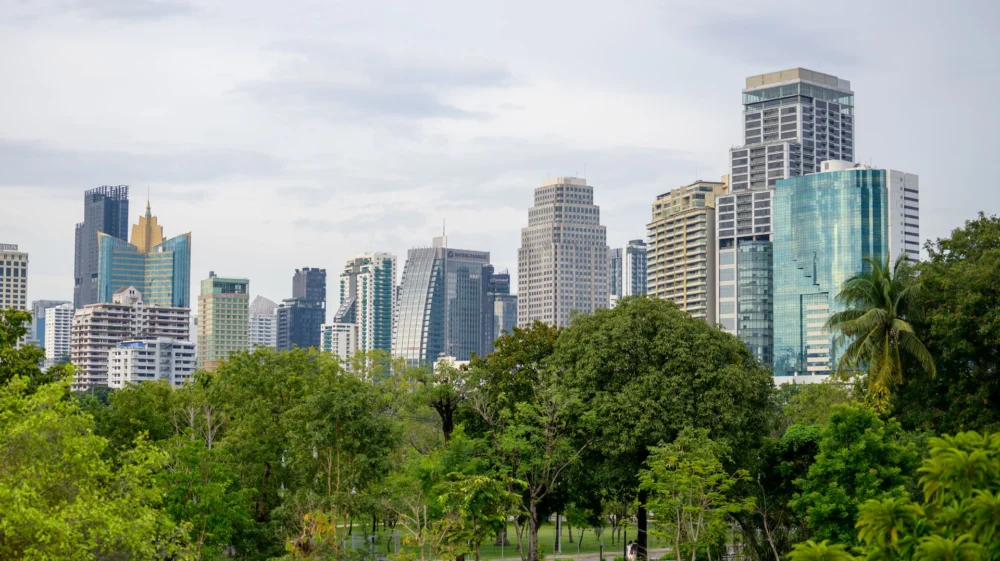
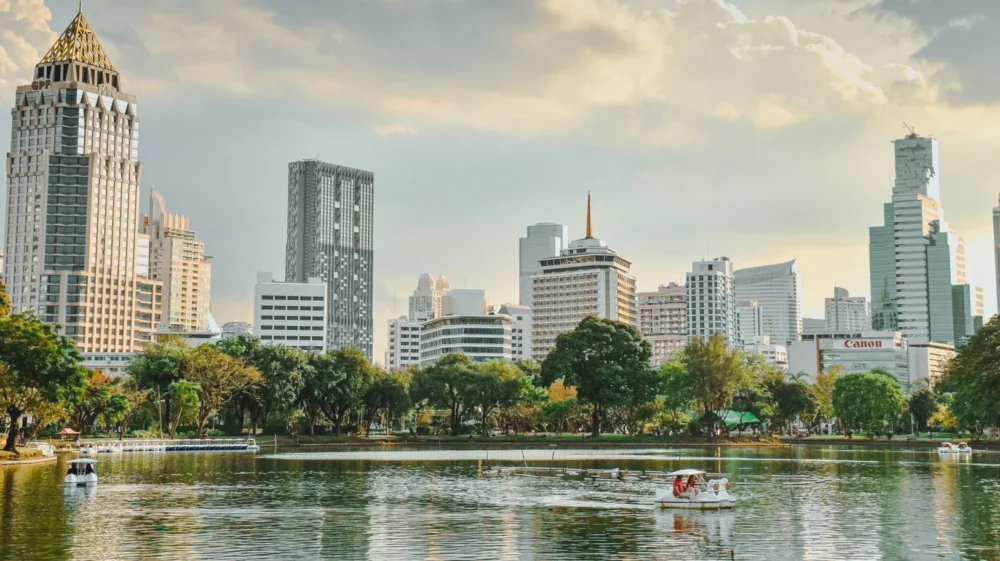
But at the same time, we need to reduce climate risk. So, this means reducing poverty of low-income residents. I mean, there’s many of these major cities in Asia, but also making them more resilient, but also reducing emissions at the same time. And so, I think cities have been unable so far to do this. This is this is I guess; you can call this a gap. And so, for example, you still see very high emissions in the transports sector in cities, very high automobile usage. And cities like Bangkok, Manila, and Jakarta.
Bangkok transport emissions are on par higher than cities like New York, Tokyo, and London. But also, I mean, there’s the push for rapid real estate expansion. And so, this means building, real estate development and flood zones are filling in of waterways and lakes. This has been a big issue in Phnom Penh, for example, and Hanoi, and this has increased the risk of flooding. I guess the larger question is, how can cities in this region still grow and improve people’s lives while reducing emissions and making their citizens more resilient? So, this is a challenge that must be solved by both at the urban municipal level, and also by national governments, I mean, working together. There’s no easy solutions for this.
What’s clear though is we need rapid decarbonization, for example, for buildings. So, retrofitting them making them more climate proof. For example, there is a lot of sunlight in this region, and so it’s very clear that mean that these buildings can be designed better, so you reduce electricity uses, or you can make wind flows better, so you reduce air conditioning costs.
And so, at the same time, you also need to find ways to reduce automobile usage. So, increasing public transport, they can get more expensive to drive. And so also making cities more climate proof. So, this would mean growing local food, planting trees, restoring wetlands, and rooftop gardens. But also, I think a key issue is making cities more equitable. Studies clearly show that the richest 1%, or both in the developing and developed world, emit more than 30 times percent more carbon per person than the richest and the poorest 50%.
So, I think the thing is, we can still reduce poverty, while better addressing climate change. So,
addressing inequality is key within these cities. And so also the key issues also, how can we invest better in public goods, better public infrastructure, such as rail, but also sanitation, public health, and public places like pools, parks, and recreational areas. And then finally, the issue is how can cities reduce their carbon footprint by using more decentralized renewable energy.
09:09-10:07
A lot of challenges a lot of things that can be taken up at the policy level. Just to reflect back, you and I have been in this region for enough number of years to actually see some cities develop. I remember Chiang Mai and Phnom Penh. We were there about 15 years ago, we were thinking, okay, they are or 15, maybe 20 years ago, we’re thinking, here’s a chance and opportunity to not be another Bangkok.
And yet, they seem to have followed a trajectory where they built many roads, filled it with cars. They did not spend money on public transport. They did remove wetlands and in Phnom Penh, there is an ongoing issue of floods because they removed the wetlands around the city. So, there is this desire to make cities better and yet they continue to follow this trajectory. Why do you think that is? City planners think, okay, let’s do all of these mistakes again.
10:08 – 11:50
I think, to a number of issues, I mean, one is this issue of lock in, when once you build these roads, I mean, it’s kind of it’s as this kind of inertia that you just keep on going for this path, that once you expand more have more infrastructure, it just going to keep on, you know, going out into these rural areas expanding and increasing, you know, air pollution, but also emissions. But also, I think, for example, is the political cycle. Mayors are often elected in short term political cycles. And so, they want to show their voters that they’ve done something. And so, it’s much easier for them to show the voters why build new roads, build flood walls, even those flood walls might move flood risks to other areas are not really addressed the long, the long term issues about flooding, because voters can see that they can see the new shiny buildings and roads, but they can’t see the land use planning, which preserves green areas, which can store water. And some I mean; it makes sense mayor’s want to be reelected. But also, national governments have pushed these urban governments to follow the national trajectory and trying to promote growth at all costs. And it’s still the imperative of trying to push for GDP. They still use the reason that we’re poor. That could be a different narrative. I mean, yes, these countries aren’t as wealthy as they are in the developed world and they still should reduce poverty, but I think it’s more about what type of growth to pursue, and how equitable it is, and also how green it is. The good thing is that these cities, and countries can learn from what the developed world did or didn’t do. And they don’t have to follow the same trajectory. So, I think there’s still presents an opportunity there.
11:51-12:22
I just wanted to come back to something you said earlier, cities need to develop and also build
resilience. And we do know that as part of development, in this region, especially cities need housing provision, they need sanitation, waste disposal. And obviously, these are most urgent areas for urban governance, given that challenge, to provide basic urban facilities. How does then one start to integrate a billion climate responses? Is that seen as a distraction for policymakers?
12:23-14:30
I think it shouldn’t be seen as a distraction. I think the technical term use often uses mainstream climate change. But I think, especially with the new IPCC report said, you should prioritize climate change and integrate climate change into all of its activities, and to all of these issues like housing, sanitation, and waste disposal. I mean, housing is a great example of how it can be well, integrated. Public Housing is urgently needed. In almost every major city in Southeast Asia, there’s not enough public housing, so it needs to be built. But the way it is built, it should be done with low energy usage. So, for example, I mean, Vienna, and Austria has great public housing. And they use very little air conditioning in the summer, compared to say New York City, even though it reaches similar temperatures. I mean, it’s, it’s not as hot as it gets here at Southeast Asia. Still, there’s ways to design this public housing, in terms of low energy usage, in terms of walkability mean, it has to be holistic. So, thinking about improving urban density, making these public housing connected to jobs, but also public transport so emissions can be lowered. But also, when you think of waste disposal, you can have waste energy systems. You can use wastewater sludge and capture for energy, and also safely boost agriculture. But also, you can see the link that if you have flooding, and also worse than sanitation. So, I think there’s all the linkages between these things. But also, when you think about this, just investing in, universal social policies like substantial guaranteed health care, education, water, I mean, housing, as already mentioned, Social Security. That’s just it’s good for anything. It’s not it’s good for climate change, but it’s also good just for improving wellbeing overall. And so, I think these types of solutions are win-win, and but also, I think governments need to now especially urban governments think how can they urgently and on a large scale, reduce carbon emissions, and all these sectors because of this new report. This is a big red flag.
And so, I think cities need to redesign and revamp their climate action plans.
14:31-14:44
But back to that IPCC report, as you said, there’s a red flag. It’s more than ever impressed on us the urgency for climate action. In your own reading of it, have you found anything there that has talked specifically about cities in Southeast Asia?
14:45-15:59
If you look at the section on Southeast Asia, they mentioned for example, the Mekong Delta is that is highly vulnerable to a number of issues, particularly sea level rise and coastal erosion due to climate change. It just shows that if you if you read the report that there’s going to be mean, will be likely more high precipitation events, which means that flooding will affect cities throughout the region. And droughts are also more likely. Cities need to plan for this, and they need to think about how they are going to deal with this issue of water better, and how the seas can, can better live with water, both lacks thereof or too much water. And so, that would be increasing drainage capacity, for example, increasing green spaces, which can both retain and store water when there’s not enough water, but also help with flooding. And so, I think, also, for example, but you’ve seen another link in Dutch cities are making room for water. And so, the moving foot walls and dikes are turning parking garages, for example, into drainage areas and water retention areas. These are key issues in Southeast Asia is how to deal with the issue of water.
16:00- 16:31
So far, it seems that when we do refer to cases or examples, it’s easier, it seems to refer to cities in the global north. But that is obviously because and we know this, that empirical urban climate governance literature is still dominated by studies from the global north, not that much from the global south.
Why do you think that is? Should there be more studies, or do we have enough of these is just that they’re not focusing on the climate and urban governance intersection, as you said?
16:32-17:15
I think there should be more studies of urban climate governance in the global south, and I think there are a number of reasons for this. One is that there’s more funding. There’s more research funding from national governments, but also research bodies in the north, devoted to these issues of urban climate governance. Also, you look at the university level sector, ministers, fewer programs and classes on this issue. There’s less training and knowledge on these issues of urban climate governance in the global south. I don’t think this isn’t improving. I think there is there are more studies and researchers focused on this issue, so, it’s promising. But I certainly think there’s still a gap in this issue and more can be done.
17:16-17:56
Definitely true. We do need more studies in the global south about our cities. So that gives us a good idea of the knowledge, the knowledge gaps. We also talked about policy censuses, and especially our policy podcast on environment. Let me focus a little bit more on policy and local governance, especially, because then one of your responses, you said the challenge is, how do you bring the municipal level to work together with the national government.
But for a moment, if we talk only of local municipal governance, what do you think are the factors that can enable this to become better? How do city governments, how do municipalities get better at Urban governance and local climate action?
17:57- 19:55
It’s a tough challenge, particularly, with the lack of decentralization in many Southeast Asian countries. But municipal governments, particularly in smaller cities, like secondary cities, they still have quite a bit of independence. There’s less political interference, for example, at the national level, I mean, for example, with Bangkok, especially the Bangkok governor is from a different political party than the national government, the national governments going to try to stop or hinder the Bangkok governor from implementing policies, because he doesn’t, he or she doesn’t want the governor to look too good.
Because it would, you know, it would hurt their reelection chances. But at the secondary levels, I think there’s a lot of opportunity for social learning to learn from what other cities have done. But I think it also requires a number of different actors to come together. I think you need some expertise for scientists, but also nonscientists, social scientists, even in the humanities. And so, these people can think about what are solutions, but also, I think you need to build a coalition with, for example, particularly low income groups, because they are the ones who suffer the most from climate risks, and the ones who can, who can offer solutions and know best how to make climate responses fair within their cities. And so, you have a coalition of experts in low-income communities, but also, private sector leaders as well are needed. And so, basically, you need these different groups to come together to talk with the government. And so, because basically, you need to have a widespread buy in. Climate change is a major issue, and that these are different solutions that are that can be proposed, and then to come together for compromises and this kind of collective action, which is needed to at the local level, and also is that you talked about learning from what cities have done or not done. And now you can think of solutions.
19:57-20:38
Which brings me to my last question. Out of all of this, governance and climate action. I know that your own interests have also rested a lot on equitable governance. I know your research has focused a lot on equitable governance and how attention can be focused on vulnerable communities. Your research on the floods in Thailand, showed how the burden of disaster risks is not shared equally, and especially between urban and suburban or rural communities. You also explored the notions of disaster justice, how can we bring this more so that, once again, it’s not the poorest are the most vulnerable that are affected by policies to deal with urban and climate governance.
20:39-25:01
That’s a great question. Just to briefly summarize my research on the floods, I use this idea of disaster justice to look at how there was two different notions of responses to the floods, one was this more hierarchical notion of justice was basically idea that some places and people should be protected, based on their position in society, and at the expense of others. And so, this was promoted by the elites, for example. And at the other side was this more, I guess, egalitarian notion of disaster justice, where people share burdens, and have equitable access to the distribution of risk. And so many communities are protesting in Bangkok during the floods and sought to push for a fair response to the flooding. So, when you think about at the, at the wider level of climate change, a good example is this, this notion of double injustice, within cities, is that poor people in Southeast Asia, they take the bus or they ride motorbikes, they live in smaller homes, they use little or no air conditioning, you could even also say they eat less meat, but they live in the most vulnerable areas. They live along canals are railroad tracks.
And so, the ones who are most affected by flooding, or they could say they also live closer to factories, and so they suffer from air pollution. And in contrast, the wealthy they drive the most they have the bigger homes, they take flights, and they’re better protected. They live in areas which had more flood walls, and so forth. This is a double injustice, and both in terms of adaptation and mitigation at the city level. And so, when you think about climate response, how do you address this double injustice? Often, the benefits and costs are even. And so, in many times, you’re seeing climate policies actually exacerbating or redistribution inequality. And so, creating unfair outcomes. A good example is after the 2011 floods in Bangkok, the national government raised roads around the outskirts of Bangkok. So, this protected Bangkok more, but those outside Bangkok, which are farmers, for example, in the Nakhon Patom, or Ayutthaya, they are now exposed to more flood risk. And in Manila, for example, they filled in many waterways to build more residential areas, shopping malls, but because low-income communities live along these waterways, they were evicted into spaces, which are farther away from the work and lower quality housing. So, these projects are done without consulting these groups. It’s also a problem with cost benefit analysis. These models often lead to helping those who are better off. So, when you think about climate policies, we need to ask about resilience for whom because a lot of times is just building urban climate resilience. You need to unpack this – who benefits from these resilience projects, but also in terms of mitigation, who is responsible for reducing emissions. And if anybody will lose jobs, for example, if you close down a coal power plant. How will this transition be made fairly power, whether it be job retraining programs to help workers who lose jobs, so must be done as we share risks, and burdens equitably in terms of climate change, or even better, in terms of thinking about the most
vulnerable. They should be the focus in terms of building resilience, and those who are the elite,
because they have the ones who have had the most responsibility.
And so, we need to think about how can we make this happen. And so, you need to think about bottomup movements, which empower these groups incorporate their voices, but also design policies which incorporate redistribution. But I think also we need to think about why does this exist. I mean, in Southeast Asia and beyond, we have injustices and this ecological crisis, in terms of climate change, but many other problems like air pollution, because the political systems themselves are corrupted, unfair, and so elites have managed to capture political systems. So, we need to have better democracies in general, we need to keep kick big money out of politics, dismantle monopolies, manage collective resources as common as much as possible. And only in this way can we address double injustice or climate change.
25:02- 25:28
That was an excellent response, Danny. And it’s a very good way to end this podcast on policy, that we should always be looking out for the most vulnerable, the poorest who are most likely to suffer policies focusing on urban climate governance. With that we can wrap this up, Danny, let me thank you once again for joining us, giving us your time and expertise. And I wish you all the best.
25:29-25:32
Oh, thank you, Rajesh. Thanks for inviting me. I enjoyed it.
25:40 -25:51
Thank you for listening to SEI Asia podcast on environment and policy in Asia. For more information on these topics, guests, and our work, please visit our website on www.sei.org
Urban areas in Southeast Asia are some of the most vulnerable to climate risks. While urban planning needs to be improved to cope with climate change, it is critical that the poorest and most vulnerable are not the most affected by policies for urban climate governance.
Danny Marks
Assistant Professor of Environmental Politics and Policy
This is an excerpt of a podcast conversation with Dr Danny Marks for the new SEI Asia podcast series “Environment and Policy in Asia”.
Asia is one of the fastest urbanizing regions in the world: 60 percent of growth in urban areas is taking place in Asia. Cities are also a key source of carbon emissions: globally, cities account for 70 percent of of greenhouse gas emissions. However, cities are also at the forefront of measures for climate mitigation and adaptation.
According to Marks, cities in Asia hold the key to implementing climate change solutions. “Cities can play a key role in reducing emissions since they control transportation networks, building codes, and water and power lines,” he said.
He views this as particularly pressing in Asia, not only because the region is a large source of carbon emissions, but also because many countries and cities are some of the most vulnerable to climate change, such as Bangladesh, Cambodia, the Philippines and Viet Nam.
Urban governance is a huge challenge in an era of climate change. However, Marks is optimistic about the role of cities.
“City mayors are more directly accountable to their constituents and they face the voters more directly,” he said. “Cities are flexible and they can move more quickly than national governments can in terms of rolling out new projects and policies. They can also help set the agenda elsewhere and at the national level. Finally, cities can experiment on climate solutions.
“There are a number of ways that cities can quickly reduce their carbon footprints, particularly in encouraging urban density as one way for making cities greener and more walkable, and implementing nature-based solutions is also a way forward,” he added. “Some of these solutions are win-win because they don’t only reduce carbon emissions, but also make these cities more resilient to climate risks.”
While urban planners go about making cities more resilient to climate change, they often tend to redistribute climate risks by favouring certain areas or communities more than others.
Marks’ research into the 2011 floods in Thailand showed how state planners worked to preserve central Bangkok while letting the floods cover suburban areas for up to two months. He emphasized that city planners need to adopt a more egalitarian notion of “disaster justice” where the risks and burdens are shared more equitably.
Marks cautioned that climate policies can end up exacerbating or redistributing inequality.
“A good example is this notion of double injustice where within cities, poor people in Southeast Asia take the bus or ride motorbikes, live in smaller homes and use little or no air conditioning,” he said. “They live in the most vulnerable areas, they live along canals and railroad tracks. They are the ones who are most affected by flooding, or pollution from factories, and suffer from air pollution.
“This is a double injustice, both in terms of adaptation and mitigation at the city level. And so, when you think about climate response, how do you address this double injustice?” he asked.
“A lot of the time, it is about building urban climate resilience. But you need to unpack this, who benefits from these resilience projects? But also in terms of mitigation, who is responsible for reducing emissions? How can climate burdens be equitably shared?”
Ensuring equitable urban governance means that policymakers and practitioners must engage more with different actors, especially the most vulnerable, to listen to their experiences, vulnerabilities and priorities.
Marks believes that the solutions to ensure equitable resilience in urban climate governance lie in empowering local groups and communities.
“We need to think about how we can make this happen,” he said. “We need to think about bottom-up movements, which empower these groups to incorporate their voices into urban planning, and design policies which incorporate redistribution of disaster risks.”
Feature / At the Bangkok Climate Action Week 2026, SEI Asia will showcase research and build pathways for climate action through science, dialogue, and engagement.
Feature / Key messages from the second Joint Steering Committee (JSC) meeting on water-related collaboration between ONWR and SEI Asia on 20 August 2026
Past event / SEI joins the Climate Week in New York to highlight global leadership and finance solutions for accelerating the transition to net zero industry.