Read our report, “What counts? The state of evidence of outcomes of locally led adaptation“.
Since 2021, more than 130 organizations and governments have endorsed the 8 Principles for Locally Led Adaptation (LLA), which were created to give communities greater agency in making decisions about how to adapt to climate change and plan more sustainable futures. Over this period of time, however, only a small share of international climate finance has gone towards supporting adaptation at local levels – and an even smaller portion of this funding is truly locally led. In an increasingly unstable geopolitical environment, LLA must compete with other urgent priorities, such as energy and national security, for international investment.
Funders, policymakers, and practitioners have repeated highlighted the need for stronger, more nuanced evidence on the effectiveness of LLA approaches. Funders argue that they need better evidence of outcomes to demonstrate that LLA works not only as a process – improving participation, equity, and legitimacy of adaptation decision-making – but also to strengthen vulnerable communities’ resilience to climate change and contribute to other long term benefits. Funders insist that providing such evidence will help them advocate for funding – both within their institutions and to other funders – and inform more equitable investment and design decisions.
But their demand for evidence of outcomes is controversial.
Some LLA advocates argue that the request for evidence is a red herring, a distraction or a delay tactic. They perceive the barriers to LLA as fundamentally about power. That is, they believe that funders and governments are unwilling to devolve real decision-making and financial authority to local actors. They argue that better information will not increase the share of financing to LLA as long as those in power distrust communities to use resources responsibly and effectively.
Others assert that evidence of positive outcomes is already widespread, and that the challenge is entirely different. They argue that decision-makers do not take up the available evidence because of the type of evidence provided. Such evidence is usually generated through participatory processes, lived experience, storytelling, and locally grounded ways of knowing. It is often considered to be “inaccessible” to funders and policymakers either because it is in a language or format outside their normal decision-making procedures, or, most controversially, because it is not recognized or valued because of who produces this knowledge.
Still others argue that it the best use of limited resources is not measuring outcomes – and that it is not the job of traditional or marginalized communities to perform or prove adaptation “success”.
While recognizing these questions of power, and competing values and epistemologies (ways of knowing), the scientific community is also grappling with core methodological challenges in measuring the effectiveness of climate adaptation overall. High degrees of uncertainty over warming scenarios and climate impacts make evaluation of adaptation efforts difficult over long time frames. Different actors often have radically different visions of desirable futures, raising the question of whether it is even possible to objectively assess adaptation “success”.
LLA also presents unique challenges in measuring effectiveness, with potentially high risks of maladaptation (when action intended to reduce risk ends up increasing it) and negative spillover effects (when effective adaptation for one group or community increases vulnerability for a neighboring group or community).
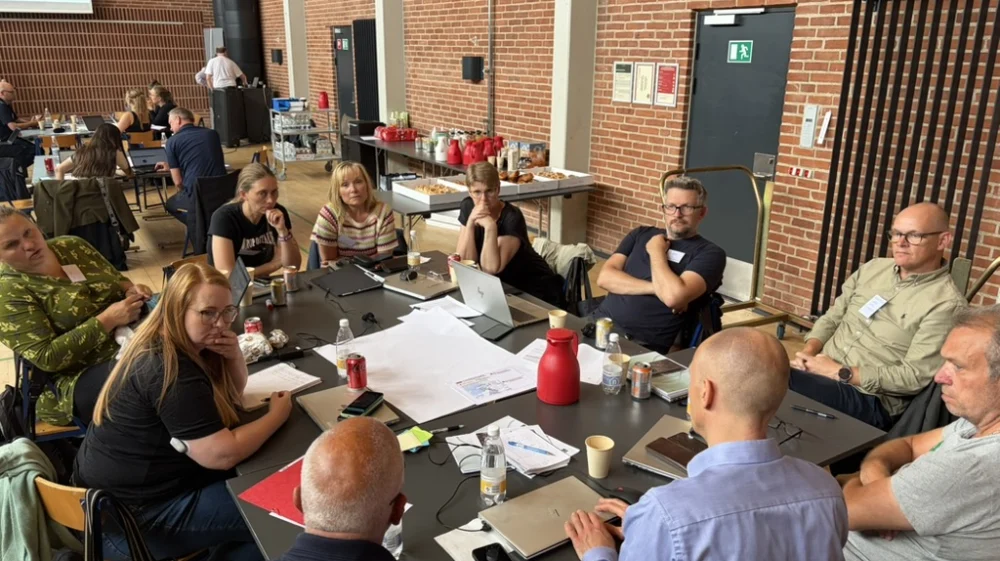
SEI is embarking on work to help bridge this gap between funders and communities that are seeking to be leaders of their own adaptation efforts. To begin, in June, it is convening a symposium that brings together key knowledge holders and producers from a range of geographies and perspectives to discuss how to strengthen the evidence base on the outcomes of LLA.
The work seeks to:
“Strengthening evidence on the outcomes of locally led adaptation” is funded by the UK Foreign, Commonwealth & Development Office (FCDO).
Caribbean Natural Resources Institute (CANARI)
International Institute for Environment and Development (IIED)
The Least Developed Countries Universities Consortium on Climate Change (LUCCC)
Feature / Responding to escalating climate impacts and adaptation needs, SEI has updated its Tandem guidance to improve collaborative climate decisions and actions.
Perspective / Asia’s next financial revolution must make climate adaptation finance accessible to vulnerable households and small businesses.
Media advisory / Experts from SEI will be at CBD COP17 in Yerevan from 19–30 October and are available for commentary and analysis.