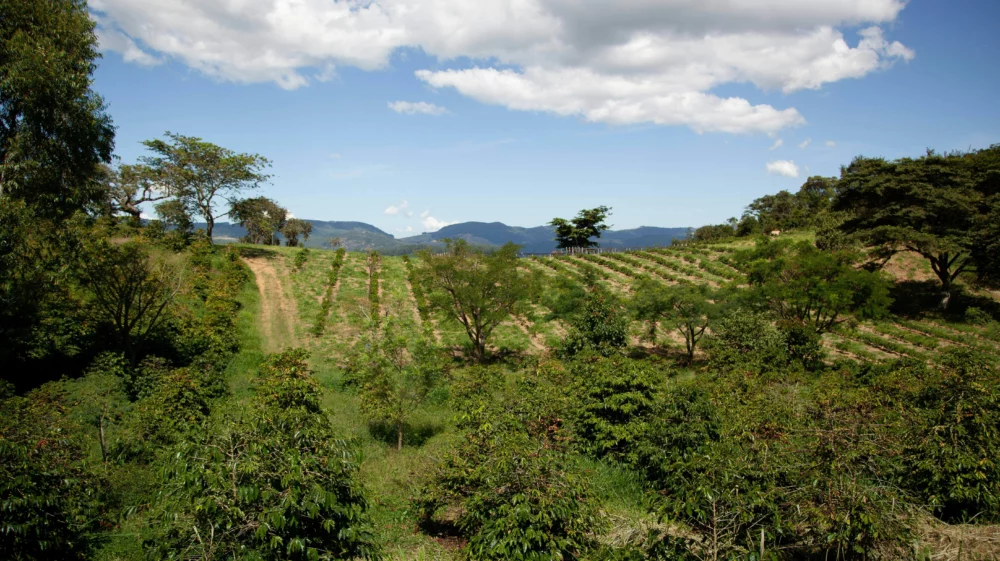
Forests and trees are powerful, often undervalued allies of agriculture. This publication synthesizes the latest science on how forests and trees regulate climate, water and ecosystem functions that directly underpin agricultural performance.
Promoting synergies between forests and agriculture is essential for sustainable agrifood system transformation. Agriculture and forests are often viewed as competing land uses with perceived tradeoffs especially stark in regions where land is scarce or highly coveted for agricultural production, fuelling debate on how best to balance food security and forest conservation. Yet, a growing body of evidence demonstrates the many ways that forests and trees enhance agricultural productivity and resilience.
This technical report, a collaboration between the Food and Agriculture Organization of the United Nations (FAO), Stockholm Environment Institute (SEI), The Nature Conservancy (TNC) and Conservation International (CI), synthesizes the latest scientific evidence on a range of climate and ecosystem service-related benefits that forests and trees provide for agriculture. It specifically examines their role in regulating climate, rainfall and water availability at multiple scales, impacting the productivity and resilience of crops and rural workers, and supporting pollination, soil and pest management. This report shows that, together, these ecosystem services are vital for supporting agriculture across a diversity of contexts.
The overall concept, context synthesis and author coordination for this publication was led by Rafaela Flach, Research Fellow at the Stockholm Environment Institute (SEI), with additional technical leadership by Amy Duchelle and Sara Casallas Ramírez from the Food and Agriculture Organization of the United Nations (FAO), Selorm Kugbega from the Stockholm Environment Institute (SEI), Nicholas Wolff from The Nature Conservancy (TNC) and Michael Wolosin from Conservation International (CI).
Past event / Join the launch of the FAO report demonstrating the value of forests to agriculture.
Press release / Protecting and restoring forests is crucial to boosting climate-resilient agriculture, rural livelihoods and global food and water security.
Perspective / Evidence from multiple disciplines shows that forests can support agriculture, climate and communities. A new report helps turn that evidence into action.