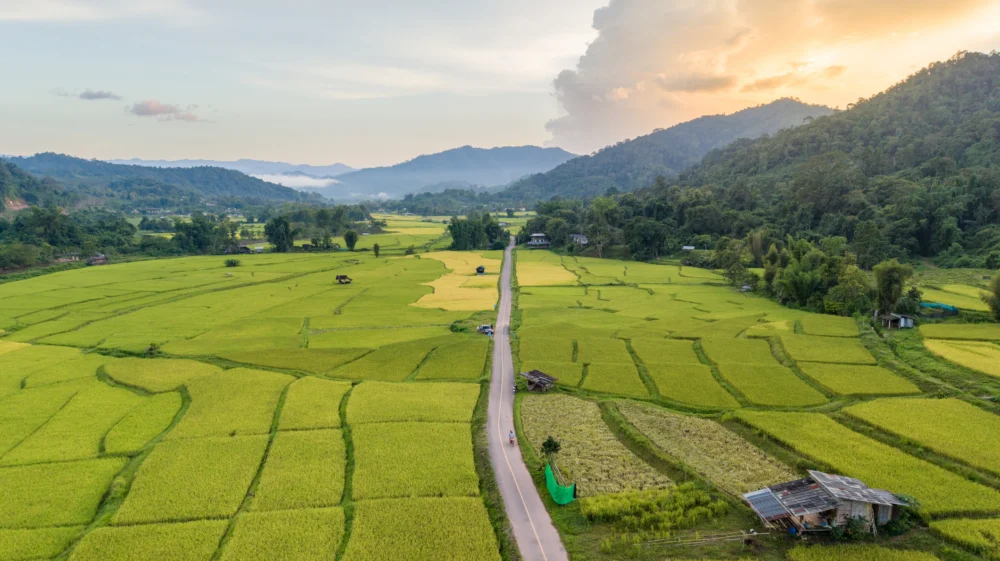
Drawing on rural field research in three villages of Northeast Thailand, this paper seeks to understand the ways in which life course, generational, era-defining and developmental change intersect, and why rural smallholders and smallholdings continue to persist notwithstanding deep structural change.
The paper outlines the creative ways that households and their members have sought to address the scissor effects of declining land holdings, rising needs, reduced relative returns to agriculture, and often precarious non-farm work. It posits, drawing on this work from Thailand, that while Asia’s ‘truncated agrarian transition’ goes some way to explaining the current empirical fact of persistent smallholders, doubts are raised whether the rural development agenda of modernisation, marketisation and rural exit will have the traction that governments and some scholars anticipate. A focus on production obscures how rural livelihoods also embody acts of consumption, care, reproduction and redistribution. The study finds that the current experience of occupational multiplicity where households’ livelihoods comprise farm and non-farm, commoditised and quasi-subsistence, in situ and ex situ, production and care, and reproduction and redistribution will likely also persist, if non-farm occupations remains classically precarious and social safety nets thinly woven.
This paper contributes to debates over agrarian and rural livelihood transitions in Asia, and sheds explanatory light on why the farm-size transition has not taken hold.
SEI working paper / A snapshot of Thailand's efforts to develop a modern bioeconomy.
Journal article / A 40-year village study in Thailand shows how migration, return and circulation shape the country’s ongoing agrarian transition.
Perspective / This article offers lessons from Labuan Bajo, Indonesia, on turning circular economy policy into local action.