This modeling study explores – spatially explicitly, for current and projected future climate, and for different management intensity levels – the potential for increasing global crop production through on-farm water management strategies.
A moderate scenario, implying both a 25% reduction in evaporation and a 25% collection of runoff, suggests that global crop production can be increased by 19%, which is comparable with the effect of current irrigation (17%). Climate change alone (three climate models, SRES A2r emissions and population, constant land use) will reduce global crop production by 9% by
2050, which could be buffered by a vapor shift level of 50% or a water harvesting level of 25%.
Even if realization of the beneficial effects of rising atmospheric CO2 concentration upon plants was ensured (by fertilizer use) in tandem with the above moderate water management scenario, the water available on current cropland will not meet the requirements of a world population of 9–10 billion.
Perspective / Conservationist policies could be more effective if they respected the spiritual beliefs that already guide forest use, preserve biodiversity and livelihoods.
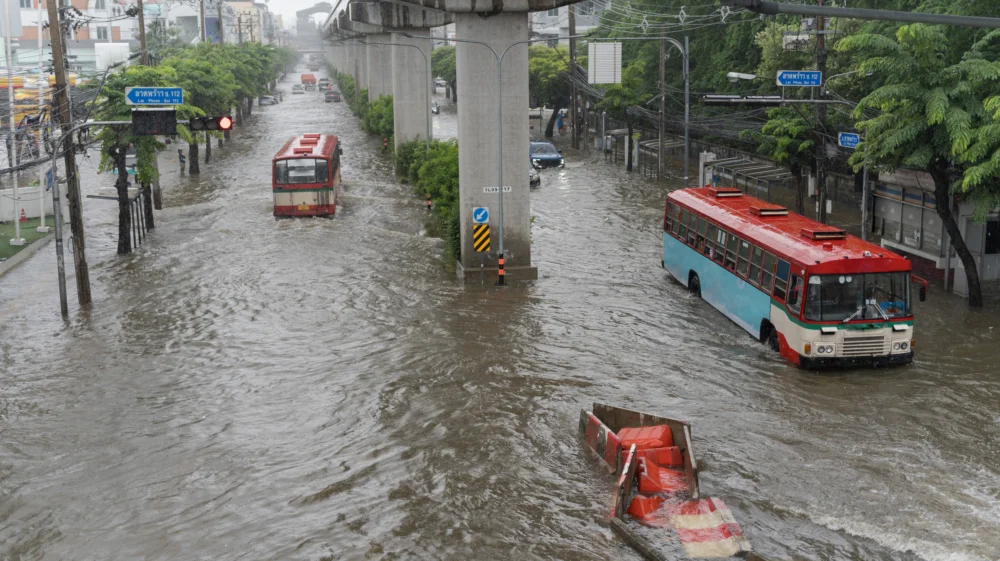
Perspective / Flooding in Bangkok in late September exposed a critical gap: forecasts identified the threat days in advance, warnings and preparedness did not translate fast.
Event on 08 December / In this fourth CS Co-labs discussion session we will explore the use of digital tools in different aspects of citizen science projects.