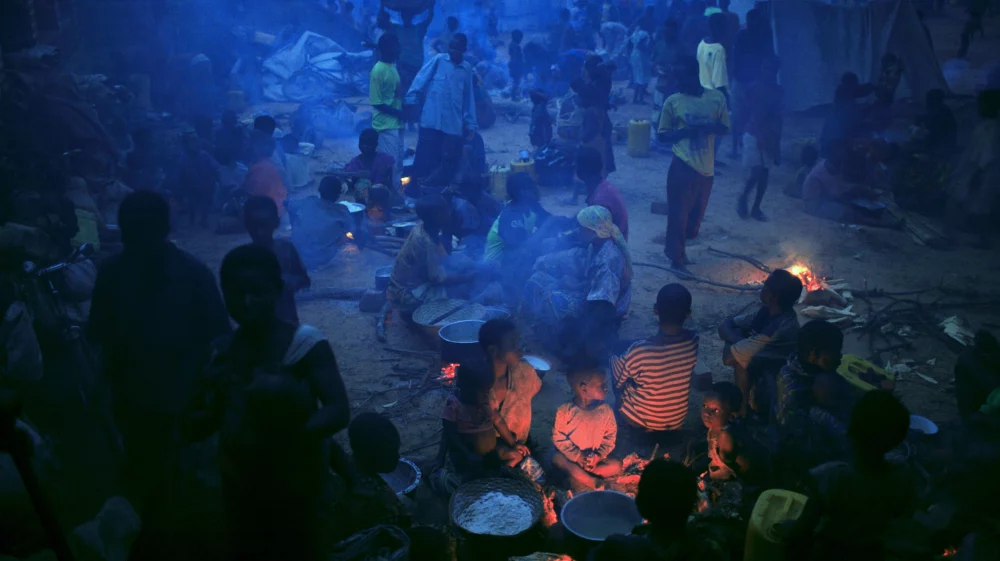
In this Q&A with Nature Energy, Sarah Rosenberg-Jansen discusses issues surrounding grid and electricity access for refugees in forced displacement settings.
Sarah Rosenberg-Jansen, Silvana Lakeman / Published on 6 May 2026
Read the paper Closed access
Lakeman, S. (2026). Grid access and electricity for refugees. Nature Energy, https://doi.org/10.1038/s41560-026-02033-6
Refugees have limited access to national grid systems. These are due to affordability and political constraints.
Injustices are created and reinforced within humanitarian energy supply and by climate action policies for forcibly displaced people.
Off-grid solar technologies can provide access for refugees and fill some of the gaps created by a lack of grid access. Off-grid systems can provide low-carbon electricity for both refugee households and humanitarian organizations working in displacement settings.
To change the situation, humanitarian actors and national governments would need to commit to institutional reform and political change to deliver electrification at scale and to connect refugee households and businesses to electricity grids.
Critical evidence is needed to foster change to improve the current situation, and to better understand how to ensure that refugee communities are included in the pursuit of global goals to provide affordable, clean energy access for all.
Closed access
Feature / SEI's "Humanitarian Energy and Climate Transitions" research agenda aims to address renewable energy and climate-related issues in humanitarian settings.
26 August 2025 / About Energy access and Household energy
Feature / This Q&A outlines why SEI is taking on research to address clean energy access and climate change-related concerns in humanitarian settings.
8 September 2025 / About Energy access, Household energy and Renewables
Other publication / This report explores business models and finance options that can help accelerate the use of clean-cooking technologies in last mile communities.

18 June 2025 / About Finance