In this Q&A, Sarah Rosenberg-Jansen, who leads SEI Oxford’s new “Humanitarian Energy and Climate Transitions” research agenda, explains why SEI is targeting energy access and climate change-related concerns in humanitarian settings, and what the work aims to achieve.
The agenda you are setting out examines energy and climate issues in humanitarian contexts. What does that mean?
On the one hand, it’s simple. Humanitarian energy refers to all the electricity, fuel, and energy technologies needed to provide power and supply cooking in refugee camps and for forcibly displaced people.
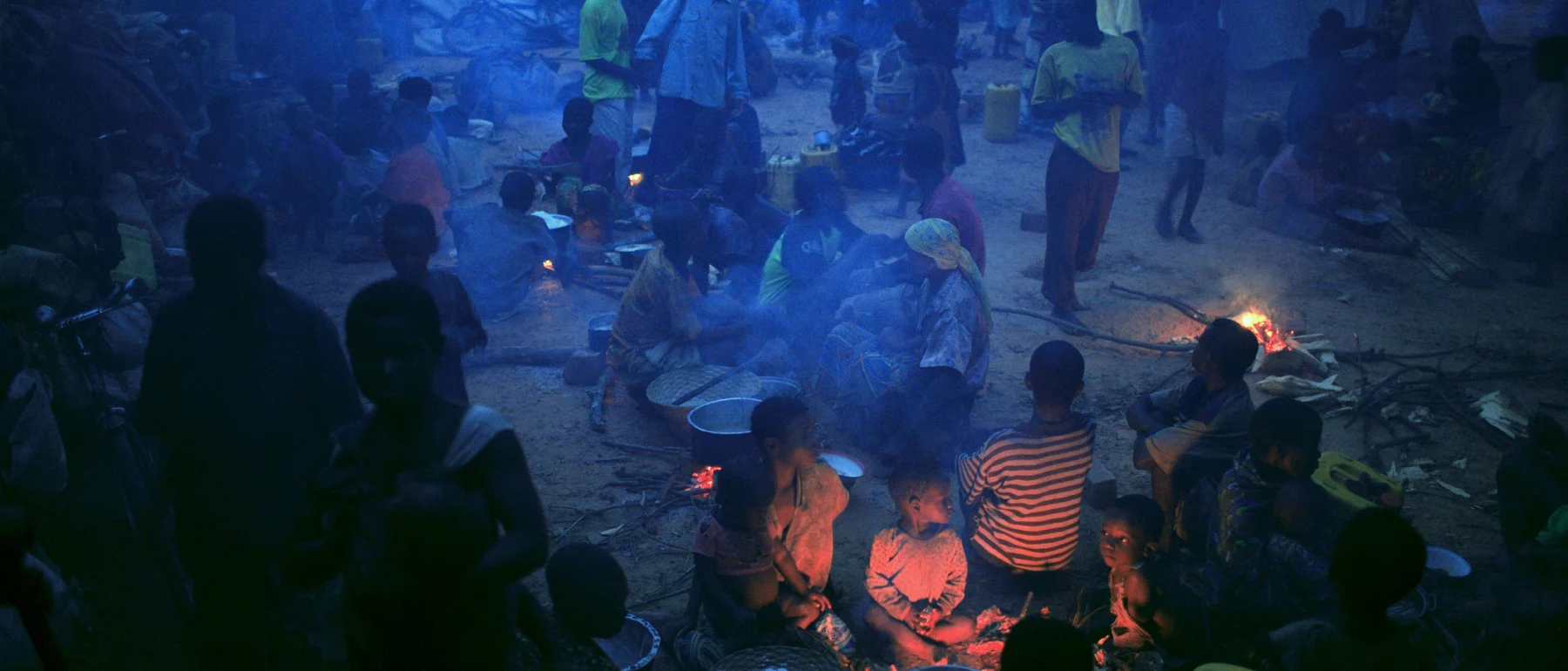
On the other hand, it’s complex. “Forcibly displaced people” covers a number of different groups, including refugees, internally displaced people, asylum seekers, and forced migrants who have been displaced due to persecution, conflict, generalized violence, human rights violations, or the adverse effects of climate change and environmental degradation. Worldwide there are now over 120 million forcibly displaced people. But if we add in those experiencing humanitarian crises such as natural disasters this figure rises to 305 million people. There is a huge variation of energy access for people in these situations worldwide.
Further complicating the picture is climate change. Globally, the energy sector produces the most greenhouse gas emissions by far, over 70%. So, decarbonizing energy supply is a very important part of addressing climate change. This is particularly true in the humanitarian sector. Why? Because most forcibly displaced people are in countries that are highly vulnerable to climate change. This interconnectedness is also the reason the new Humanitarian Energy and Climate Transitions portfolio at SEI Oxford covers both energy and climate. We can see that understanding how both issues come together is critical to informing policy and practice choices on reducing emissions.
Why is this agenda important? Why is it receiving new attention?
As one of the interviewees for my book, “Voices in the Dark”, said about energy: “It is underpinning everything. If you have no battery, you have no torch. If you have no panel, you have no phone charging business. If you have no diesel, you have no lights or fan. If you have no wood, you have no food”. Modern life requires energy. Could you email or use your phone without electricity, cook food without an oven or cooking appliance, or light your home in the evenings, without energy?
The same is true for refugees and displaced people: life without energy is severely limited. It is a myth that refugees and displaced people don’t need energy – over two-thirds of refugees are mobile phone users, and of course everyone needs heat to cook food and boil water.
My view is that energy access should be a human right. This might not sound like a controversial opinion, but to some it is! Some humanitarians think of energy for refugees and displaced people as a secondary concern or a luxury. As an issue, energy has been overlooked by the humanitarian community. For example, energy has long been treated as a sub-topic within water provision (electricity for water pumping) or human rights (providing basic cookstoves for women to reduce the risk of gender-based violence). While these are important matters, this tendency to treat energy as not as important as other issues means that many other household and business energy needs are forgotten or neglected.
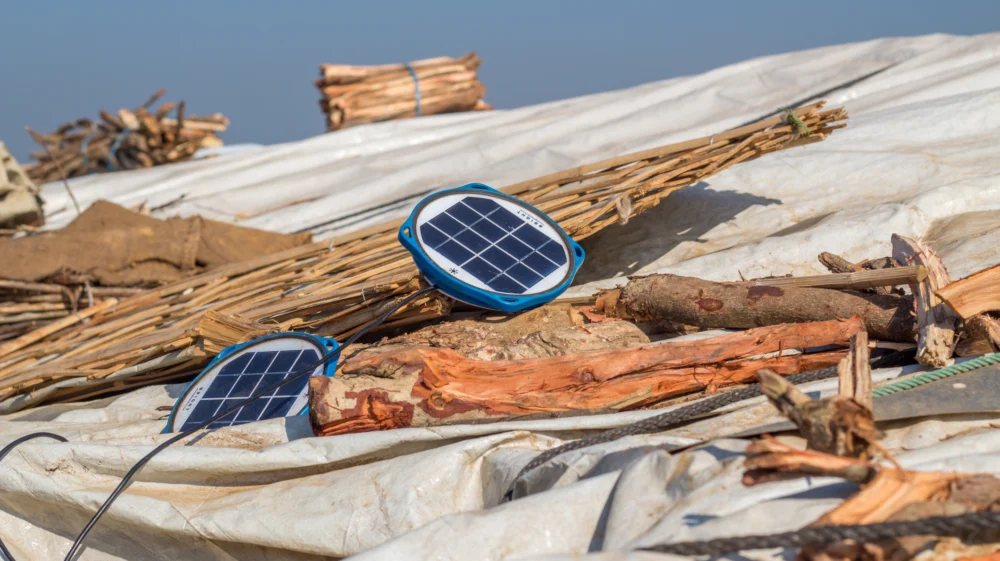
Now, finally, energy is receiving attention within the UN. This is thanks to a confluence of factors – the work of key advocates and refugees themselves, growing recognition that emissions from humanitarian operations must be addressed as part of efforts to stem greenhouse gas emissions, and technological progress that shows how new innovations in renewable energy can help. For example, I was part of a team of researchers who contributed to a recent UN Environment Programme report that examined how new solar cookers and other innovations can help improve the situation in humanitarian settings and in “last-mile”, underserved communities.
That leads us to the question of what energy technologies are in use in humanitarian settings and refugee camps? What needs to change?
Things vary widely: for example, in Kenya and Rwanda in East Africa people rely on firewood and charcoal for cooking, and many families use candles, torches, or mobile phones for lighting. While refugees living in towns in Jordan buy fuel and gas canisters and pay for electricity from the Jordian national grid.
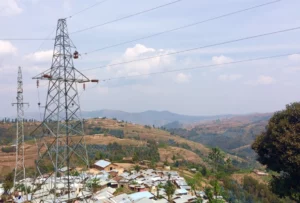
National grid electricity wires over Kigeme refugee camp in Rwanda. Photo: Sarah Rosenberg-Jansen
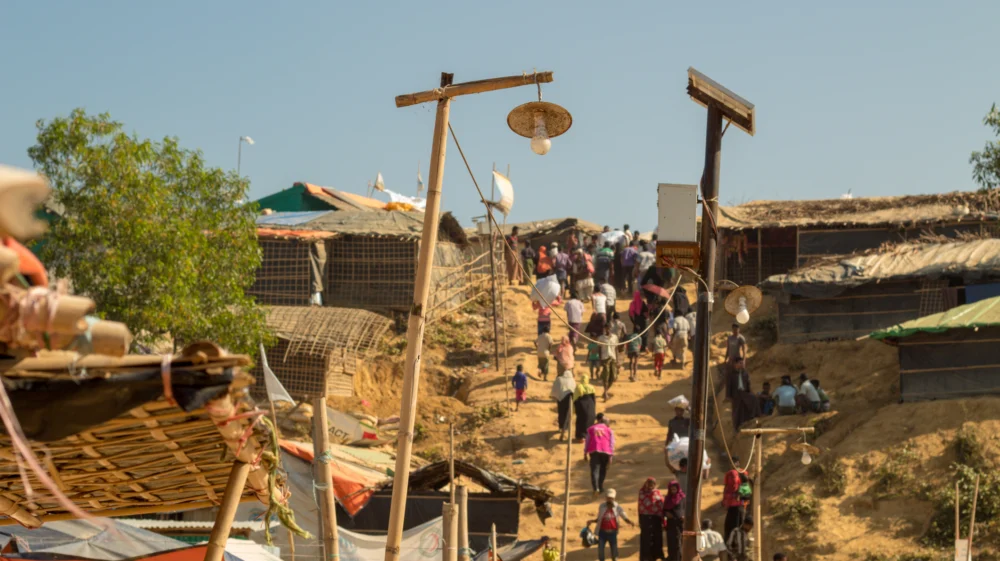
Electricity access is not only limited; it’s expensive. Refugees often pay high prices to charge phones or use internet shops. And in places like Gaza that are under active siege, access to basic energy services can be almost impossible to come by.
What needs to change? Displaced people need better access to more energy. Some 94% of forcibly displaced people living in camps are estimated to not have meaningful access to power. An estimated 81% lack anything other than the most basic fuels for cooking.
The sources of energy used also need to shift radically – away from diesel for generators and firewood and liquefied petroleum gas or firewood for cooking.
And things need to speed up. Consider this: more than 11,000 diesel generators are still in use by humanitarian operations, costing more than $100 million to be spent on polluting fossil fuel and emitting almost 200,000 tonnes of CO2. The humanitarian sector has been remarkably slow to switch to renewable technologies.
Funding must be part of the picture. How does financing need to change to support access to renewable energy in these settings?
The systems for supplying energy within the UN are underfunded and often inefficient. Meanwhile the private sector and energy businesses find it challenging to commercially engage because humanitarian systems can be opaque and often do not support long-term investments.
For money to start flowing, change is needed for public- and private-sector sources.
For public funding, UN system reform is essential. Within the UN humanitarian system, energy gets left behind as a “secondary need”, meaning funding is spent elsewhere. UN procurement rules tightly control which suppliers can provide energy products and services. This can exclude renewable energy companies from applying for tenders. To establish new rules and ways of working requires support from donors and the UN to change some of the ways they implement energy programmes currently – by switching to using renewable technologies instead of fossil fuel powered ones ..
For private-sector financing, the problems are different. Refugee camps are seen as risky places to invest because refugees might move and not be able to repay loans. However, refugees actually have one of the highest repayment rates: the micro-lending organization Kiva suggests that over 96% of their loans have been repaid in full. Despite this, many private-sector organizations have little experience investing in displacement settings, and they are cautious. Some organizations, such as Ashden and Acumen, have started testing commercially viable sustainable energy projects with refugee entrepreneurs. But more research will be needed to understand how these investments can be scaled. For this reason, financing and investment are a first, core topic on SEI Oxford’s research agenda.
What do you hope will come of the research?
As a start, we hope the work will lead to more awareness and greater understanding of the humanitarian system among decision-makers who are essential players in setting the stage for meaningful change.
We hope the work can led to positive changes in the ways donors and investors spend money on energy and climate solutions in humanitarian settings. New research on innovative financial practices can enable more funding and financing which directly supports renewable solutions, and higher levels of energy access, for forcibly displaced people.
And overall, we hope our work can shed light on how joining together renewable energy and climate action objectives can improve the health, well-being, and quality of life of all displaced people and all those in so-called “last-mile communities” that have been left behind in the clean energy transition.
Here are three resources for further information:
Public-access library – This public Zotero Library has up-to-date academic and practitioner articles that are open to all.
A short read – See Sarah’s article, The emerging world of humanitarian energy: A conceptual research review, published by the journal, Energy Research & Social Science.
An in-depth piece – See State of the Humanitarian Energy Sector Report, a review of the sector published by the Global Platform for Action for Sustainable Energy in Humanitarian Settings and co-authored by Sarah.
SEI brief / This SEI brief outlines recommendations to leverage financial guarantees to help expand energy provision in humanitarian settings.
SEI working paper / This SEI working paper analyses the role that financial guarantees may play in supporting renewable energy provision in underserved humanitarian contexts.
Other publication / In a Q&A with the journal Nature Energy, Sarah Rosenberg-Jansen outlines key issues affecting electricity access for the world's growing refugee population.