Why has progress on locally led anticipatory action for disaster management been uneven, and what are the trade-offs and opportunities the IFRC Network must navigate to make progress?
Across its global network of National Societies, the International Federation of Red Cross and Red Crescent Societies (IFRC) has played a leading role in extending anticipatory approaches for disaster management. Yet as anticipatory action expands around the world, it has become clear that it faces challenges that are as political as they are technical.
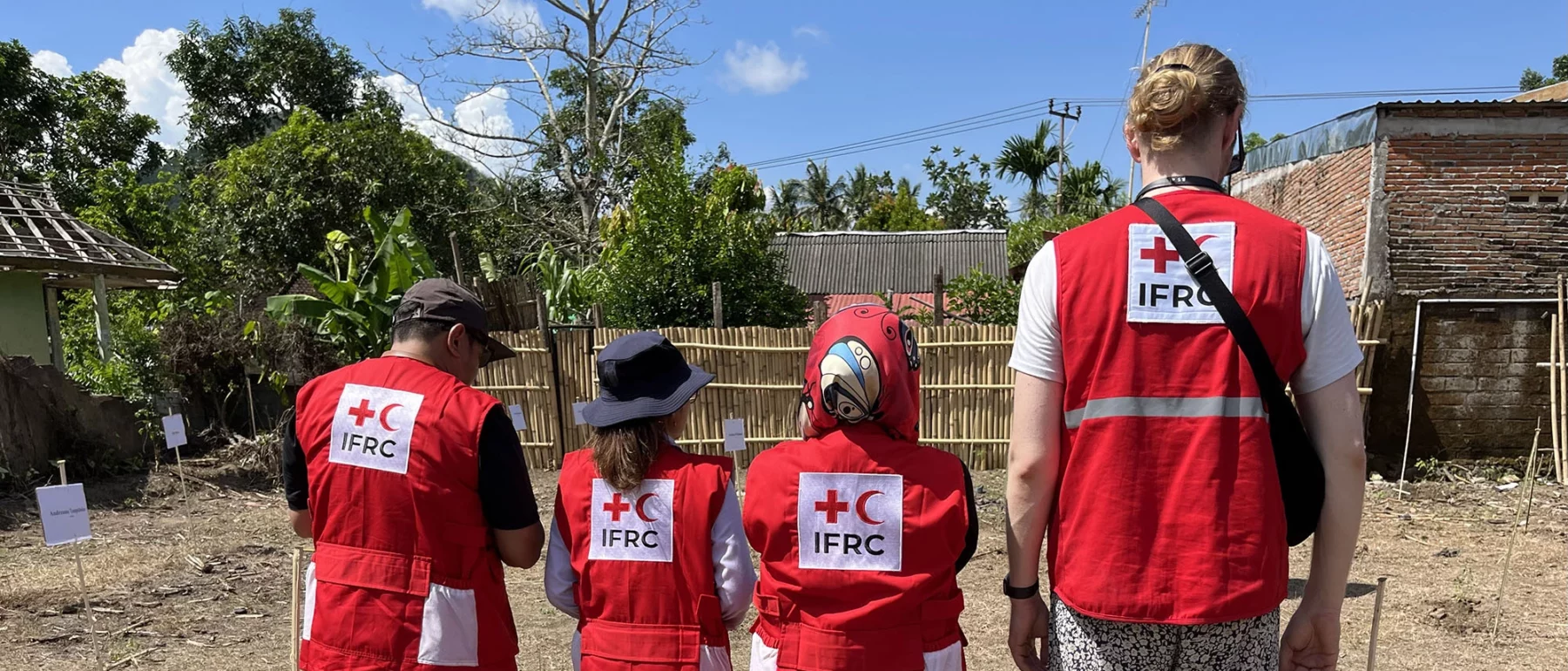
This report distils insights from a desk review, interviews, a focus-group discussion and a field visit into four overarching messages. Together, they explain why progress on locally led anticipatory action has been uneven, and also highlight the trade-offs the IFRC Network must navigate and the opportunities to re-examine how anticipatory action is organized and governed. The report also provides recommendations for the IFRC, the Donor Advisory Group and National Societies.
Download the key messages and recommendations
For the IFRC to achieve its ambition to scale anticipatory action through a global network, there is a need for simplicity, standardization and coordination, which inevitably constrain local autonomy and diversity. Diversity in what is done is easier to embrace than diversity in how it is done. These tensions need to be recognized and discussed more openly. Several National Societies are already pioneering ways to reconcile global consistency with local agency, offering valuable lessons for others. The Donor Advisory Group provides an important space to convene and advance such exchanges.
Findings from the analysis converge on a single reality: progress towards locally led anticipatory action is constrained less by technical capacity than by political factors. While localization has gained institutional traction, local leadership remains narrowly defined and externally controlled. These constraints stem from the trade-offs between local leadership and other attributes donors prioritize, such as accountability, efficiency and scalability. These politically sensitive trade-offs reflect donors’ legal and institutional limits on risk tolerance.
As the IFRC defines its strategy for anticipatory action beyond 2025, there is a clear opportunity for the network and its partners to build on progress made, strengthen the foundations of local leadership, and ensure that coordination, governance and financing mechanisms enable rather than prescribe how anticipatory action is designed and implemented. Rooted in local leadership, powered by global solidarity, and equipped for the challenges that lie ahead, the IFRC Network can consolidate and extend the progress achieved so far.
Despite clear progress and commitment, the shift to locally led anticipatory action remains incomplete. Implementation has advanced faster than governance, and the systems that define, validate and fund anticipatory action still reflect international design and control. Realizing the ambition of local leadership will require addressing five interrelated challenges that are institutional as much as political:
• Design and decision-making. Federation-wide systems and donor requirements continue to shape how anticipatory action is defined, validated and financed, even as implementation becomes increasingly decentralized. While many National Societies now design and activate their own early action protocols, global guidance and approval processes prioritize simplicity, standardization and coordination, which can unintentionally work against local leadership and innovation.
• Funding and trust. The challenge is not primarily a lack of money but a reluctance to devolve discretion. While resources exist in the Disaster Relief Emergency Fund (DREF) and other pooled funds, access and control remain centralized. Predictable, flexible and risk-tolerant finance depends on genuine confidence in the capacity of National Societies and other local actors, and on accountability systems developed jointly rather than imposed from the top. At the same time, anticipatory action sits at the intersection of the humanitarian, development and climate agendas, but this nexus is not yet being harnessed to unlock new funding and align mandates across sectors.
• Evidence and learning. Donors often require proof that locally led anticipatory action works before supporting its expansion, yet such evidence cannot exist without devolved pilots and investment in monitoring, evaluation and learning. This “burden of proof” traps local actors in dependency and slows reform. Evidence must be treated as a shared responsibility, built through implementation rather than demanded in advance.
• Knowledge and authority. Local and Indigenous knowledge provides insights that science-based models may miss. The persistent hierarchy that privileges formal, model-based forecasting over experiential and community knowledge limits inclusion and operational effectiveness. It is essential to combine multiple knowledge systems and recognize existing practices that are anticipatory in all but name.
• Hierarchy and inertia. The IFRC Network’s global reach and community presence remain its greatest strength, yet its own hierarchies can reproduce the top-down dynamics it seeks to overcome. Even where anticipatory action is embedded in disaster risk management systems and policies, decision-making power and finance rarely extend to municipal or community levels, where most implementation occurs. The challenge is to reform decision chains and financing within the network and across national governments, giving local actors genuine authority to anticipate and act.
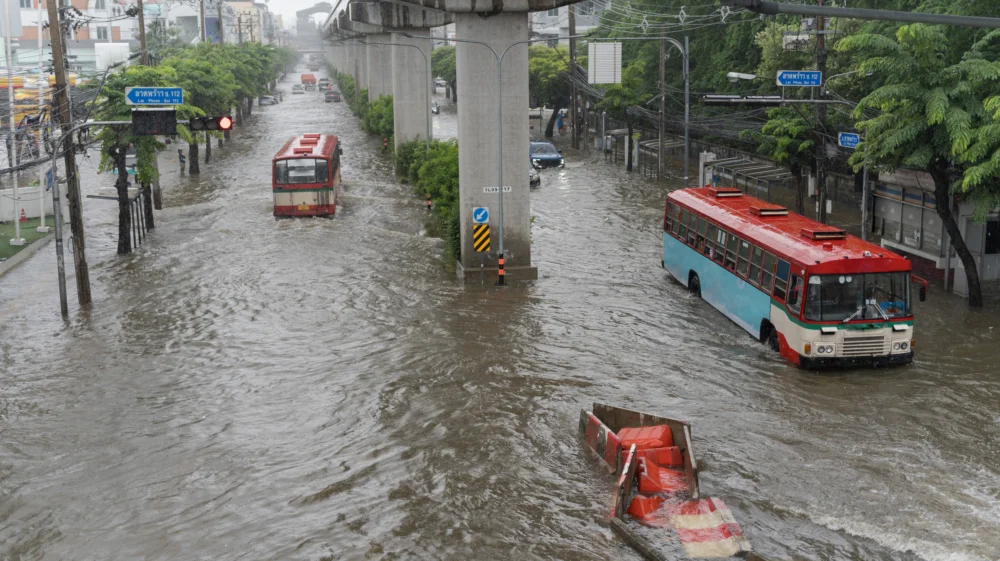
Perspective / Flooding in Bangkok in late September exposed a critical gap: forecasts identified the threat days in advance, warnings and preparedness did not translate fast.
Media advisory / SEI invites journalists to a media briefing where its leading experts will share their perspectives on the major themes shaping COP31.
Perspective / Asia’s next financial revolution must make climate adaptation finance accessible to vulnerable households and small businesses.