The research explores how learning takes place within international development organizations, examining when and how knowledge is generated and used throughout planning, monitoring and reporting processes.
With today’s shrinking budgets for development cooperation and criticism that International Development Cooperation Organizations (IDOs) often fail to use performance data to inform decision-making, it is essential to know if and how IDOs learn from their results-based management (RBM) practices. Learning is typically assumed to happen in a cyclical RBM learning loop. Learning is supposed to occur in the final stage of the loop when reporting should inform future decisions. The authors propose a new heuristic model for learning and observe that learning from results is, in fact, taking place in IDOs, but not in the way previously envisaged.
Drawing on qualitative semi-structured interviews with 15 IDOs, they conclude that learning takes place at earlier stages of the RBM cycle, and that the strongest link to learning is in the first stage of planning and forecasting. Moreover, they observe that artifacts, interactive and dynamic dialogue, and drawing on various knowledge sources are key characteristics of learning from results practices. Beyond these, the authors consider theories of change as an artifact to be more likely to enable learning than other artifacts like reports as they visualize how problems will be turned into desirable futures and often mobilize staff in interactive processes.
These findings should inform efforts to improve future RBM models to enable learning from results in IDOs by putting more effort into using results information in decision-making, streamlining RBM processes, and providing additional support for processes during the first stage of the RBM loop.
Perspective / New research reveals that much learning happens at earlier stages of the project cycle.
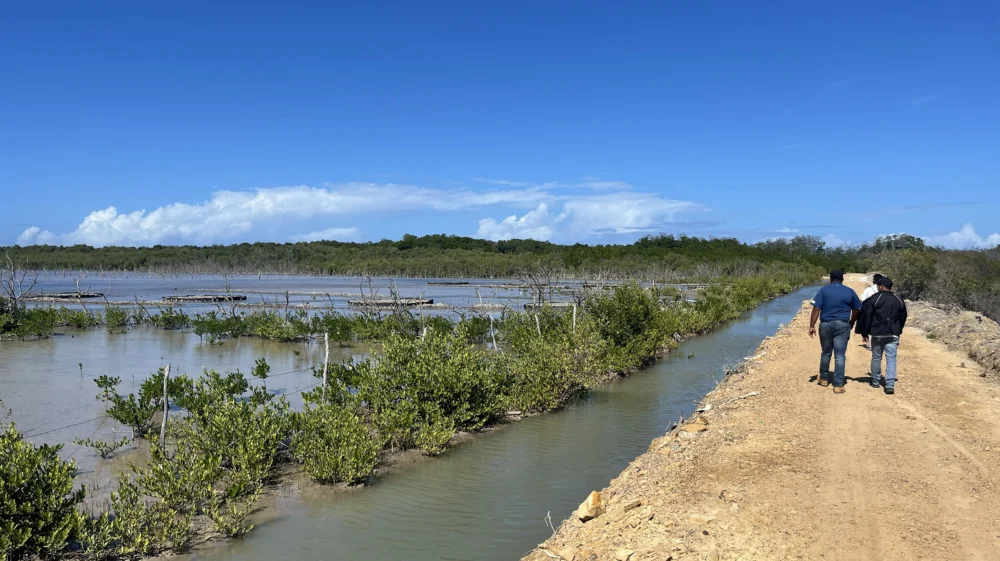
Feature / Mangroves are returning to Montecristi, where an SEI-led living lab is piloting a comprehensive restoration approach.
Event on 10 November / In this third CS Co-labs discussion session we will explore what equitable collaboration looks like in Citizen Science projects.