This study aims to enhance the understanding of the relationship between LULC changes and carbon storage in Northeast India, serving as a vital reference for policymakers in designing strategies that prioritize ecosystem carbon storage.
Understanding the impact of land use and land cover (LULC) changes on carbon storage across various spatiotemporal scales is crucial for developing effective climate mitigation strategies and promoting sustainable development. LULC classification for the Senapati district, Manipur, was carried out using multi-temporal satellite data from the Landsat 5 Thematic Mapper and Landsat 8 Operational Land Imager for the years 1999, 2009, and 2019.
The Land Change Modeler (LCM) within TerrSet software is employed to predict the LULC class for the year 2029 under two different scenarios: Business as Usual (BAU) and Environmentally Sound Planning (ESP). The carbon storage and sequestration model of the Integrated Valuation of Ecosystem Services and Trade-offs (InVEST) was employed to examine and quantify spatiotemporal changes in carbon sequestration among different LULC classes.
Under the BAU scenario, approximately 13% of dense forest will be lost compared to 1999, while in the ESP scenario, this loss is reduced to 9.9%. Additionally, the decrease in carbon storage will be 3209.24 Mg C in the BAU scenario, compared to 888.39 Mg C in the ESP scenario.
This study estimates the value of carbon sequestration in the Senapati district at USD 1,151 million under the ESP scenario, highlighting the considerable economic benefits that can be achieved by involving the community in conservation strategies and management.
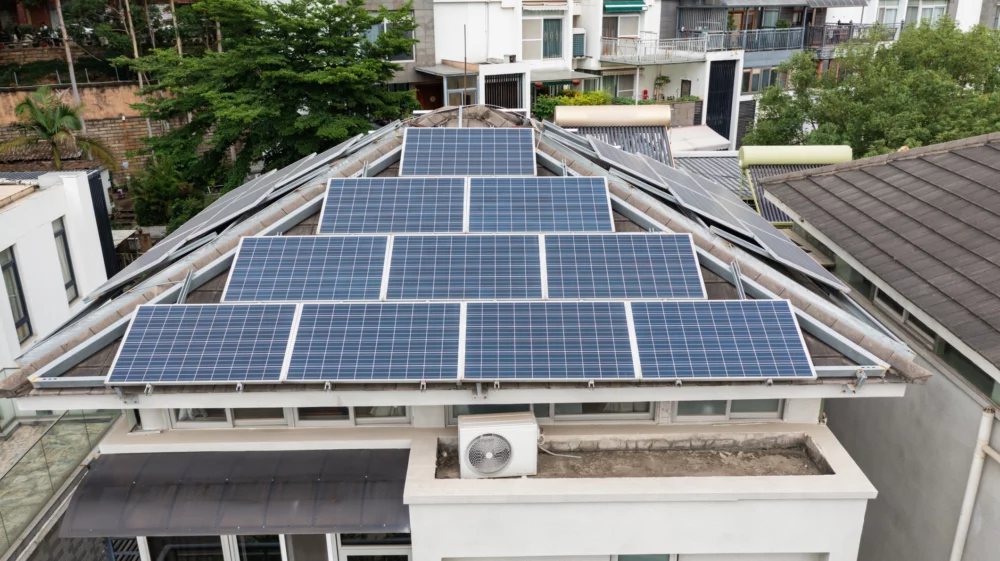
Perspective / The war in Iran and ensuing energy crisis has exposed the vulnerability of Thailand’s energy system – how does solar rooftop PV offer an opportunity?
Tool / This modelling tool helps to plan the national-level transition to net-zero greenhouse gas emissions.
Perspective / This perspective argues for a systemic approach by integrating mitigation and adaptation by default into every policy, budget and planning decision.