The war in Iran and ensuing energy crisis has exposed the vulnerability of Thailand’s energy system. Solar rooftop PV can play a vital role in shoring it up – and contribute to energy affordability, and a just energy transition, argue experts from SEI’s Asia centre.
It has been 87 days since the energy crisis began on 28 February 2026, following the sudden escalation of conflict in the Middle East. Even though the US and Iran extended a tentative ceasefire on 21 Apri, the shockwaves have already fundamentally destabilized global energy markets.
From the viewpoint of Thailand, this crisis has exposed a painful reality: the country’s current energy system is not resilient and is placing an unequal economic burden on vulnerable communities.
The energy crisis is both impacting Thailand’s energy transition and taking a heavy economic toll on citizens and households. At the same time, evidence shows that rooftop solar PV has potential to mitigate pressure on the energy system as well as energy prices for households, showing that it is both a promising solution for the energy crisis in Thailand, and a contributor to equitable outcomes.
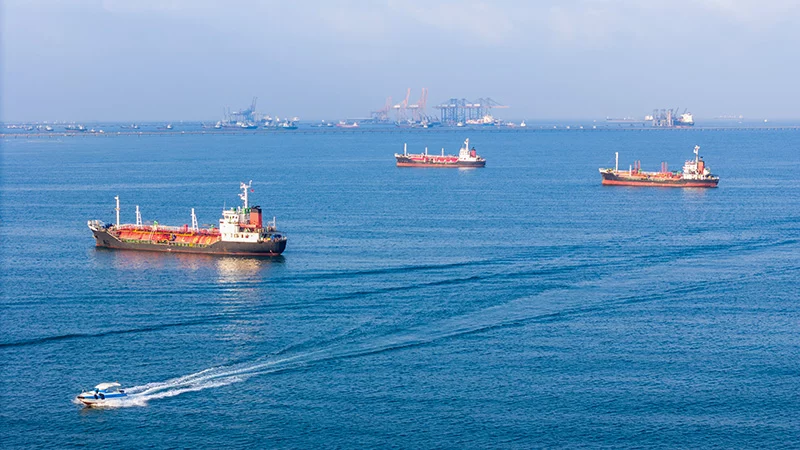
According to data from the ASEAN Centre for Energy, the Southeast Asian region is dangerously exposed to this energy crisis because it imports roughly 56% of its crude oil and 17% of its natural gas from the Middle East. Thailand is no exception, as noted by Thailand’s Deputy Prime Minister, Phipat Ratchakitprakarn, more than 50% of its crude oil supply is exposed to the crisis in the Strait of Hormuz, while around 24% of its 2024 LNG imports came from Middle Eastern suppliers. After applying mandatory rationing to limit the vehicle fill-up amount, Thailand has roughly 104 days of oil stock in reserve in response to the oil crisis, as announced by the Ministry of Energy on 20 March.
Tankers off the Thai coast.
Photo: Suphanat Khumsap / Getty Images.
However, over the past 87 days the negative impacts on the economy have become clear. In early April, officials and industry leaders agreed that the ongoing conflict has pushed Thailand into a “level 2” energy crisis, where fuel supply is available but at a significantly higher cost, driving up energy prices as well as costs for food security and industry. Since the start of the war, diesel prices have climbed by THB 3.50 per litre – around a 7% increase – while petrol/gasohol increased by THB 0.70 per litre.
Meanwhile, because Thailand imports around 55% of its fertilizer from the Middle East, the crisis has also triggered food price inflation, demonstrated by Thailand’s Ministry of Commerce raising its 2026 inflation forecast to 1.5–2.5%, up from a previous projection of 0.0–1.0%. Spiking oil and food prices have a ripple effect by driving raw material and transport costs up in various industries. For example, the petrochemical sector, a pillar of Thai industry, has seen plastic pellet prices surge, with some products reportedly rising in price by between 30 and 80% –plastic bags, for example, have increased in price by 40%.
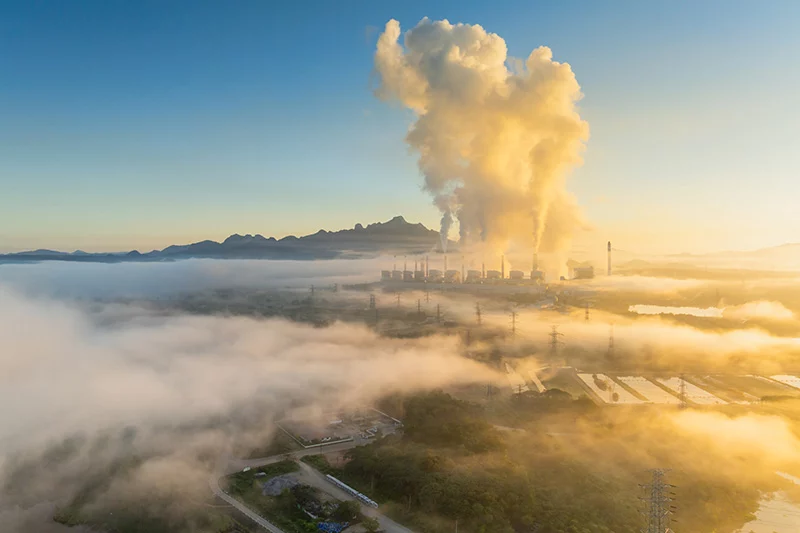
The energy crisis triggered by the war in Iran has had a clear negative impact on Thailand’s energy transition. To offset the soaring costs of liquified natural gas (LNG) and maintain electricity tariffs, Thailand’s Energy Regulatory Commission (ERC) has ordered the restart of two decommissioned units at the Mae Moh coal-fired power plant, contributing 600 MW from May to August. While this is an understandable move, it also slows down the energy transition in Thailand.
An aerial photograph of the Mae Moh coal-fired power plant in Lampang Province, Thailand.
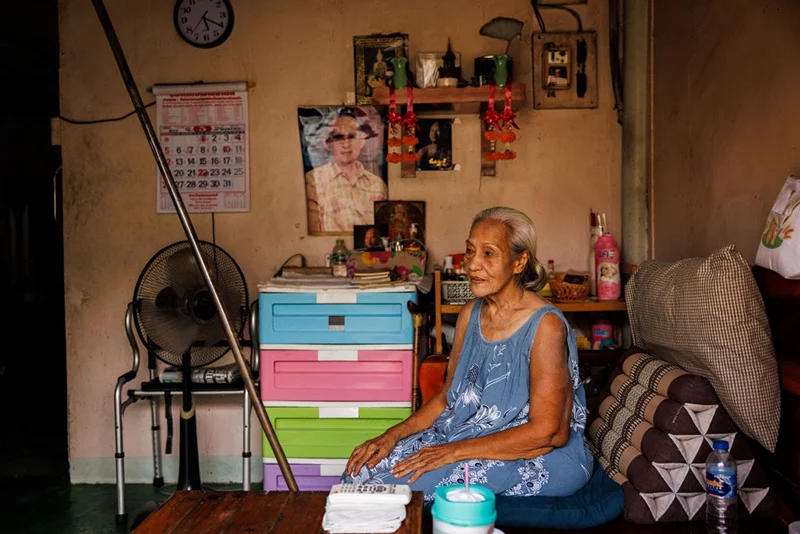
The energy crisis is also making less affordable for Thai households. Because Thailand imports more than 50% of its energy, the energy crisis is also making energy less affordable for Thai households. According to official survey data from the Thai Trade Policy and Strategy Office, non-food infrastructure necessities – specifically housing, utilities, and transportation – collectively command nearly 47% of a standard household’s monthly basket expenditure. Thailand’s National Economic and Social Development Council points out the increasing expenditure on transportation, gas and electricity, driving up the daily expense up by 3.5%, which places extra pressure on the bottom 40% of earners. Considering the surge of energy expenditure in the hot season, the increase might force many into a heat-or-eat trade-off.
A woman sits by her fan in the Khlong Toei neighborhood, Bangkok.
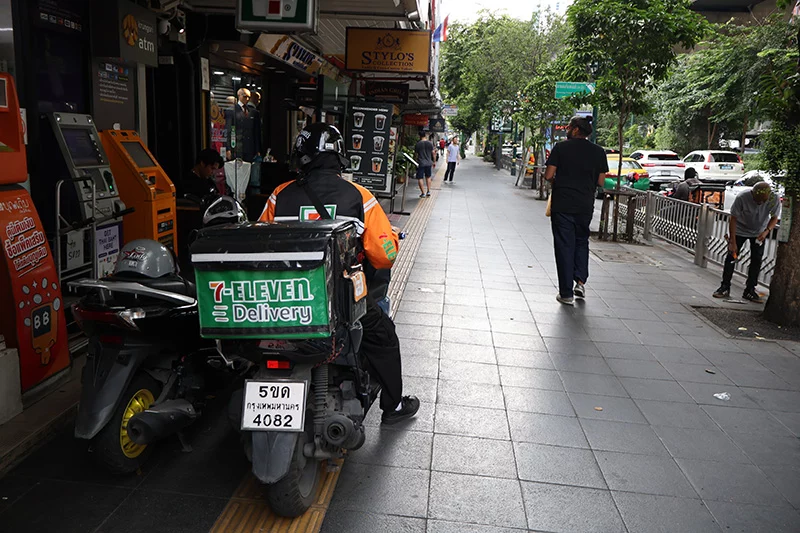
When the Strait of Hormuz closed, one of the first groups to feel the shock is motorcycle riders in Thailand. Cumulatively, Gasohol 95 has increased by THB 12.40 per litre since February for a full-time rider consuming seven litres of fuel per day. An average daily earning of THB 600 means they now lose half of it just to keep their tank full. And “500 THB” rationing created massive queues for motorbike riders, reducing their time to do business. Simultaneously, work-from-home policies have also reduced the number of consumers. Both the Thai government and companies have launched subsidies and incentives to mitigate the increased cost for riders, but the pressure persists.
Delivery riders in Bangkok have borne much of the fuel-price shock.
Photo: Johanna Lehtmets / SEI.
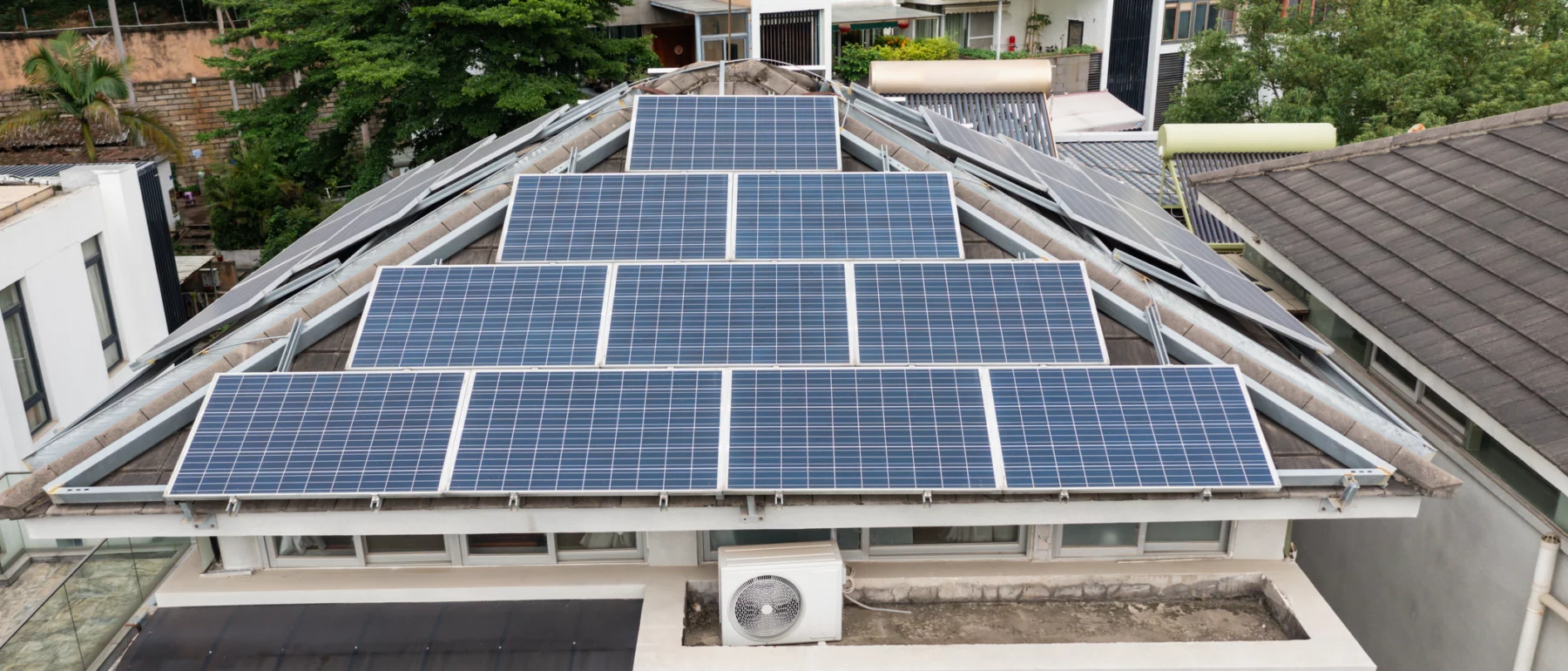
Amid the storm of challenges caused by the Hormuz energy crisis, the decentralized solar PV system has been weaving a safety net for Thailand’s energy security.
Because natural gas is Thailand’s main power generation fuel, the 3.6 GW of decentralized rooftop solar generating about 4.86 TWh per year is estimated to reduce pressure on gas-fired generation equivalent to about 0.6 million tonnes of LNG annually, or roughly 5% of Thailand’s 2024 LNG imports.[1] 1In parallel, rooftop PV reduces users’ energy bills: based on IRENA’s estimation on the levelized cost of energy (LCOE) of solar (i.e. USD 0.044 per kWh – around THB 1.4 THB per kWh) which is below the retail electricity tariffs in Thailand.
More importantly, the International Energy Agency estimated that if Thailand utilized just 10% of its total available rooftop space for distributed PV, over than 38 gigawatts (GW) of distributed solar PV could be installed – more than the current peak demand of the Thai power system. This is more than ten times today’s deployed rooftop solar capacity of around 3.6 GW, showing the scale of the opportunity.
In order to tap the potential of rooftop solar PV, Thailand has launched the “Quick Big Win” energy initiative, with the net billing policy. Although debates surrounding its current implementation continue to focus on electricity tariffs, this framework aligns directly with the “structural reform” pillar of the SEI JET-18 framework.
SEI’s Just Energy Transition (JET) project explores the definition of justice in energy transitions and investigates how the “justice” elements are reflected in policies. In a forthcoming piece, we will explore how Thailand is performing on its just energy transition. Stay tuned!
Feature / At the Bangkok Climate Action Week 2026, SEI Asia will showcase research and build pathways for climate action through science, dialogue, and engagement.
Media coverage / SEI Research Fellow Sara Vigil talks to PBS News Hour on how climate change affects migration.
Past event / Share knowledge and perspectives and explore avenues for collaboration on critical water, energy, and climate issues in the Mekong Region.