Tree Value Visions is a decision-making tool which aims to better integrate diverse values into local tree management. The tool includes specific sets of outcomes and actions that can help to meet the justice claims of humans and non-humans.
Tools like Tree Value Visions – which link multispecies justice to key social concerns – can provide a critical lever for building social support for including more-than-human justice demands in planning decisions.
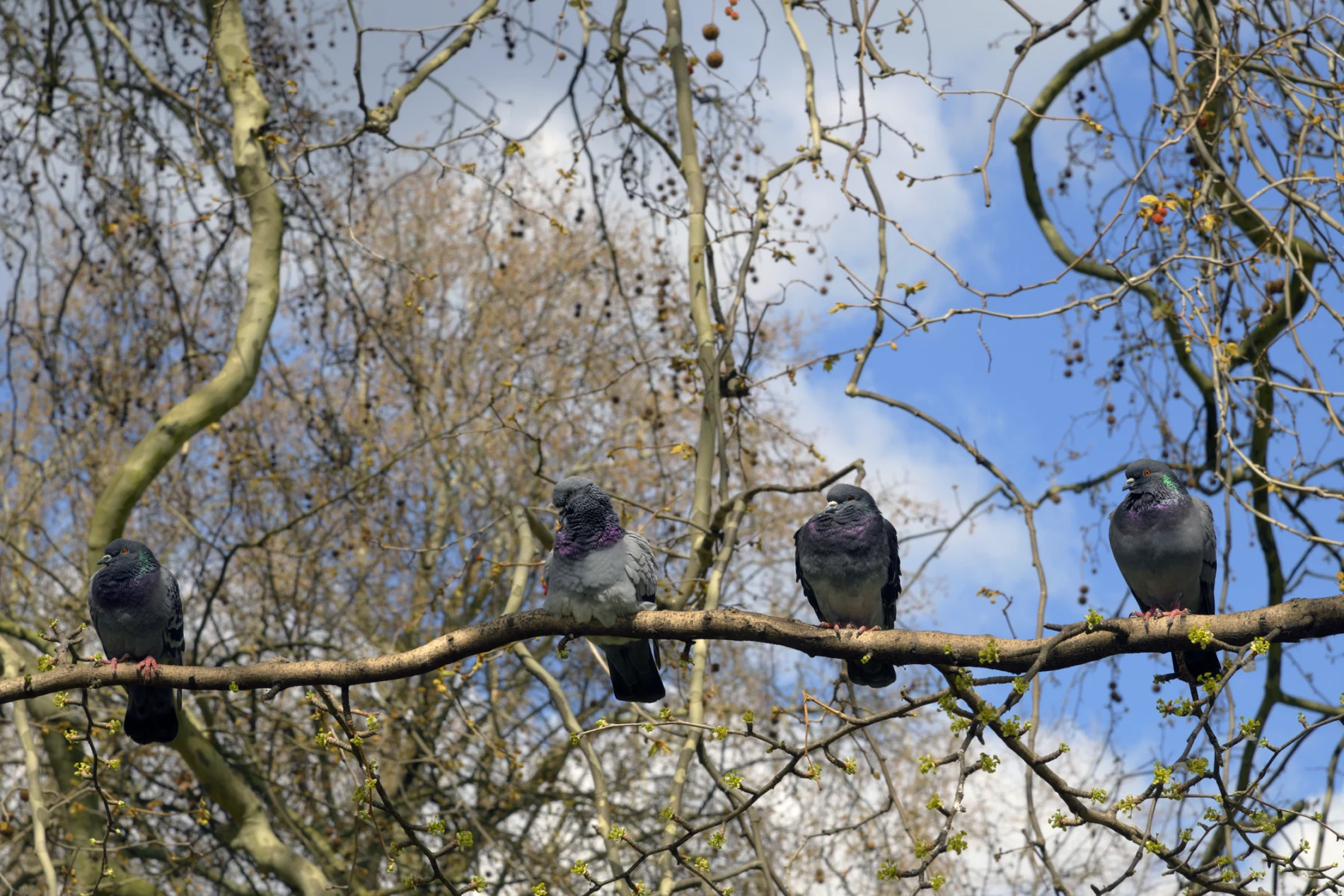
Photo: DESPITE STRAIGHT LINES (Paul Williams) / Getty Images
Expanding treescapes is key to reducing net carbon emissions. However, treescape planning in urban areas needs to account for many different, often competing, policy objectives: resource and space constraints, flood regulation, people’s wellbeing, biodiversity concerns, and more.
Evidence gathering for planning urban treescapes now often includes assessments and valuations of ecosystems, however these valuations tend not to consider relational values of treescapes, and they often have only limited community participation. The Tree Value Visions tool addresses these problems by offering an innovative new way to bring plural perspectives into urban tree planning. It is structured around the Intergovernmental Science-Policy Platform on Biodiversity and Ecosystem Services’ (IPBES) Four Life Frames: living from, living in, living with, and living as nature. The tool is intended for use by local treescape decision-makers, such as local authority planning departments, park trusts or community land-trusts, or community stakeholders with technical expertise.
Core to Tree Value Visions are concepts of deliberation and storytelling as a way to express relational values. The tool uses a narrative form to ensure that emotional, embodied and lived experiences of trees are legitimized as way of engaging with the planning process. Another innovative aspect of Tree Value Visions is the way it engages all participants with non-human and more-than-human perspectives, rather than delegating specific individuals as advocates.
Initial uses of the tool in five UK cities indicate that it can surface productive synergies between human and ecological needs. Tools like Tree Value Visions – which link multispecies justice to key social concerns – can provide a critical lever for building social support for including more-than-human justice demands in planning decisions.
Press release / As El Niño intensifies across the Amazon, new research in Science highlights the urgent need to better protect the region’s remaining forests from disturbances.
Feature / Trase research reveals the colossal amount of water used to produce soy and beef in Brazil, and recommends ways to address water scarcity.
Feature / New open data on commodity supply chain facilities are now available to help companies and financial institutions meet reporting requirements.