Editor’s choice
Editor’s choice
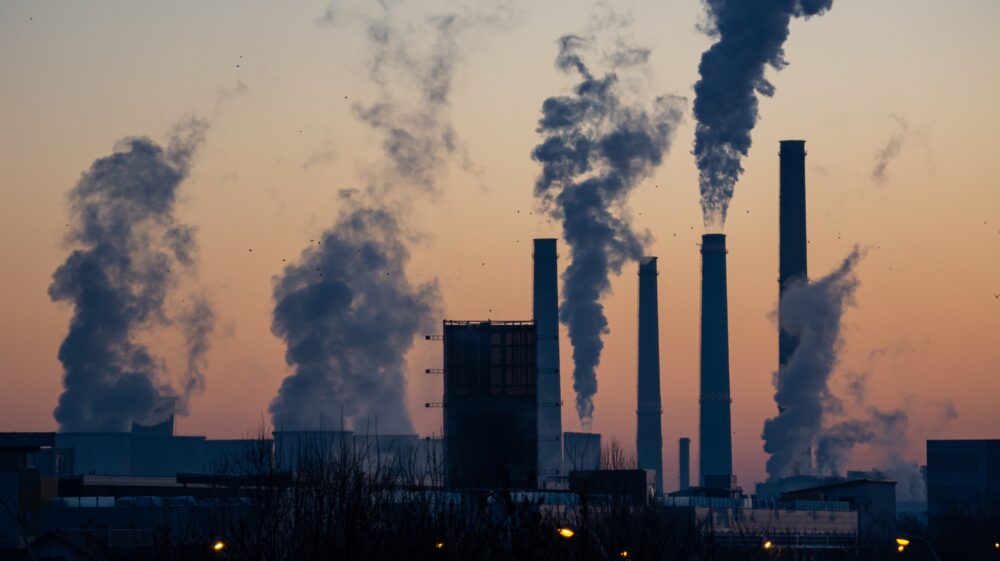
Aging manufacturing infrastructure for producing steel is a major culprit for climate-changing greenhouse gas emissions. The authors suggest shifting to new technologies and phasing out the old to avoid these impacts.
Iron and steel production is responsible for 7% of global greenhouse gas emissions. Previous research has found that the long economic life of steel production equipment impedes decarbonization in line with climate targets.
The authors estimated the cumulative emissions from existing primary steel production equipment if operated as historically observed, based on furnace-level data of historical operating patterns. They report that the emissions commitment of current primary steel equipment is significantly smaller (21 Gt CO2eq) than previously suggested (52–65 Gt CO2eq). Consequently, they argue, future emissions from steel are driven not by long-lived capital, but by the pace of deployment of novel technologies and renewable energy provision, as well as a general reduction of steel demand and energy use.
Without rapid progress in these fields, the operation of current steel production equipment is likely to consume significant amounts of the remaining carbon budget. The authors recommend better monitoring of the age of emission-intensive assets and more research to examine how the operation of such equipment can be regulated.
Project / Hydrogen Breakthrough Ironmaking Technology (HYBRIT) is a groundbreaking effort to reduce CO₂ emissions and de-carbonise the steel industry by 2035.
SEI working paper / This working paper examines the demonstration phase of commercializing a fossil fuel-free steel supply chain through a hydrogen direct reduction process.
Perspective / The chief barrier to industrial transition is not a lack of capital, but the absence of clear policies on incentives for green transition.
SEI working paper / Three Swedish companies plan to implement fossil-free steel production. Understanding these key factors will help make this ambitious plan a reality.