Solar drying technologies can mitigate post-harvest losses of mangoes, enhance food security and improve rural livelihoods among smallholder farmers in Mozambique. This study identifies and analyzes what hinders the adoption of improved solar drying technologies, as well as the drivers that facilitate their use among smallholder farmers.
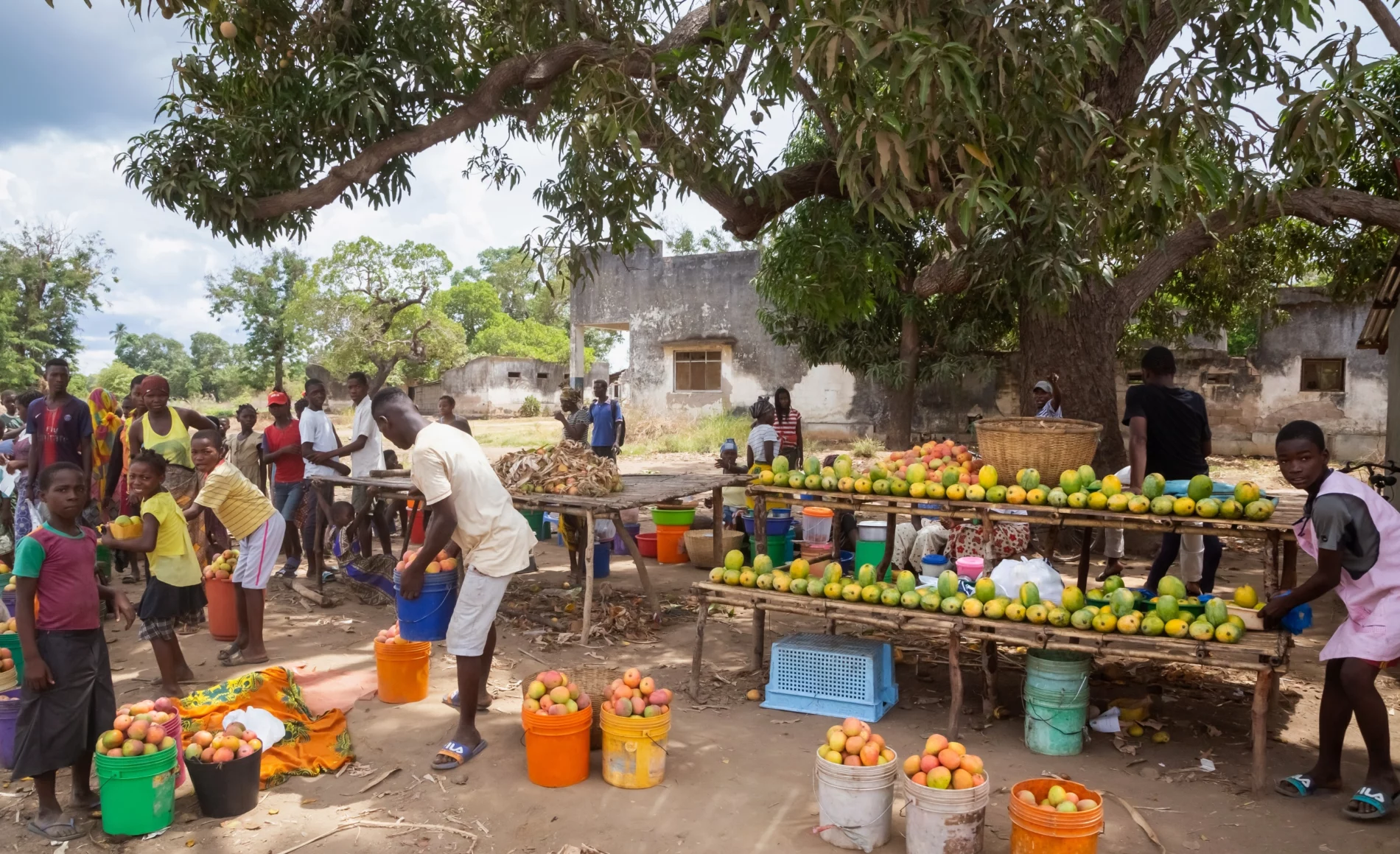
Pemba, Mozambique, 26th November 2019: People selling mangos on the side of the road.
Mango production plays a vital role in rural livelihoods in Mozambique, yet post-harvest losses remain high, ranging from 25% to over 50%, due to inadequate preservation methods. Improved solar drying technologies offer a sustainable solution by extending shelf life and enhancing product quality. However, their adoption among smallholder mango farmers remains limited. This study investigates the key barriers and drivers influencing the uptake of these technologies in three districts of Inhambane Province, through a combination of literature review and semi-structured interviews. Major barriers include limited technical knowledge, high upfront costs, poor market access, and limited institutional support. Field data show that over 80% of farmers are unaware of improved fruit drying techniques, and fewer than 5% have received any training. While the literature emphasizes environmental sustainability and policy support, field interviews highlight a stronger interest in practical enablers, such as affordable systems, hands-on training, and income-generating potential.
The study calls for a multisectoral approach, involving financial support, capacity-building, and strengthened extension services to promote adoption. Scaling solar drying technologies can significantly reduce post-harvest losses and strengthen the mango value chain, contributing to food security and rural development in Mozambique.
Journal article / Researchers explore three types of development transitions for low- and lower-middle-income countries that transition to low-carbon development.
Media coverage / In an article in Climate Home News, SEI Senior Research Fellow Richard J. T. Klein said that defining vulnerability is a "political question".
Project / Future Resilience for African CiTies And Lands (FRACTAL) looks at climate processes driving southern Africa's climate variability and response to global change.