This policy brief, developed in collaboration with Adaptation without Borders and Adaptation at Altitude, highlights engagement opportunities for UNFCCC Parties and Observers to bring in transboundary climate impacts and climate change adaptation in mountain areas across relevant negotiation tracks: Global Stocktake, Global Goal on Adaptation, Finance, Planning and reporting, and Loss and Damage.
Transboundary climate impacts, and the risks they generate within and beyond mountain areas, are of rising concern in international climate change negotiations. These risks are highly relevant to the adaptation needs of all countries.
This brief is intended for Parties and Observers to the UN Framework Convention on Climate Change (UNFCCC). It articulates what transboundary climate risks are, why they matter, and their relevance for different negotiation tracks – including proposed calls for action.
These negotiation tracks represent important and appropriate entry points for raising transboundary climate risks and advancing the mountain agenda at the upcoming United Nations Climate Change Conference (COP29) and beyond.
With many groups making transboundary climate risks a priority – even working towards the development of common positions – negotiators have an opportunity to raise the specific needs and concerns of their countries and take steps to assure their region’s future climate resilience.
There is a strong rationale for negotiators to raise transboundary climate risks and the adaptation needs of mountain communities at COP29 and beyond. The authors provide three compelling arguments.
Initiative / This initiative explores implications of transboundary climate risks and strengthens cooperation to meet the global challenge of adaptation to climate change.
Program / The Adaptation at Altitude program seeks to help mountain communities adapt to climate change.
Journal article / This journal article calls for more national and sub-national evaluations of adaptation finance to determine whether money reaches the most vulnerable groups.
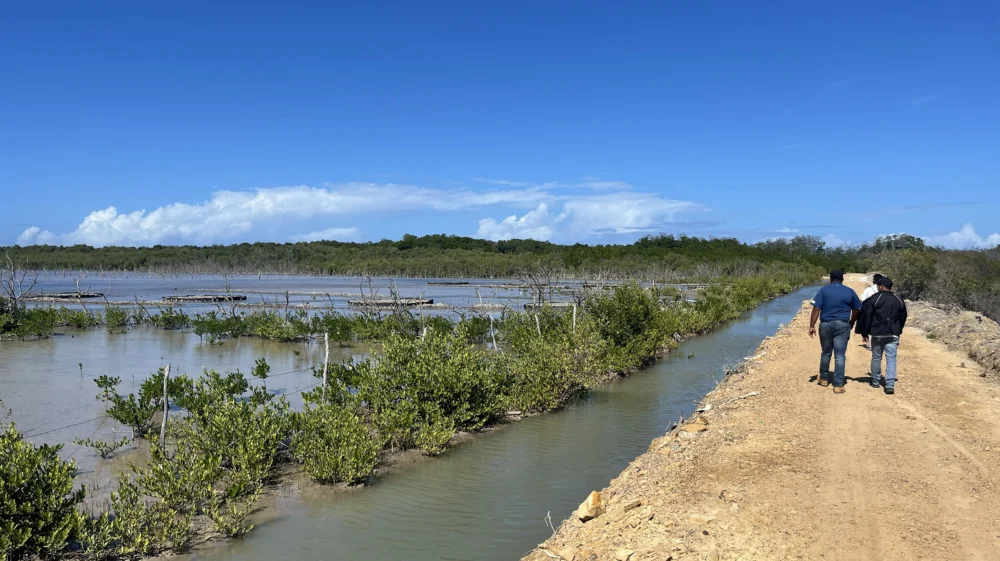
Feature / Mangroves are returning to Montecristi, where an SEI-led living lab is piloting a comprehensive restoration approach.
Feature / SEI US introduces a new research program focused on climate forecasting and capacity building.