Photo: SEI
Around 2.4 billion people use biomass fuels - wood, charcoal and animal dung - for their domestic energy needs. These are typically burned in inefficient stoves or on open fires, with serious consequences for health and the environment. SEI identifies and designs actions to help households transition to cleaner technologies and energy sources.
259 results / 16 of 29 pages
SEI report / A participatory exercise to introduce the concept of transitioning to electricity for cooking in a rural off-grid community.
Feature / If everyone in Kenya cooks with electricity in 2030, how did it happen? Our research team co-developed a transition pathway with members of a rural community.
Journal article / A user-friendly tool is used to identify the most important emission sources in Côte d’Ivoire.
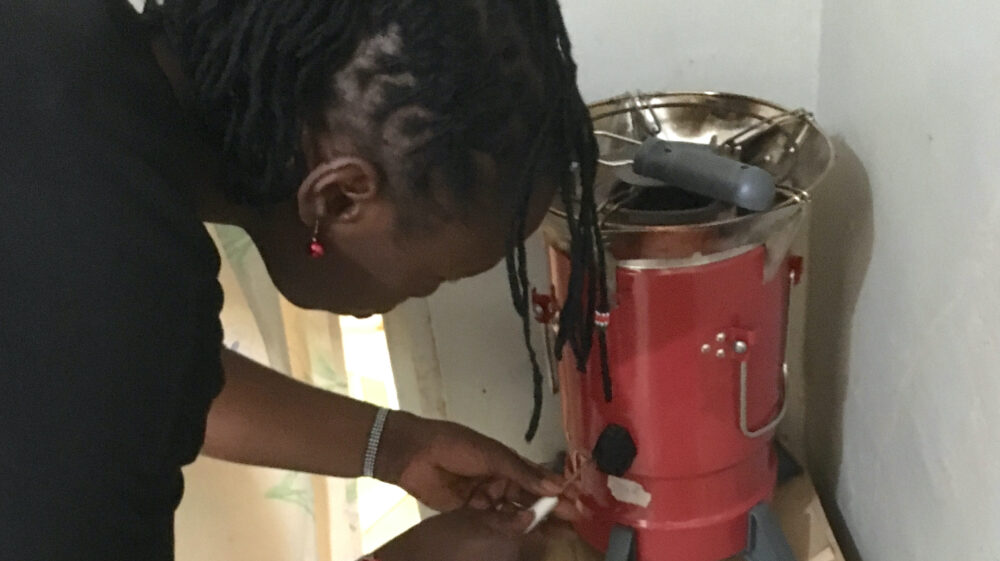
Journal article / A household study shows qualified success in displacing more polluting fuels with gasifier pellet stoves for cooking.
Feature / During the years 2015-2019, SEI invested in research, tool development and capacity enhancement as part of the initiative on Low Emissions Development Pathways.
Journal article / Using a new model of Colombia's energy system, this paper finds that two proposed policies could prevent the emission of 4.71 million tons of CO2 equivalent.
SEI brief / This brief synthesizes the findings from SEI's work on the inequality that exists in energy systems, on inclusive energy planning and on just transitions.
Feature / SEI researchers explain the gender dimensions of their work, and how these uncover opportunities for better sustainable development.
Feature / Explore the results from our Initiative on Behaviour and Choice, including a toolkit for behaviour-based development interventions and examples of its use.