The four lower Snake River dams in Washington state, US, cause about 30 000 acre-feet each year in additional water loss compared to free-flowing conditions due to evaporation. This volume of water is worth about USD 110 million as a water right and could grow approximately 8000 acres of apples or supply the household needs of around 240 000 people.
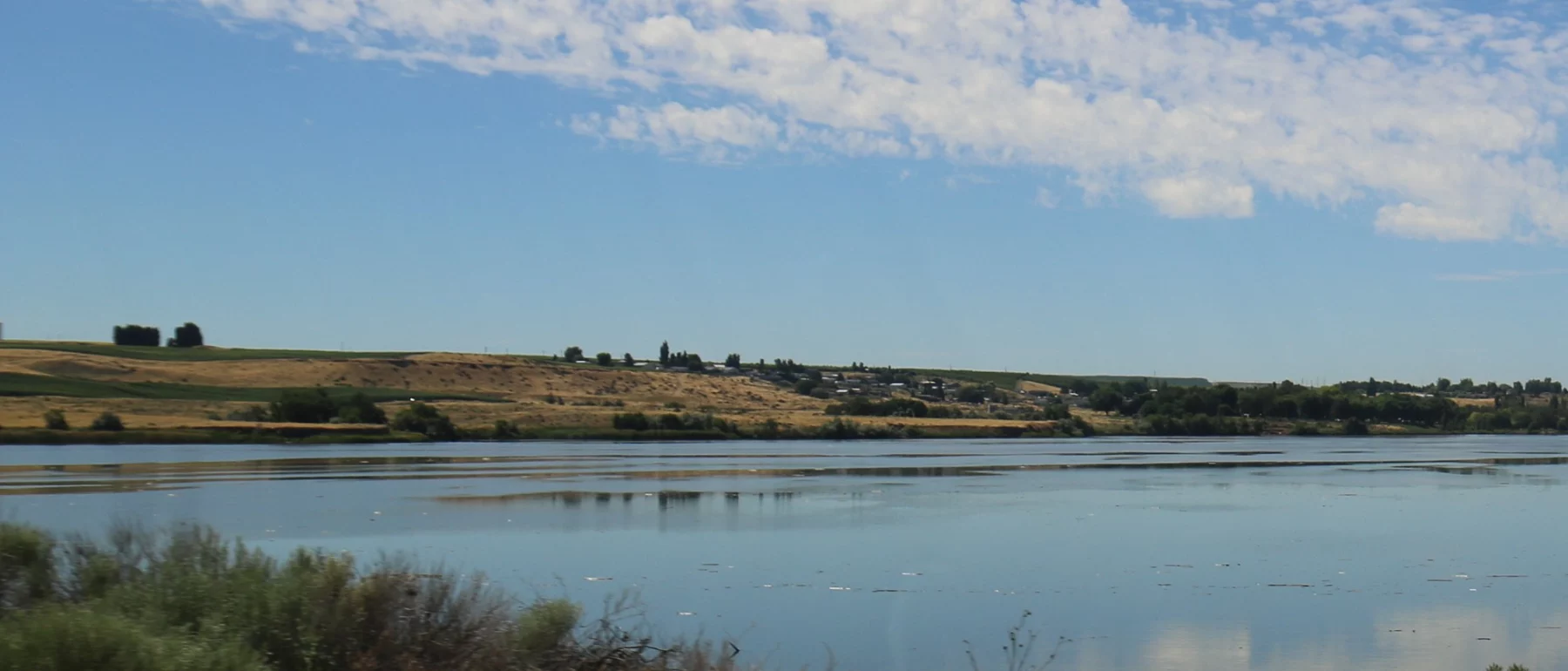
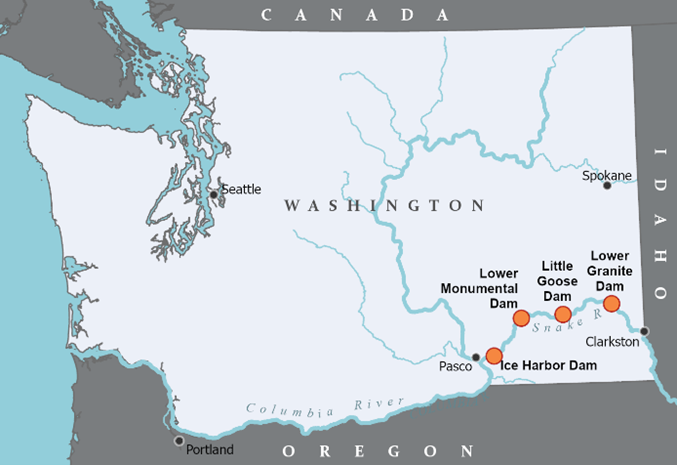
The lower Snake River, in eastern Washington state in the northwestern United States, passes through four dams before emptying into the Columbia River and draining into the Pacific Ocean. The dams provide benefits for hydropower, irrigation, and transportation, but restrict fish migration to and from a vast area of high-quality spawning and nursery habitat upstream.
Map of lower Snake River dams.
Historically, the Snake River was home to almost half of the total Chinook salmon and steelhead in the greater Columbia River watershed. However,current wild-origin returns of salmon to the Snake Basin are 0.1–2% of their historical abundance, with Snake River sockeye salmon listed as “endangered” and Snake River steelhead and Chinook salmon stocks listed as “threatened” under the US federal Endangered Species Act. A 2022 US Department of Commerce study concluded that removing the four lower Snake River dams would be a “centerpiece action” towards these species’ recovery in the Snake River watershed.
A range of organizations, including tribal organizations, local governments and NGOs, are advocating for the removal of the dams and the replacement of their services to restore the species. While the evaporation water loss is just one component of the dam operation trade-offs, it has not been previously studied. This study, supported by Columbia Riverkeeper and The Water Foundation, addresses this research gap.
Project / SEI is studying the evaporation from the Lower Snake River reservoirs in the northwest United States, as authorities explore removing four dams.
Project / SEI is working in Washington state on the design of a possible off-stream reservoir to support endangered and threatened fish species and agriculture.
Project / SEI is building a water allocation and hydrology model in the Upper Klamath River basin.
Perspective / This World Water Day, SEI Scientist Doug Chalmers reflects on how science supports conflict resolution around one of the planet's most precious resources: water
Project / SEI is designing water allocation models that explicitly represent every water right and assess the impact of in-stream flow requirements on water users.
Feature / Water managers must balance the needs of aquatic habitat and human supply. SEI Scientist Doug Chalmers explains a new approach to help resolve that tension.