Editor’s choice
Editor’s choice
Effective efforts to adapt to climate change and reduce disaster risk depend on collaboration across disciplines, institutions and communities. To respond to complex and interconnected risks requires integrating the knowledge of many different people: researchers, policymakers, emergency responders, planners, engineers, social scientists and residents of local communities. Yet, working together also intensifies challenges for communicating in ways that can create shared understanding.
One source of these challenges is semantic change: the process through which words evolve in meaning over time as people adopt, adapt and reinterpret their meaning. Semantic change is happening all the time with all kinds of words, but it is increasingly common for climate research and practice as work expands across diverse disciplines. Multiple interpretations arise both because concepts evolve and because terms fulfil different needs for different disciplines
As one example, consider the meaning of the word risk.
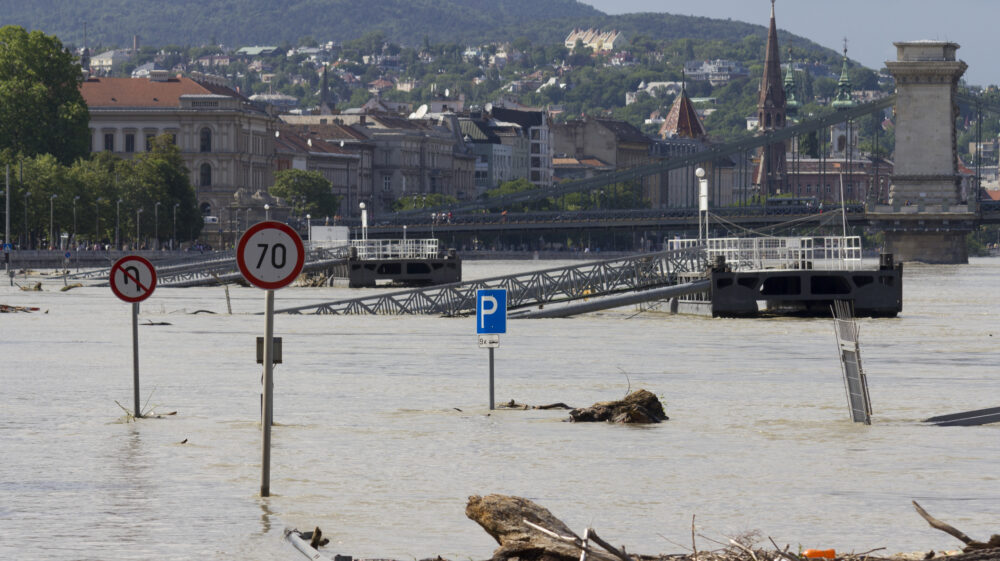
When we asked a room full of climate adaptation and disaster risk management professionals what the word meant, we heard a room full of confident, coherent answers. A meteorologist described risk as an equation: hazard x vulnerability x exposure. A municipal planner saw risk as a flood scene, with water rising against a building. A coastal engineer described risk as a threshold: the moment when it is time to decide to act.
None of these meanings are wrong. That’s the problem.
Our work in the EU DIRECTED project explores this quietly disruptive issue.
Our work shows that five words regularly used across climate adaptation and disaster risk reduction work carry different meanings. These words are part of the disciplines’ core vocabulary: resilience, vulnerability, risk, adaptation, and disaster risk management.
Even though these terms are used constantly across climate adaptation and disaster risk reduction disciplines, they carry different operational meanings depending on who is using them.
The results can be false consensus. Two people can nod in agreement over a term that means something different to each of them. The gap in understanding surfaces only later from a decision that doesn’t work, a plan that doesn’t fit, or a policy that doesn’t protect the people it intended to reach.
The usual fix for this kind of ambiguity is a glossary. Standardized terms and written definitions contained in glossaries are important, but it is often difficult to capture nuances, such as tacit knowledge, professional instincts, lived experiences and institutional pressures that can shape how terms are used in practice.
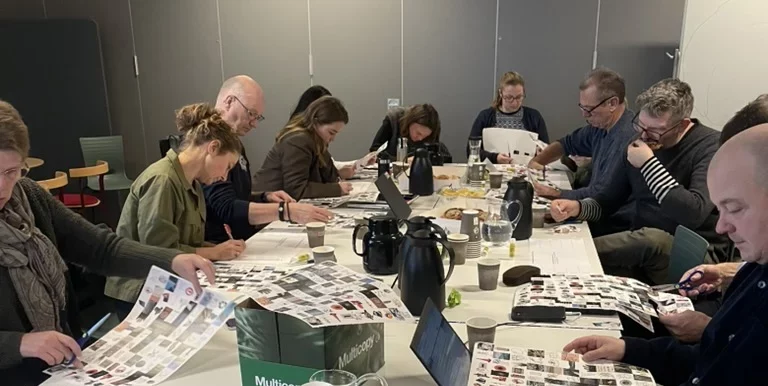
So, working with SEI’s designers in residence from the University of the Arts London, we tried something different. We explored the potential of visual metaphors in surfacing and unpacking these gaps.
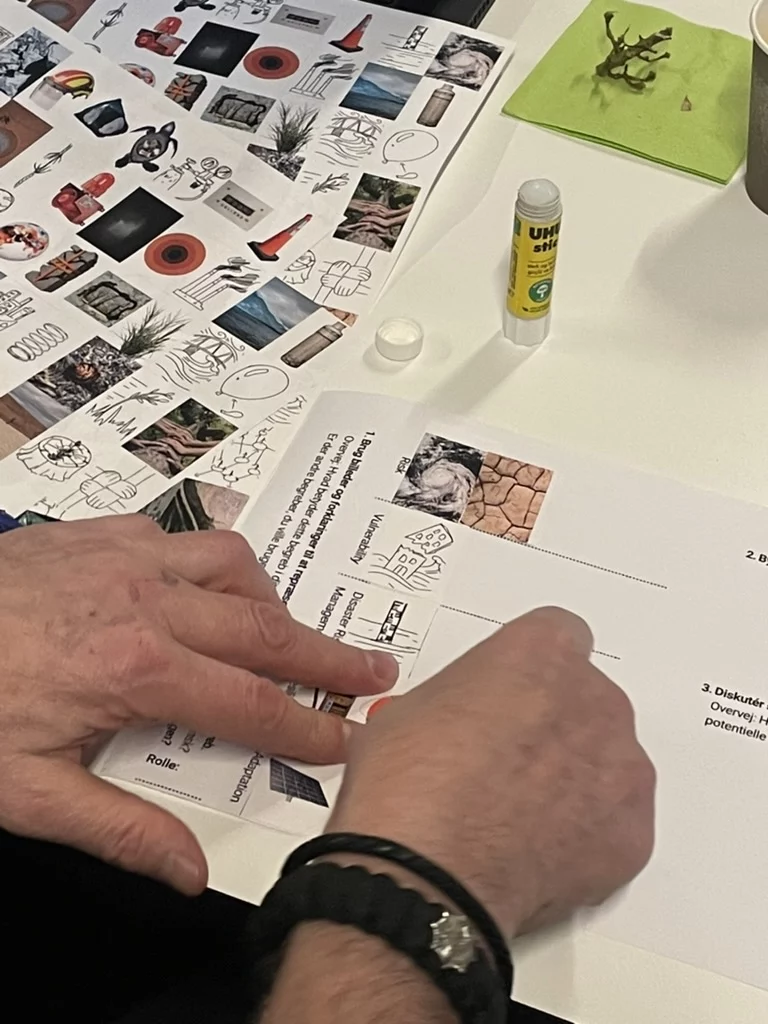
Researchers built a visual archive of images sorted into four categories:
As part of the DIRECTED project’s work in the Capital Region of Denmark, we asked people working on different aspects of climate adaptation and disaster risk to create a collage from these images to represent the five key terms (resilience, vulnerability, risk, adaptation, and disaster risk management). We then asked participants to show and explain their visual selections to a partner – someone working on a different department or perspective, mixing municipality adaptation employees, emergency services workers, and representatives of national agencies in Denmark.
We found that three types of divides surfaced:
Lexical gaps: These refer to instances in which a language may not have a clean word for a certain concept. Several Danish participants said “resilience” was a term they recognized in English but struggled to translate. It is “a concept that is difficult in Danish,” as one put it.
Responsibility gaps: These surface when a person’s institutional role shapes how he or she thinks and acts on a term. A fire chief spoke of vulnerability in terms of personal stories and people at risk. A representative at the Danish Meteorological Institute described the same term through what could be quantified, such as economic damage.
Value gaps: These emerge when priorities and ideologies diverge. Different actors care about and they place value on different things.
Moreover, these gaps rarely showed up in isolation. Responsibility, experience, and values tended to bleed into one another. The jobs people held shaped their instincts, which shaped what they valued, which shaped how they pictured the problem.
What does this mean for the five key terms we analysed?
Risk: Risk was defined in three different ways: as something calculable, as something experienced (through hazard and impact imagery), and as a decision threshold (“how long we dare to wait before taking action,” as one coastal protection employee described it).
Vulnerability: Definitions split along two lines: infrastructure versus people. Some participants pictured vulnerability as a terms to define “systemic weak points” like power stations. Others thought of the term in relation to its meaning for people – using a symbol of a woman holding a child, for example.
Resilience: Participants struggled with this term the most. Several needed to look it up. They were unsure whether it had a Danish equivalent. By contrast, the term produced the strongest visual agreement of the workshop. Almost everyone reached for the same handful of symbols: a bending building, a spring, a new shoot growing from a tree stump. People could not define resilience with words, but they all recognized it the moment they saw it portrayed with illustrations.
Adaptation: Participants broadly agreed on the conceptual meaning of this term, but there were differences in understanding of the time horizons and institutional roles. For example, emergency responders pictured sandbags as representing adaptation. Researchers pictured long-term data and modelling. Several participants chose a particularly vivid image, a chameleon, changing colour to its surroundings, to capture how they understood adaptive capacity.
Disaster risk management: This term generated the most convergence in the interpretations of the participants. Differences split along just one line: whether a person’s job orientated them towards planning, or towards emergency responses.
We describe the images we used in our work as boundary objects: a term borrowed from the organizational research literature for tools that hold just enough shared meaning to support collaboration across different professional worlds but still leave room for each group to bring their own interpretations. For example, a spring can mean “bounce back” to one person and “capacity to adapt” to another. Both readings are legitimate, and, by using images, both meanings can be visible in the same room, at the same time.
This underscores the real value of the method. The power of using visual devices is not producing one, universal definition. The value lies in making the differences visible and turning what would otherwise be an invisible source of miscommunication into the subject of the conversation.
The collages exposed semantic differences that might otherwise have remained hidden behind what appeared to have been shared terminologies. This is an important insight because seemingly shared concepts – such as risk, vulnerability and resilience – can entail different assumptions about responsibility, values and action. By making abstract concepts tangible, these images provided visual metaphors to create a shared space to compare different perspectives.
Visual metaphors are therefore diagnostic, not merely illustrative. Rather than simply explaining concepts, they make evident how people interpret, experience and operationalize these terms within their own professional contexts.
Photo: Natascha Ng / SEI
Project / The EU Horizon project DIRECTED aims to improve the governance and management of climate disasters across multiple civil society and emergency agencies.
Project / This project sought to gather preliminary lessons regarding what adaptation actions deliver the greatest number of adaptation benefits
SEI brief / This brief examines how improving information exchange may help cassava processors in Nigeria can help them address the water and energy challenges they face.
Other publication / The analysis can inform discussions on how adaptation finance can remain effective and just as pressure to do more with less becomes greater and greater.