Editor’s choice
Welcome to this webinar, bringing together Nordic scholars in a conversation about land claims, land use conflicts, the state of Sámi rights and rule of law in the Nordic countries.
Photo: Thom Reijnders / Unsplash.
ending at 13:30 CEST
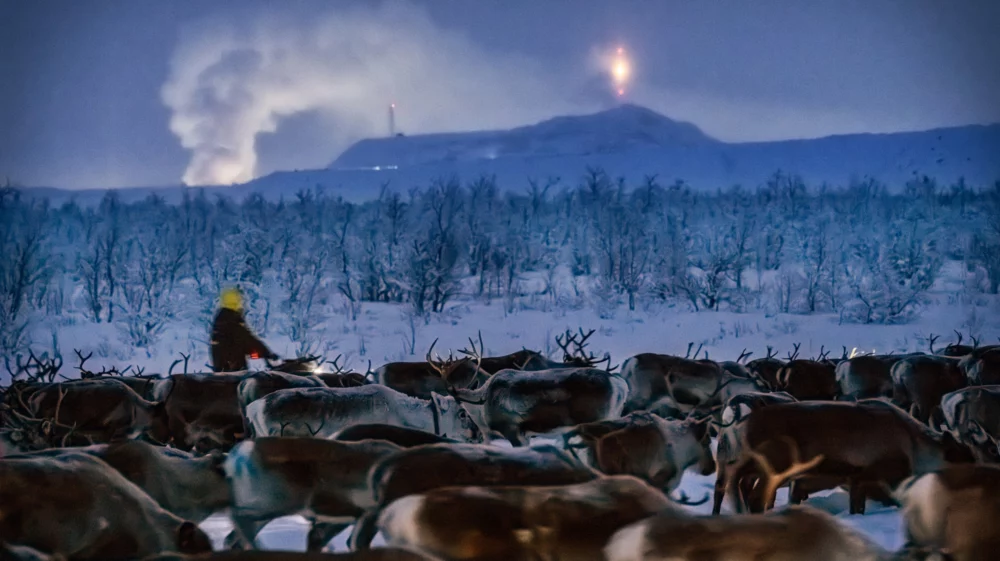
Growing extractive land and natural resource use, driven largely by the energy transition, is degrading Sámi lands and eroding the conditions for traditional livelihoods across the Nordics. The issue is particularly urgent in Sweden, where the appropriation of Sámi lands is currently also accompanied by hardening political rhetoric.
In this research seminar, we place recent developments in Sweden within a broader Nordic comparative framework. The seminar brings together leading researchers in Sweden, Finland and Norway to explore the origin of the growing anti-Sámi sentiments in the political and public debate, and to discuss how they may be understood, explained and resisted. The objective is to examine the intensifying struggles over land and rights in Sápmi from the perspectives of legal, democratic, justice and sustainability scholarship, addressing questions such as:
The seminar is organized as part of two research projects, Radisam and Sápmidem, which both aim to contribute to Nordic scholarly conversations on the entangled matters of Sámi rights, democracy, green transition, colonialism, racism and discrimination. They are funded by the Swedish Research Council and Nordforsk.
Extractive land and natural resource use is degrading Sámi lands, especially since mechanisms ensuring rights to participation and influence for the affected Indigenous communities are lacking or ineffective. This current trajectory raises the question: to what extent do the Nordics uphold the human rights of the Sámi and environmental protection in practice?
The issue is particularly urgent in Sweden, where the appropriation of Sámi lands is currently also accompanied by hardening political rhetoric. This includes explicit propositions, presented by national political leaders, not only to stall but to curb rights protection for reindeer herding – for instance via regulatory interventions to decrease the number of reindeer, or by removing mechanisms ensuring the livelihood’s protection in land-use planning.
While legitimating these claims as contributing to “development and democracy” and as “reclaiming (state) control over traditional reindeer herding areas”, they at the same time openly question and challenge the human rights of the Sámi, as recognized by the Swedish Supreme Court and by international laws and institutions. Positioning Sámi reindeer herders as “privileged” and “in the way” of the public good is a familiar trope gaining renewed attention. This ongoing discursive dismantling of Sámi rights needs to be understood in a political and public context characterized by the increased questioning of the validity and relevance of human rights and international law, with serious implications for groups historically exposed to discrimination.
Eirik Larsen (Saami Council) is a lawyer and leads the Human Rights Unit at the Saami Council. He has extensive experience of human and Indigenous rights and specific expertise on the relationships and interactions between states and Indigenous Peoples.
Annette Löf (SEI HQ) is a senior research fellow in the Rights and Equity team. Her work focuses on Sámi land rights, social justice and land-use governance.
Project / RADISAM investigates Nordic settler colonialism and its impact on present day Indigenous land rights and discrimination against the Sámi.
2024 - 2027 / About Forests, Land use and Public policy
SEI report / Fallstudie av LKAB:s ansökta Per Geijer-projekt och av risker för Gabna sameby
15 April 2026 / About Participation
Other publication / Kapitel i Sanningskommissionens antologi om hur statens markförvaltning i Sápmi påverkar renskötsel och samiskt självbestämmande.
24 April 2026 / About Land use and Public policy
Envisioning a sustainable and equitable society based on environmental justice and rights.