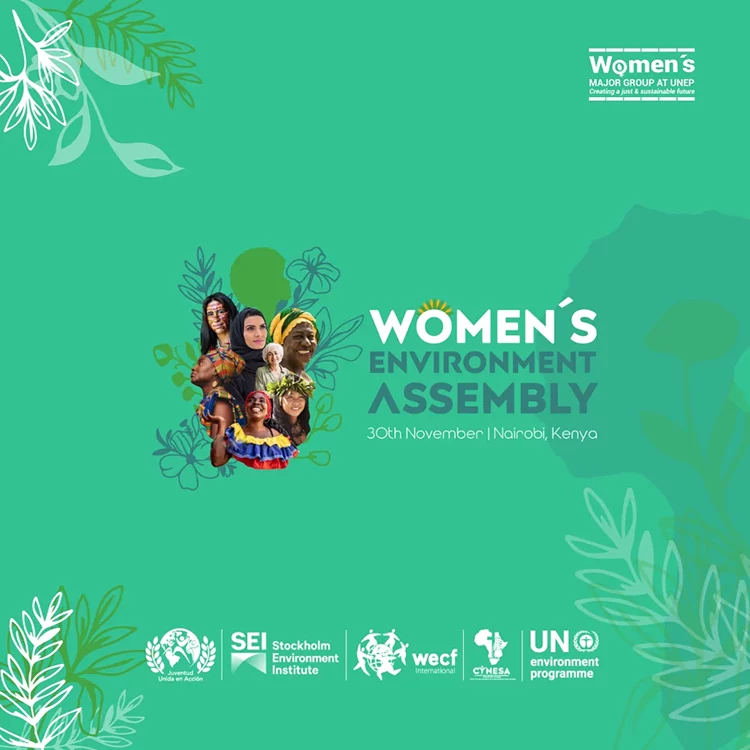
Graphic: Women’s Major Group.
Environmental degradation poses a crisis that severely impacts women and marginalized groups, yet they are crucial for community-based solutions. Recognizing this, the 1992 Rio Earth Summit established nine Major Groups, including the Women’s Major Group (WMG), to formally influence international environmental policy.
Since then, the WMG has been vital in shaping major global frameworks, from the Rio Conventions to the 2030 Agenda and successive UNEA sessions, successfully keeping gender equality central to environmental commitments.
The planned Women’s Environment Assembly (WEA) builds on this legacy and previous regional successes (like the one in Lima, Peru). Its core objective is to consolidate women’s priorities, strengthen their leadership, and ensure their collective voices globally influence the policy outcomes of the upcoming UNEA-7 and future governance processes.
Feature / Gender expert Andreea Raluca Torre shares insights on the need to include women’s voices in global environmental governance.
Past event / The SEI-hosted Adaptation Research Alliance, with support from SEI Africa, will host the workshop to connect adaptation research with policy and practice.
Feature / Findings from RAIA-funded projects are expected to support governments in Africa in integrating adaptation measures into their budget processes