The Adaptation Research Alliance (ARA), a global collaborative effort now hosted by Stockholm Environment Institute (SEI) and the Chulalongkorn University Social Research Institute (CUSRI), has been working to ensure that research can serve those on the frontlines of the climate crisis.
Climate change is no longer a distant threat – it is now a reality for millions of people. But the burdens of climate change are not shared equally.
From devastating floods in southwest Asia to droughts in Africa, the most vulnerable communities – such as smallholder farmers, coastal villagers, Indigenous populations and urban informal settlers – bear the brunt of worsening floods, droughts, heatwaves and rising sea levels, while lacking the capacity to adapt, including access to financial resources.
Their vulnerability arises from complex factors: limited resources, geographic location, gender inequality, weak governance and systemic inequalities. Climate change magnifies inequality and injustice. Traditional research has frequently failed to reach these communities or address their specific, local and urgent adaptation needs, with a particular focus on justice and equity.
The Adaptation Research Alliance (ARA) aims to change that. As part of its recent transition to being hosted by SEI and CUSRI, the Alliance appointed SEI Asia’s Albert Salamanca to lead its Secretariat. He explains: “Action-oriented adaptation research must be needs-driven, co-produced and adequately funded with consistent and predictable resources to deliver solutions at the scale and urgency the science demands.”
The ARA’s commitment to linking research with the real needs of vulnerable communities builds on a vision first set out at its founding.
“Our vision in 2021, when the 33 founding members of the ARA issued a declaration during the first Gobeshona conference,” said ARA’s former co-chair Rosalind West, now Senior Climate Science Advisor to the UK Foreign, Commonwealth & Development Office, “was of a world by 2030 where the research community is a valued partner to policymakers, practitioners and vulnerable communities, engaging effectively to support the delivery of innovative, user-driven solutions for adaptation and resilience from global to local levels. We believe this vision remains as relevant as ever and is worth supporting.”
Launched at COP26 in November 2021, ARA now comprises over 270 organizations – researchers, policymakers, donors, NGOs and, crucially, local community-based organizations. Its shared mission is to catalyse and increase investment in action-oriented adaptation research for the most vulnerable. ARA’s core mission is to connect adaptation research directly with people to produce tangible results.
The Gobeshona Declaration that led to ARA was initiated by the International Centre for Climate Change and Development (ICCCAD), led by the late Saleemul Huq, scientist, climate activist and adaptation expert. As Huq said as ARA Steering Board member, “Local knowledge and local-led solutions have a role to play in informing effective adaptation solutions that can increase their resilience now and in the future.”
ARA acts as a network for action research that involves communities directly in the research process, ensuring the outcomes are practical and immediately useful. Since it started, ARA has awarded catalytic grants to 55 projects across 31 countries to co-create knowledge and solutions and foster impactful and scalable action through collaboration.
“This [action-research] approach facilitates locally led and inclusive adaptation, especially in the Global South,” or low-income countries, mainly in tropical and equatorial regions, Salamanca says. “SEI is strategically positioned, with its regional offices in Asia and other regions in the Global South, to support this effort.”
An example of what ARA members are doing is highlighted by work from the member organization Transitions Research, “From Informality to Impact: The Untapped Potential of Scaling Urban Resilience Innovation”. Cities in the Global South are experiencing rapid growth, often in the form of informal settlements that are highly vulnerable to hazards made worse by climate change, such as flooding and heatwaves. Traditional top-down planning often ignores these communities. ARA’s work has resulted in community-driven adaptation in cities and urban settings.
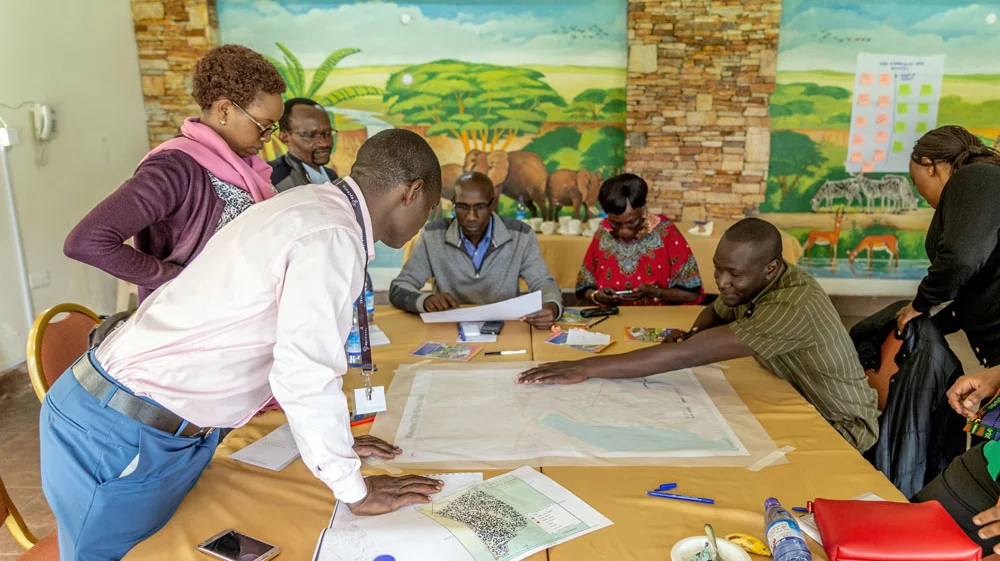
Another ARA-supported initiative, reported by the International Institute for Environment and Development (IIED), focuses on “Strengthening and Enhancing Contextual Urban Resilience“. This work involves partnering with residents of informal settlements to co-produce data and maps of their areas, among other interventions. This collaborative process generates crucial information about flood risks and vulnerable infrastructure and empowers communities to effectively advocate with municipal authorities for drainage improvements, secure land tenure, and other essential services.
Effective and inclusive collaboration on adaptation efforts is urgent, due to the escalating climate crisis and the magnitude of adaptation challenges faced by vulnerable communities. As ARA’s recently appointed co-chair, Aditya Bahadur, who is also the Director of Red Cross Red Crescent Climate Centre, explains, the organization aims to “connect funders, practitioners and researchers to scale what works rapidly, retire what doesn’t, and measure impact beyond publications.” ARA’s results-oriented framework ensures that funding and effort are directed toward solutions that are both just and genuinely enhance resilience for the most vulnerable.
ARA is funded by the UK International Development from the UK government.
Project / The Adaptation Research Alliance (ARA) is a global coalition responding to the urgent challenges faced by vulnerable communities from climate change.
Past event / Join SEI’s sessions at Adaptation Futures 2025 to explore co-production, equity and innovation in climate adaptation.
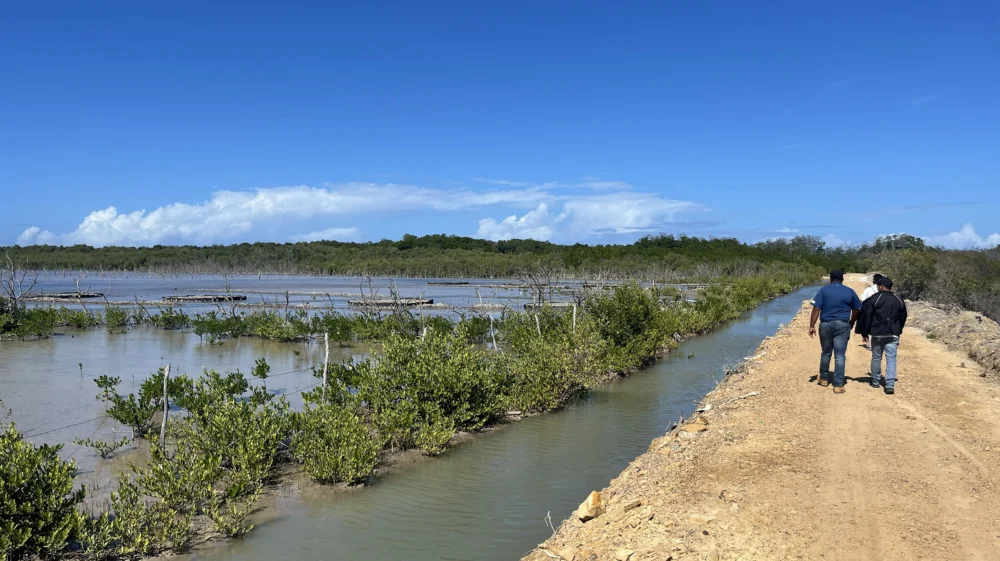
Feature / Mangroves are returning to Montecristi, where an SEI-led living lab is piloting a comprehensive restoration approach.
Feature / At the Bangkok Climate Action Week 2026, SEI Asia will showcase research and build pathways for climate action through science, dialogue, and engagement.