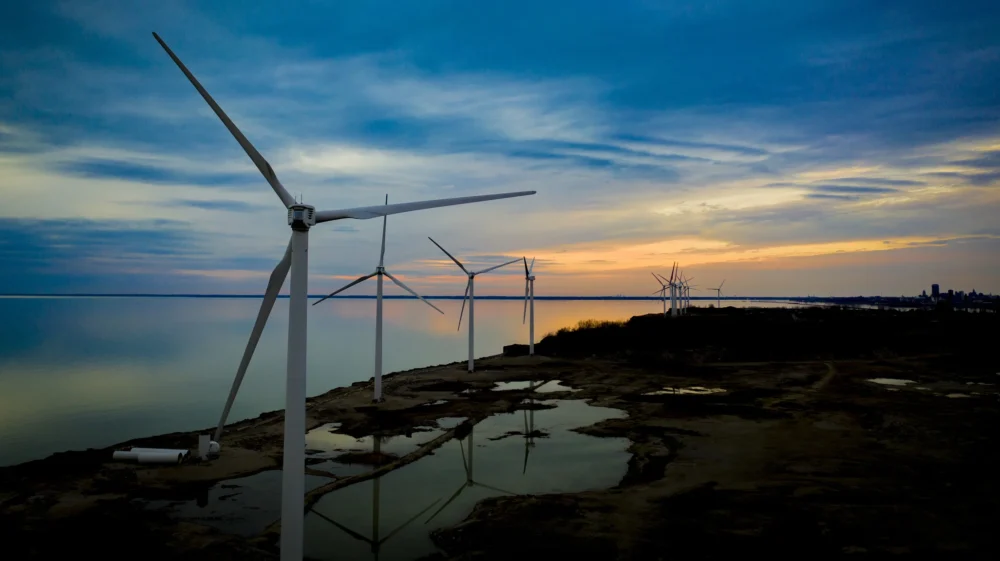
SEI researchers partnered with Vermont’s Agency of Natural Resources to create Vermont Pathways, a model of the state’s primary economic sectors that allows researchers and policymakers to explore how different environmental policies could accelerate reductions in greenhouse gas emissions.
Concerned over emission levels, the Vermont legislature passed the Global Warming Solutions Act in 2020. It ambitiously aimed to reduce greenhouse gas pollution to 26% below 2005 levels by 2025, to 40% below 1990 levels by 2030 and 80% below 1990 levels by 2050. Alongside this law came the creation of the Climate Council, which crafts the state’s Climate Action Plan (CAP). The plan identifies actions across the economy to reduce emissions and advance other priorities including climate resiliency and environmental justice.
Building on several years of collaboration, SEI partnered with Vermont’s Agency of Natural Resources (ANR) to conduct the modelling that informs CAP. SEI’s model, known as Vermont Pathways, supported both the initial 2021 version and the 2025 update of the plan.
“Our goal was to provide Vermont with a strong scientific foundation for its updated Climate Action Plan, one that reflects the latest data and policy changes, and helps sharpen the recommendations that guide state decision-making,” said SEI Scientist Silvia Ulloa, one of the researchers who supports the project.
This is the latest effort in an ongoing partnership between SEI and the state of Vermont. Initially spearheaded by the late SEI Senior Scientist Taylor Binnington, the original partnership focused on using Vermont Pathways to inform the Vermont energy plan. The model was then continuously improved, expanding the scope to include greenhouse gas emissions, supporting the work of regional planning commissions, and cost analysis of individual emissions mitigation actions within the state.
SEI researchers developed the Vermont Pathways model using two of SEI’s modelling tools, the Low-Emissions and Analysis Platform (LEAP) and Next Energy Modeling System for Optimization (NEMO). This model allowed researchers and policymakers to collaborate and explore different pathways for mitigating emissions, testing different combinations and levels of mitigation strategies to predict how these policies would affect overall emissions. The model includes a total of different mitigation strategies covering a variety of sectors, including the electrification of public transport vehicles, phasing out fossil fuels in space and water heating, and increased use of blended biodiesel for both heating and transportation. The model explores the effect of employing the mitigation measures through 2050.
The Vermont Pathways model gives policymakers the evidence they need to chart a course.
Silvia Ulloa, SEI Scientist
The model’s results informed the Climate Council’s recommendations for priority actions in the CAP. They indicate that mitigating emissions to the level required by the Global Warming Solutions Act would require faster and broader adoption of mitigation measures. Even in the most ambitious modelled scenario, the state would still fall short of meeting the Act’s required emission reductions. Combined with budget cuts and regulatory rollbacks by the current US administration, the state continues to wrestle with the challenge of meeting its environmental obligations.
“The Vermont Pathways model gives policymakers the evidence they need to chart a course,” Ulloa says. “Our next priority is to identify practical, near-term benchmarks that keep the state moving forward, because steady, incremental progress is essential to sustaining both momentum and credibility.”
The Vermont Pathways model remains an integral tool in assessing climate policy and implementation in Vermont. SEI researchers continue to update the baseline model to incorporate the most recently available data and forecasts, to refine the existing mitigation measures, and to develop new mitigation scenarios.
The next update for Vermont’s Climate Action Plan is slated for 2028–2029.
Tool / The Low Emissions Analysis Platform (LEAP) is a powerful, versatile system for energy planning and climate change mitigation assessment.
Tool / The Next Energy Modeling system for Optimization (NEMO) is a high-performance, open-source optimization tool designed to answer energy policy questions.
Project / This project uses a model developed from LEAP and NEMO to simulate greenhouse gas emission pathways across the state of Vermont.
Past event / SEI and CCAC are hosting an in-person hands-on training workshop 22–26 June in Pretoria on SEI's LEAP software for climate and clean air planning in Africa.
Past event / SEI joins the Climate Week in New York to highlight global leadership and finance solutions for accelerating the transition to net zero industry.
Project / This project aims to build a comprehensive decision-support toolkit to help planners and policymakers address energy insecurity across New York State.