A new research project, AgroMixNorth, aims to transform Northern Europe’s agricultural landscape by promoting diversified cropping systems. By addressing soil health and climate resilience, this project seeks to align with the EU’s Green Deal goals while ensuring sustainable food production.
As the impacts of climate change become more pronounced, Northern Europe and the Baltic regions face growing challenges in developing sustainable and adaptive agricultural practices. Recent years have seen stagnating crop yields alongside increasing negative environmental impacts from intensive agricultural practices.
Monoculture farming methods, which dominate the landscape, are notably less adaptive and resilient to climate stressors. According to the European Commission and supported by consensus among soil scientists, these trends are linked to deteriorating soil quality and carbon stocks – critical factors for European food security.
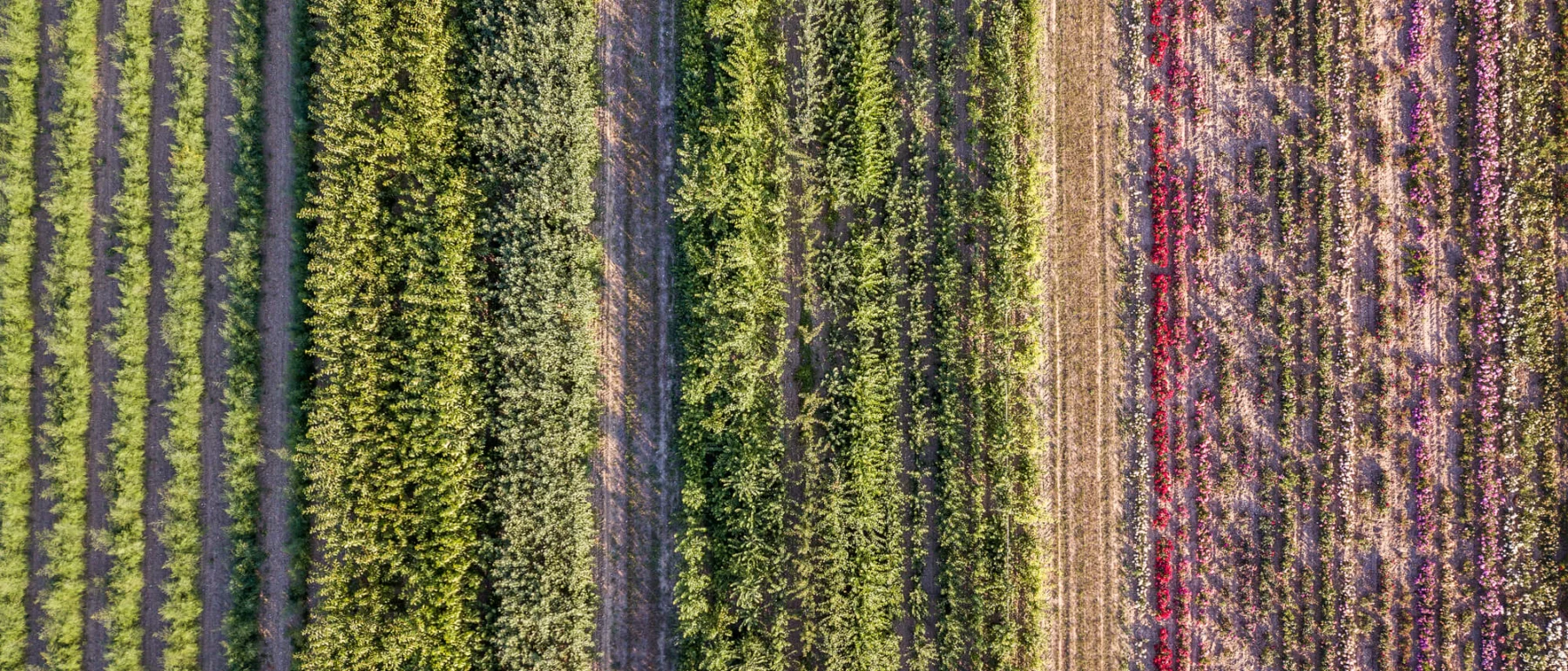
In response, an interdisciplinary team of experts are investigating how diversified cropping systems can create climate-smart, resilient agriculture systems with net-positive impacts on soil carbon storage. The new research initiative, AgroMixNorth, focuses on enhancing diversity among same species of cereal crops (such as spring barley and oats) with and without intercropping cover crops. These diversified systems are expected to deliver ecological and socio-economic benefits, contributing to climate change mitigation while maintaining – or even improving – crop productivity.
Specifically, AgroMixNorth seeks to:
Globally, soils hold over twice the amount of carbon found in the atmosphere, making them key to the global carbon cycle. The “4 per 1000 Initiative,” launched during COP21 in 2015, advocates for increasing global soil organic carbon stocks by 0.4% annually – a target that could significantly offset human-made greenhouse gas emissions. Diversified cropping systems, such as intercropping and cultivar mixtures, offer the potential to simultaneously enhance below-ground carbon storage and crop performance. However, several trade-offs which need to be addressed.
For example, limited understanding of how root carbon inputs affect nitrogen cycling can lead to increased greenhouse gas emissions, including nitrous oxide which is 300 times more potent than carbon in its warming effects. Additionally, higher carbon inputs from diversified cropping can increase microbial nitrogen demand, reducing the nitrogen available to plants and potentially harming crop yields.
The project is also testing the contributions of multiple intercropping practices, including:
The EU Common Agricultural Policy promotes crop diversification as key to resilient production (eco)systems, climate mitigation and food security. AgroMixNorth gives meaning to this CAP strategy through providing scientific evidence on the benefits of diversified cropping in Northern Europe.
Anke Herrmann, Project Lead, Swedish University of Agricultural Sciences (SLU)
As climate events become more frequent and severe, experts agree that feeding a growing global population will require unified international efforts, with sustainable production and soil management at the forefront. The EU is ramping up efforts to strengthen ecosystems, improve soil health and achieve climate neutrality by 2050 as part of its European Green Deal.
AgroMixNorth contributes to these goals by providing practical, science-based insights into adopting intercropping and increasing intraspecific diversity of cereal crops. The project brings together agricultural stakeholders, including farmers, industry representatives, policymakers and researchers, to catalyze collective action.
Though shifting from long-established practices may pose challenges for farmers, diversified cropping requires minimal investment and offers significant benefits, including improved soil health and carbon sequestration. Through the AgroMixNorth project, knowledge of these benefits, along with strategies for designing intercrop and mixed-cultivar farms, will be scaled-up. With its science-based knowledge contributions and multi-stakeholder efforts, Northern Europe and Baltic agricultural systems could become more resilient and better equipped to face the uncertainties of a changing climate.
AgroMixNorth focuses on enhancing crop diversity to deliver both ecological and socio-economic benefits, contributing to climate change mitigation
Achieving the EU’s Green Deal and Common Agricultural Policy goals will require multifunctional approaches that support food security and carbon sequestration. AgroMixNorth aims to meet these needs by integrating research with actionable solutions.
AgroMixNorth brings together experts from a consortium including the Swedish University of Agricultural Sciences (SLU), SEI, Norwegian Institute of Bioeconomy Research (NIBIO), Natural Resources Institute Finland (LUKE), Lithuanian Research Centre for Agriculture and Forestry (LAMMC), The James Hutton Institute and Aarhus University.
Project / AgroMixNorth offers springboards for resilient cropping systems that provide nutritious food and income to farmers while increasing below-ground carbon storage.
Event on 28 October in Yerevan / Armenia faces waste disposal challenges alongside potential for resource recovery. We explore how to recover valuable resources and reduce pollution.
Media advisory / Experts from SEI will be at CBD COP17 in Yerevan from 19–30 October and are available for commentary and analysis.
Press release / New Trase data analysis highlights the need for stronger supply chain transparency as domestic demand grows and export data gaps widen.