Air pollution and greenhouse gas emissions are among Nigeria’s most urgent economic and public health problems, with transport accounting for over a quarter of Nigeria’s greenhouse gas emissions. Yet despite strong national climate commitments, many private businesses face technical, financial, and regulatory barriers to reducing these emissions. To bridge this gap and help speed up Nigeria’s low-carbon transition, the UK Partnering for Accelerated Climate Transition (UK PACT) initiative hosted regional stakeholder workshops in Abuja and Enugu in December 2025 through the Enhancing Private Sector Capacity for Climate and Clean Air Action in Nigeria project.
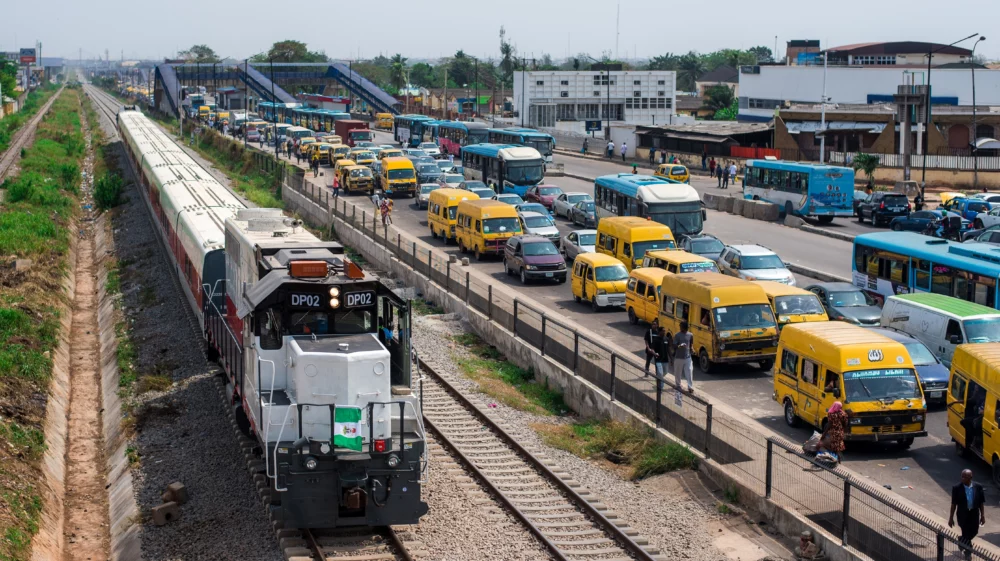
The transport sector in Nigeria generates both greenhouse gas emissions that contribute to global temperature rise and air pollutants that harm public health. The sector generates about 15% of Nigeria’s greenhouse gas emissions, and it generates harmful air pollutants, such as black carbon and fine particulate matter (PM2.5), which have taken a toll on public health. Air pollution is now the third leading risk factor for premature death in Nigeria, and roughly a quarter of infant deaths in the country can be attributed to air pollution, which disproportionately affects vulnerable populations such as children, women, and older people.
Nigeria has established a strong climate policy framework through its Climate Change Act (2021). It also has an Energy Transition Plan. In addition, it is one of the few African nations with a formal net-zero target. However, broader private-sector engagement on related actions remains limited. Businesses often lack the standardized guidance, technical skills and finance to measure and reduce emissions.
AP3 Advisory brings direct experience gained as part of the UK-Nigeria Advisory Facility (UKNIAF) delivery consortium in mainstreaming the NDCs into Nigeria’s annual budgeting and long-term national planning frameworks, as well as technical assistance to the National Council on Climate Change to establish the Business Plan and governance framework for accessing climate finance, such as the National Climate Change Fund.
SLOCAT contributes to the consortium by providing technical knowledge on sustainable transport implementation and climate finance. The project will benefit from previous FCDO-supported work by SLOCAT, such as the Policy Guide to Improving Access to Climate Finance for Transport. In the coming months guidance material will be tailored towards the needs of stakeholders in Nigeria, and in-depth training will be conducted to support the private sector towards bankable projects.
ESG is playing a pivotal role in facilitating collaboration between the broad range of stakeholders involved with the project, including government bodies, regulators, industry associations, development finance institutions, transport and logistics companies, international development partners, research institutes and civil society organisations. The involvement of all stakeholders will shape the tailored frameworks, as well as training modules, technical support and advisory content for the private-sector transport businesses taking part in the project.
CEG provides specialized expertise in Gender Equality, Disability, and Social Inclusion (GEDSI) and helps structure finance-ready clean energy and resilience-focused actions for the project.
To bridge this gap and help speed up Nigeria’s low-carbon transition, the UK Partnering for Accelerated Climate Transition (UK PACT) initiative hosted regional stakeholder workshops in Abuja and Enugu in December 2025 through the Enhancing Private Sector Capacity for Climate and Clean Air Action in Nigeria project.
The project aims to equip private businesses with the practical skills and tools they need to quantify emissions, explore and tap climate finance pathways, and develop and implement actionable clean air strategies. These introductory technical engagements aim to build awareness and strengthen the capacity of SMEs to adopt sustainable transport practices, invest in needed changes, and undertake innovative approaches in transportation. The initiative was delivered by a consortium led by the SEI at the University of York, with the AP3 Advisory; the SLOCAT Partnership on Sustainable, Low Carbon Transport (SLOCAT), Escher Silverman Global (ESG), and Consulting Engineers Group (CEG) as partners.
Drawing on their expertise and tools, notably the SEI’s Practical Guide for Business Air Pollutant Emission Assessment, SEI is providing crucial technical support. This guide and its associated calculation methods will be a key resource, training beneficiaries to quantify, assess, and manage their emissions of greenhouse gases, short-lived climate pollutants, and air pollutants.
The core of this project is providing businesses with the practical tools to accurately measure and manage their emissions. We are empowering Nigerian businesses to move beyond intent and take concrete, cost-saving action that delivers both lower greenhouse gases and cleaner air.
Gary Haq, Senior Research Associate and Consortium Lead
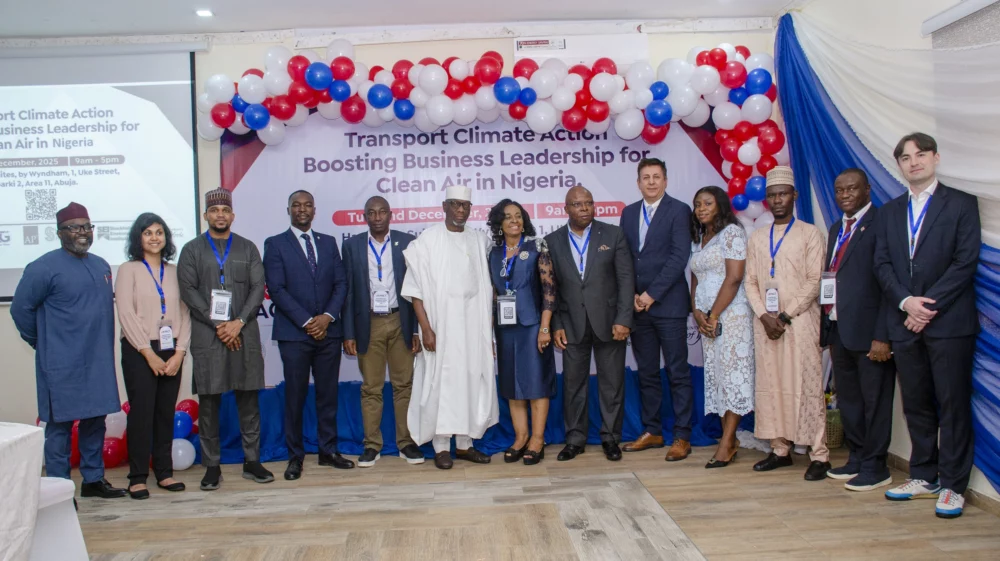
The workshops brought together private-sector actors, government agencies and technical experts to strengthen capacity, share knowledge and cultivate new partnerships that can accelerate climate and clean air leadership across Nigeria’s transport landscape. The sessions in both cities also sought to assess participants’ needs to inform the design of the detailed capacity-building workshops to be delivered in 2026.
Initial meetings with private sector partners confirmed that while the willingness to act is present, a major impediment is the lack of specific technical capacity and pathways to climate finance. This challenge is common for businesses across many African nations, where quantifying emissions, especially from disparate logistics and transport chains, can be difficult. By leveraging SEI’s practical guide, the consortium’s technical training, this project aims to position Nigerian beneficiaries to overcome these barriers. For instance, enabling small-scale transporters to transition their ageing fleets toward more fuel-efficient, lower-emission options, thereby unlocking both cost savings and clean air co-benefits.
Shifting to sustainable transport is difficult, especially for SMEs managing tight budgets and competing priorities. The UK initiative offers a free resource to help companies find solutions that can increase their competitiveness and help them move towards transport means with lower emissions of greenhouse gases and pollutants.
The program offers enterprises support on a wide range of related issues, such as how to record and understand their emissions, and how to create climate action projects that can attract investments. The program is intended to help businesses better understand how investing in inclusive transport can be good for business, society, and the environment.
The Abuja and Enugu workshops are part of a wider national effort to build the foundation for long-term environmental and economic resilience in Nigeria. Continued collaboration between government, industry, and communities through the initiative aims to help lay the groundwork for a better transport system.
This gathering is the beginning of a stronger partnership between government and industry … an opportunity to support businesses to reduce emissions, improve air quality, enhance compliance, and remain competitive in a rapidly shifting global marketplace.
Ibrahim A. Shelleng, Senior Special Assistant to the President on Climate Finance and Stakeholder Engagement, Nigeria
Project / The project boosts public–private collaboration to deliver inclusive climate and clean air transport initiatives in Nigeria.
Tool / The Low Emissions Analysis Platform (LEAP) is a powerful, versatile system for energy planning and climate change mitigation assessment.
Press release / Today's start of the climate change and clean air action in Nigeria’s private sector project marks a step toward better climate resilience and cleaner air.
Other publication / This publication provides businesses with practical guidance that will enable them to quantify air pollutant emissions down their value chains.
Other publication / The 2025 Integrated Guide for Business GHG and Air Pollutant Emission Assessment updates the 2022 Practical Guide for Business.