Our food systems are increasingly dysfunctional, strained by climate change, biodiversity loss and conflict. But what if the solution lies in embracing complexity rather than avoiding it? Instead of accelerating their collapse, food systems have the potential to become a positive force for ecological, social and climate resilience. Discover the inspiring stories of agroecological farmers worldwide who are leading this transformation.
Agroecology is emerging as a promising pathway for food system transformations encompassing multiple dimensions – environmental, social, economic, cultural and ethical – integrated into a holistic approach. Its scope extends beyond the farm gates to reimagine how food is processed, distributed, consumed, monetized and governed. Recent efforts to unify the social movement, practices and science that define agroecology have resulted in the 13 Principles of Agroecology, formulated by the High-Level Panel of Experts (HLPE) of the Committee on World Food Security (CFS). Acting as a compass for decision-makers, these principles provide guidance for implementing agroecology at the field, farm and agroecosystem levels.
The principles outline multidimensional targets, including improving resource efficiency (e.g. recycling), strengthening resilience (e.g. soil health, biodiversity, economic diversification), and securing social equity and responsibility (e.g. co-creation of knowledge, fairness, land and natural resource governance). While embedding this systemic approach into farming practices may seem challenging, approximately 30% of farmers worldwide have already begun this shift. These farmers exemplify how embracing complexity can serve as a catalyst for change, paving the way toward more sustainable food systems.
The Amplifying Stories of Agroecology Principles and Practices (ASAPP) project, led by the Swedish International Agricultural Network Initiative (SIANI), invites readers on a global journey to meet agroecology pioneers. Through a farmer-centred approach, the project highlights specific agroecological practices from diverse locations and explores how they align with the 13 Principles of Agroecology. The active involvement of farmers ensures that the resources developed are both accessible and grounded in their lived realities.
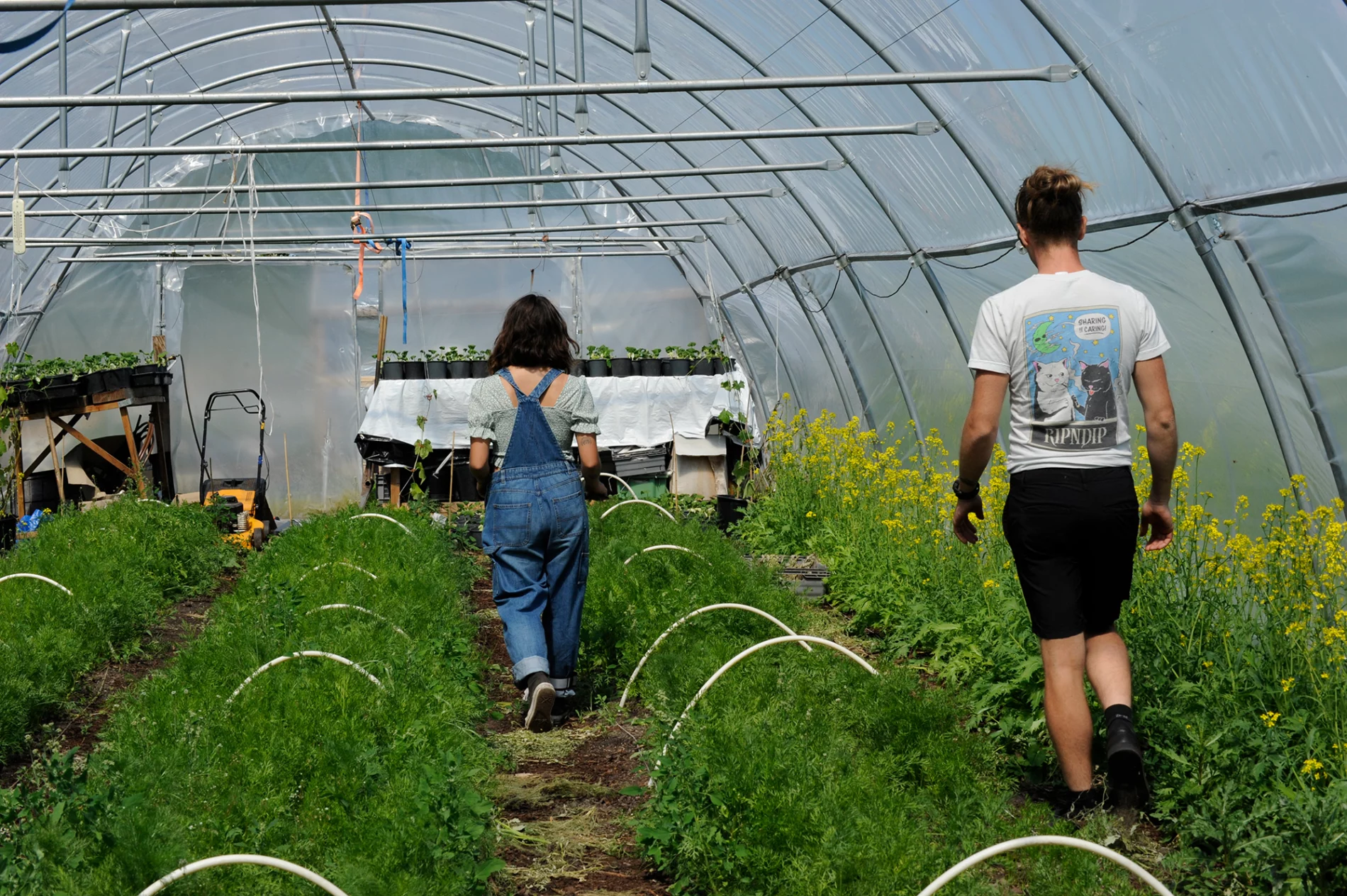
In Southern Sweden, the ASAPP project’s inaugural case study brought us to Alnarp’s Agroecology Farm, where Mariana Forero and Niall O’Brien-Gregg guided the team during their visit. Established in 2021 by students from the Agroecology Master’s Program at the Swedish University of Agricultural Sciences (SLU), the farm turns theoretical knowledge into action. Operated by volunteers and four paid employees under an eight-member board, the farm grows over 40 cultivars on less than one hectare, supplying local customers through a Community Supported Agriculture (CSA) program.
The farm is deeply integrated into the local community, serving as a vibrant gathering place for students, researchers and local agroecology enthusiasts. This integration was evident during the project’s publication launch at Alnarp’s Harvest Fest, which welcomed over 400 participants for workshops, farm visits and festivities. Through our visit, we sought to uncover the roots of their success and how they relate to the 13 Principles of Agroecology.
Mariana Forero and Niall O’Brien-Gregg giving a tour of the farm.
Photo: Aziliz Le Rouzo.
Agroecology at its core is a way of working with the land, not working the land.
Alnarp’s Agroecology Farm Board
One core principle embraced at Alnarp is enhancing agroecosystem biodiversity, which guides many of their practices. This includes diverse crop selection and habitat managed through features such as flower patches, hedgerows and dead hedges, which provide habitats for various species. The farm also harnesses synergies among all elements within the agroecosystem, which are considered as a whole. The North American Indigenous practice of the “three sisters” – integrating pumpkins, beans and corn – is a striking example of how virtuous cycles emerge from this approach. Pumpkins act as a cover crop, suppressing weeds and retaining moisture; the beans fixate nitrogen in the soil; and the corn provides structural support for the beans to climb.
The farm’s commitment to fairness is reflected in solidarity schemes where customers collectively share costs between low- and high- income families. The CSA program offers ten low-income subscriptions and seven solidarity shares, while events are designed to be inclusive, with options for regular (SEK 50), solidarity (SEK 150) and supportive (SEK 1) entrance fees.
These are just a handful examples of how Alnarp’s Agroecology Farm serves as a living laboratory for change, fostering community-wide engagement in this transformation. In their own words: “Agroecology at its core is a way of working with the land, not working the land. We strive to bridge knowledge gaps and build our community’s sense of place and awareness of environmental issues that regenerative processes can address.” – Alnarp’s Agroecology Farm Board
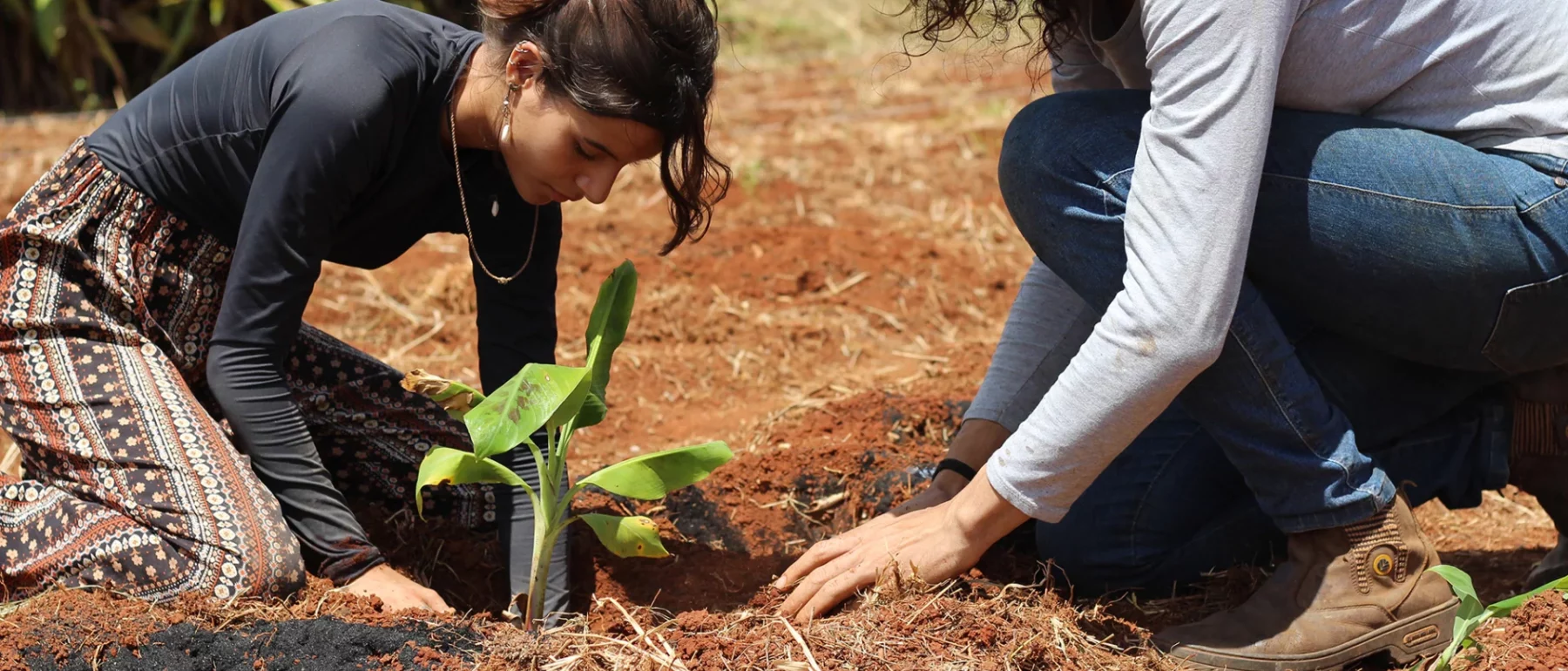
The second case study takes us to Brazil’s Panela Cheia Agroecological Farm in Itaberá municipality, where Nazaré and her family grow vegetables, fruits and medicinal plants in a mixed agroforestry system. Nazaré’s story is deeply connected to the Landless Workers’ Movement (MST), one of Latin America’s largest social movements advocating for land reform and food sovereignty.
The farm is part of a rural settlement reclaimed through land occupation and reappropriated by a women-led community. This community founded the Cooperative for the Production of Medicinal Plants (COOPLANTAS) to supply medicinal plants to Brazil’s public health system. Today the MST unites over 1.5 million people across 24 of Brazil’s 26 states, highlighting the transformative power of grassroots movements in shaping agroecological futures.
Agroforestry community planting day at COOPLANTAS.
Photo: COOPLANTAS.
Like Alnarp, Nazaré’s farm prioritizes enhancing agrobiodiversity, synergies and circularity. However, the Brazilian context underscores a strong social component, supported by well-established networks. Nazaré, like many other rural women members of MST, gained access to land, training and community support through the MST, enabling her to take an active role in agroecological transformation.
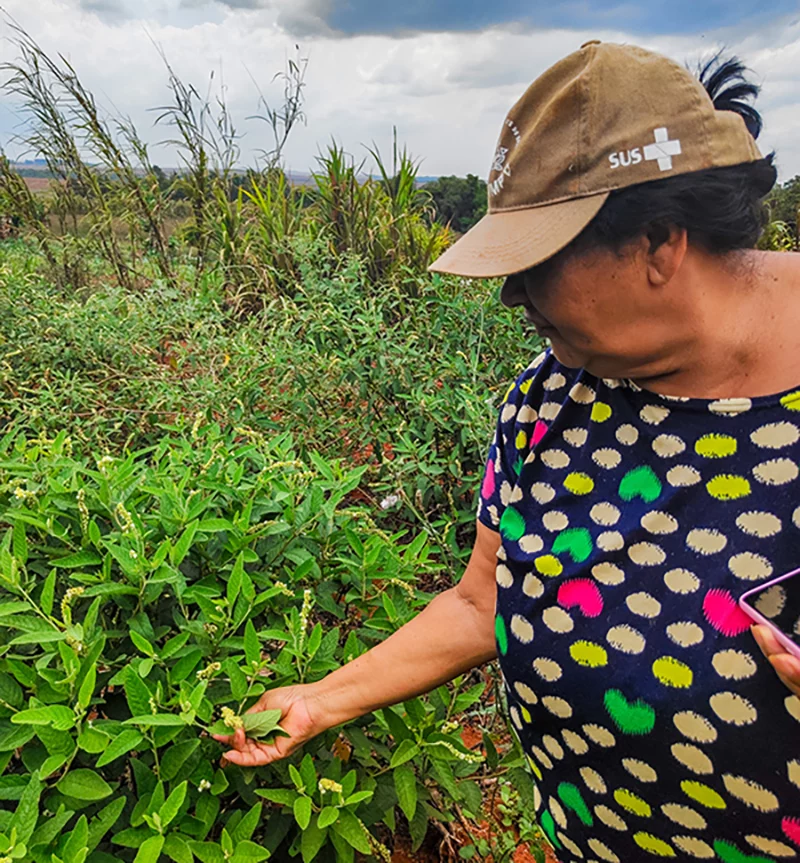
Nazaré co-founded COOPLANTAS, where she serves on the fiscal council, works in seedling production and manages her own farm. Producing natural remedies, cosmetics, teas and honeys, the cooperative is a key supplier to Brazil’s Unified Health System (SUS), contributing to improved healthcare across the country. Through other cooperatives on the settlement, they also participate in two additional public procurement programs, providing school meals and supporting vulnerable communities.
Participatory processes, co-creation and knowledge exchange are key drivers of COOPLANTAS’s success. For example, farmers actively engage in trials to improve medicinal plant production and processing during collective workdays. These efforts are complemented by exchanges such as events, courses, workshops and seed swaps organized between the cooperatives of the settlement. This horizontal transfer of knowledge connects farmers, Indigenous and Afro-Brazilian communities, and universities, fostering mutual learning and innovation.
Reflecting on her journey, Nazaré shares: “My dream with agroecology is to improve health and wellbeing, inspire youth and nurture a generation that cares for the environment,” emphasizing the need to pass on this knowledge to future generations.
Nazaré showcasing the Baleeira herb in the newly planted agroforestry area.
Photo: Karen Nobre Krull.
At its core, Panela Cheia stands as a testament to the powerful convergence of women’s leadership, community-driven change, and holistic practices in transforming food systems from the ground up.
The ASAPP project will continue to map agroecological practices worldwide, providing further evidence of its transformative impact across various contexts. By doing so, it aims to enhance farmers’ preparedness for emerging global standards in agroecology transitions, supporting alignment with both policies and funding requirements.
As the board of Alnarp’s Agroecology Farm explains: “ASAPP provides the missing link between policymakers and small-scale farmers, enhancing visibility and transparency for projects like Alnarp’s Agroecology Farm. By showcasing agroecology’s adaptability to local challenges, ASAPP supports comparability and inspires change toward resilient and equitable food systems.”
In the global transition toward agroecological systems, initiatives like Alnarp’s Farm and Panela Cheia shine as beacons of hope, guiding the way forward and inspiring others to follow. Their success stories demonstrate how grassroots movements can foster resilience, equity and sustainability while providing a model for others to adapt and build upon.
The Swedish International Agricultural Network Initiative (SIANI) is hosted and coordinated by SEI. SEI provides the administrative and operational framework for SIANI, supporting its mission to promote sustainable agricultural practices and equitable food systems. As part of this relationship, SEI helps disseminate SIANI’s work, including publishing features like this one to amplify the initiative’s impact and reach a broader audience.
Project / The Swedish International Agricultural Network Initiative – SIANI – is a global network that supports and promotes dialogue and action around food systems.
Other publication / This leaflet illustrates how Alnarp’s Agroecology Farm applies the 13 agroecological principles in practical farming settings.
Feature / Jonai Farms shows how agroecology and degrowth can work hand in hand to build just, resilient food systems rooted in care, community and ecological balance.
Event on 28 October in Yerevan / Armenia faces waste disposal challenges alongside potential for resource recovery. We explore how to recover valuable resources and reduce pollution.