Steve Cinderby shares observations from newly built green spaces that show how design and location shape who uses them, how, and why that matters for public health and community resilience.
As cities scramble to make up for lost time – after years of undervaluing green infrastructure, underinvestment, delayed climate-responsive planning and a pandemic that exposed deep spatial inequities – many are rushing to adopt 15-minute city models, invest in green infrastructure that ticks multiple sustainability boxes, or finally bring health-in-all-policies frameworks to life. But as these efforts gain pace, one question cuts through: how are these spaces actually used? Can they deliver meaningful health and wellbeing benefits?
Bangkok’s pocket park initiative offers a rare on-the-ground experiment: a glimpse into what works, what doesn’t and why design without context could fall short.
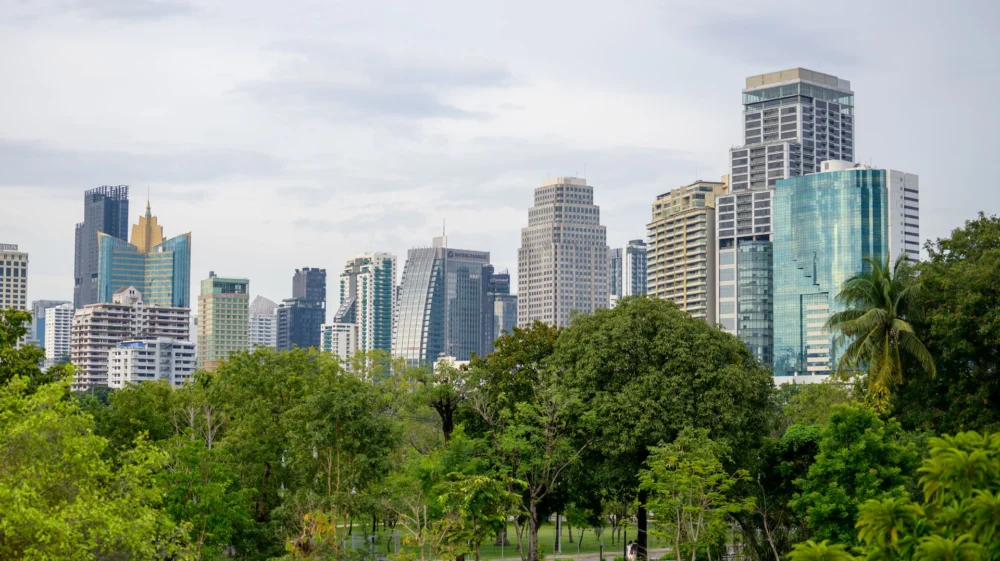
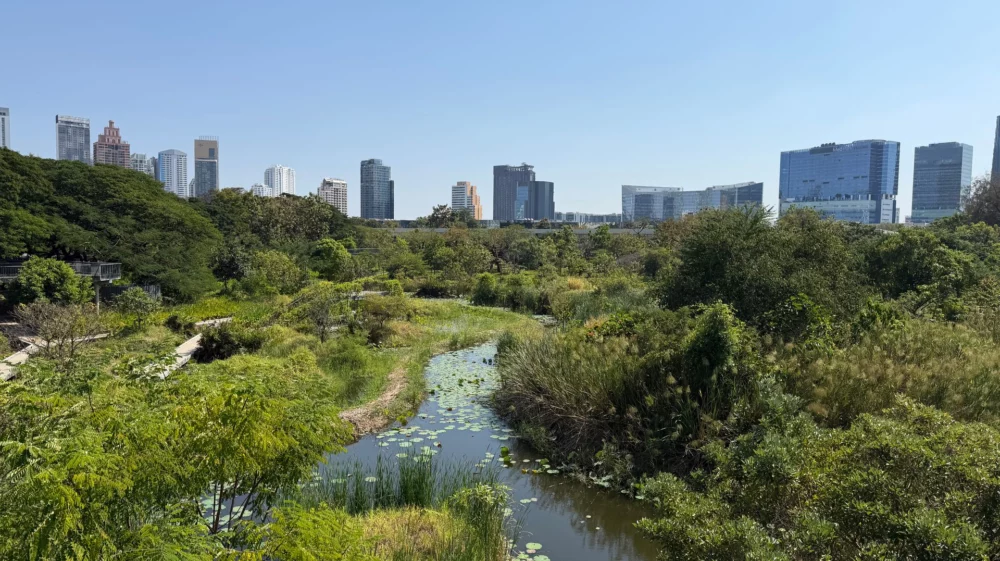
Opened in 2021, Chong Nonsi Canal Park transforms a busy Bangkok road median along Khlong Chong Nonsi into an accessible green space with trees, walkways and water features, bringing nature back into the heart of the city.
What are social determinants of health (SDH)?
Social determinants of health are the broader conditions that influence people’s wellbeing, such as access to green space, housing, education, employment and social support. In Bangkok’s pocket parks, SDH outcomes are shaped by how well these spaces support physical activity, social interaction and a sense of safety. When thoughtfully designed, they can strengthen community ties, enhance physical and mental health, and build the resilience communities need to thrive.
In the mega-city of Bangkok, the metropolitan authority has been tackling the challenge of limited green space by installing small pocket parks within a 15-minute walk of every neighborhood. But how are these parks actually being used? And do different designs result in different benefits for residents?
The short answer: yes, dramatically.
To better understand this, the SEI and Urban Design and Development Centre (UDDC) project team have been assessing how people interact with these new green spaces using the SOPARC (System for Observing Play and Recreation in Communities) method. This approach records who is using the park, their estimated demographics, the activities they undertake and how vigorous or sedentary those activities are.
Our early 2025 fieldwork offers valuable lessons on the relationship between park design, location and the social determinants of health (SDH).
The pocket parks we studied vary in form and context, from drained wetlands in quiet residential locations to a small plot under an elevated highway, and another nestled between high-rise apartments and shopping centres. These differences clearly affect how, when and by whom the parks are used.
Our weekday observations (Figure 1) highlight how park use varies dramatically between neighbourhoods influenced by location, the nature of the local population, and park aesthetics and design.


The observations (Figure 1) show stark differences in levels of use. Some parks see hundreds of visitors at peak times (typically late afternoon and evenings), while others attract only a handful in an hour. Parks that function as pedestrian thoroughfares – such as Park 2 (in a shopping area) and Park 4 (under the highway) – mainly encourage exercise, ranging from walking through to using fitness equipment (Park 4). In contrast, the pier park (5) and wetland park (3) are used more for relaxing and socializing, with fewer visitors engaging in physical activity.
Different designs don’t just influence number of visitors; they also shape the types of activities people engage in, revealing subtle patterns around gender and community presence.
Looking more closely at activity types, we found the biggest contrast between parks that encourage exercise and those used primarily for socializing or relaxing (Figure 2). Park 2, in the busy retail location, was mainly used for light exercise (walking through the area) but also attracted children for outdoor play. Park 5, by the pier, had a much stronger focus on relaxation and socializing.
The parks also showed notable gender differences (Figure 3). Parks 2 and 4 had a relatively even split between men and women. Park 3, in the wetlands, saw more women visiting in the evenings – though overall numbers were low. Park 5, meanwhile, was dominated by male users, primarily motorbike taxi riders (a typically male profession) who rested and socialized there between shifts.
What do these preliminary results suggest about how pocket-park design can influence social determinants of health for urban planning? The findings highlight how design and location affect both usage and who benefits.
Parks functioning as thoroughfares saw very high footfall, encouraging exercise through walking but offering fewer social benefits such as building community connections, developing social capital or fostering attachment to place. In contrast, “end-point” parks such as the pier (5) and wetland (3) encouraged longer stays, relaxing and socializing. Unsurprisingly, the quieter residential park attracted fewer people.
These small parks are not “destination” spaces, but rather local community assets.
One unexpected insight emerged during a recent earthquake in Bangkok. While collecting data at Park 2, our team witnessed people evacuating nearby buildings and gathering in the park. Though this day was excluded from our core analysis due to the unusual circumstances, the event revealed an important secondary function: pocket parks can serve as safe, familiar community gathering points during emergencies.
This underscores the multiple roles urban green spaces play in congested, busy urban environments: they are part of the city’s social infrastructure.
Our findings also raise questions about equity. Some parks were predominantly used by men; others had low usage overall. Without careful design and community input, pocket parks risk unintentionally excluding certain groups from their benefits.
Understanding these patterns is essential for planners and policymakers aiming to make green-space investments inclusive and effective. Design choices – from the location and layout to seating or play areas – directly affect who benefits from these public resources.
As we continue this work, we plan to explore how users perceive these pocket parks, and whether there are measurable differences in wellbeing between users and non-users. We will also speak with experts on park design and with community members to further assess how well the pocket park program is delivering on its goals.
Urban green spaces, no matter how small, can play a big role in shaping health, inclusion and resilience. But getting the design right is critical – because how people use a park often depends less on what’s planted and more on how it’s placed in their daily lives.
Explore how SEI research on mobility, housing and green space shapes pathways to more liveable, resilient and inclusive cities.
Understanding how environmental quality of the built environment interacts to influence people's health and wellbeing.
Project / The project aims to provide technical support, a policy pathway and implementation roadmap towards sustainable and low-carbon transportation in Thailand.
Project / The University of York SEI Centre implements customized capacity-building programs on active mobility in African transport structures on the HVT project.
Project / The project assessed how Bangkok’s pocket parks enhance urban wellbeing, accessibility, and environmental benefits, informing inclusive urban planning policies.
Feature / A roadmap being developed under SEI’s Green Agenda suggests clearer rules could strengthen science, protect local knowledge and ensure fairly shared benefits.
Feature / At the Bangkok Climate Action Week 2026, SEI Asia will showcase research and build pathways for climate action through science, dialogue, and engagement.
Journal article / The authors argue that monitoring and evaluation for nature-based solutions (NBS) should be treated as a collective learning process.