Swedish municipalities are facing unprecedented challenges as climate change intensifies. The cascading impacts of droughts, floods and heatwaves threaten multiple societal functions at once – yet local authorities remain unprepared to manage these interconnected risks. Two SEI projects – CrisAct and HydroHazards – offer valuable lessons on how Sweden can rethink its approach to climate resilience.
The SEI Water, Coasts and Ocean team has long studied the compound and cascading effects of climate change on critical infrastructures and social vulnerability. These risks are often overlooked because different sectors tend to focus on monitoring their own fields without assessing how disruptions in other sectors might affect them or how they, in turn, may impact other areas of society.
Within the CrisAct and HydroHazards projects, SEI researchers Karina Barquet, Matilda Gunnarsson, Jung-Ching Kan and Marlon Passos have analysed how Sweden is managing the effects of droughts, floods and heatwaves. Their findings reveal key lessons that should inform decision-making at both the local and national levels in Sweden. Many of these insights may also be relevant for other countries.
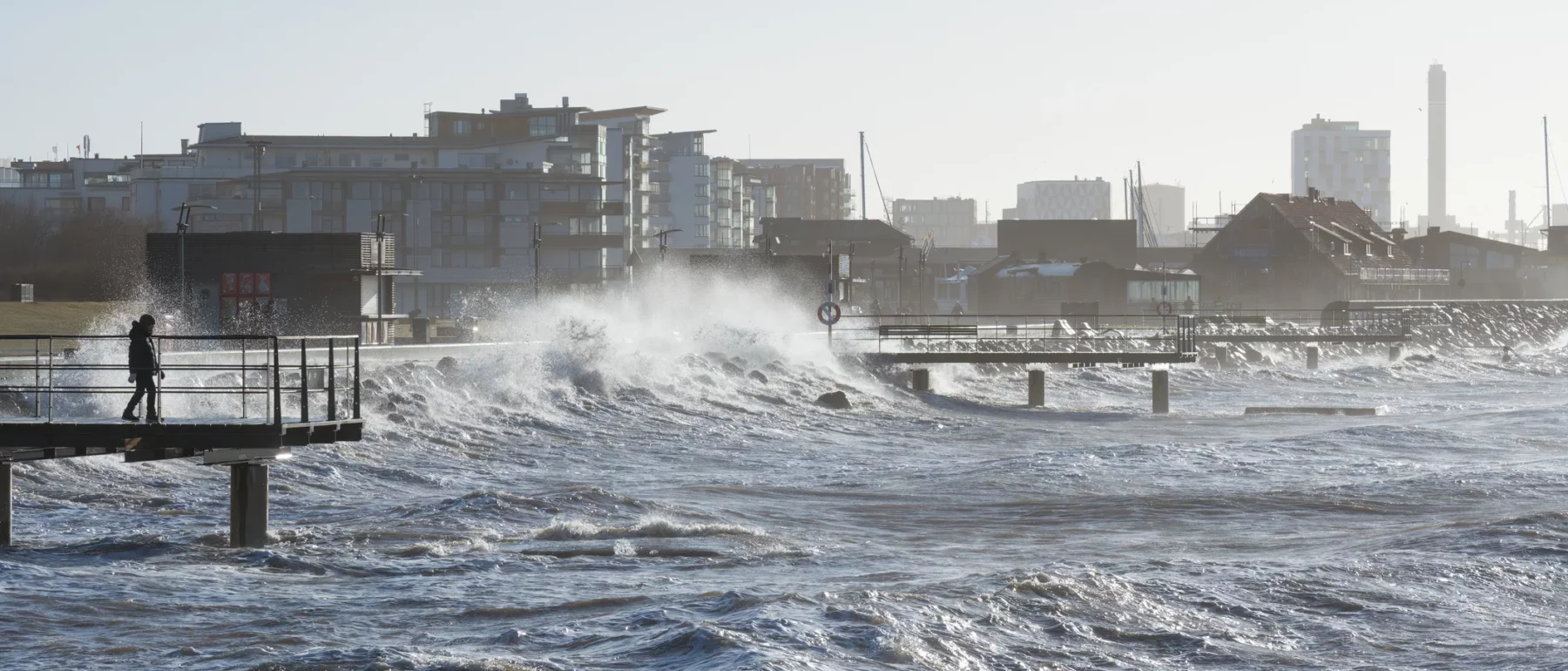
One of the most significant consequences of a warming climate is changes to the water cycle, which can result in both prolonged dry spells and more intense flooding. The researchers have identified hydroclimatic hazard hotspots across Sweden. Heatwaves have intensified in the south, while the risk of flooding has increased in both southern and northern regions. Overall, Sweden has become warmer and wetter.
These changes have major consequences for critical infrastructure and essential societal functions, including electricity supply, drinking water, wastewater treatment and roads. The SEI team is also studying the impact of these supply shocks on human systems, particularly in relation to food security and public health.
Climate hazards rarely occur in isolation. Instead, they often interact in ways that amplify their effects. These are known as “compounding hazards” and “cascading risks”, both of which pose serious challenges to managing climate impacts effectively.
Compounding hazards involve multiple threats occurring together or in sequence. They can be categorized into three different types:
The term “compounding events” can refer to any of these scenarios.
In parallel, cascading effects occur when an initial disruption triggers a chain reaction of failures across interconnected systems. For example, flooding could disable an electricity station, causing substation failures and widespread power outages. This, in turn, could disrupt essential services such as hospitals, schools and traffic lights. Given the complexity of modern infrastructure, these ripple effects can escalate quickly, affecting entire communities.
To improve the prediction of both single and compound hazards, SEI researchers are experimenting with machine learning approaches. They are testing various methodologies that structure data across time series, multiple features and spatial dimensions. This approach could enable much earlier predictions than are currently possible, providing valuable time to take preventable measures. However, developing a functional tool for this purpose would require more data and funding than is currently available.
In a recent study, SEI researchers analysed the concurrence of heatwaves and droughts in Sweden. They observed a pattern of intensification during the summer months, especially in the southern province of Skåne (Scania) and around Stockholm. These trends can have significant consequences, such as crop losses and water shortages, which may affect hydropower production and lead to increased electricity prices.
Managing these risks requires understanding of how interconnected systems react to disruptions. SEI researchers are therefore studying cascading effects within service and infrastructure networks.
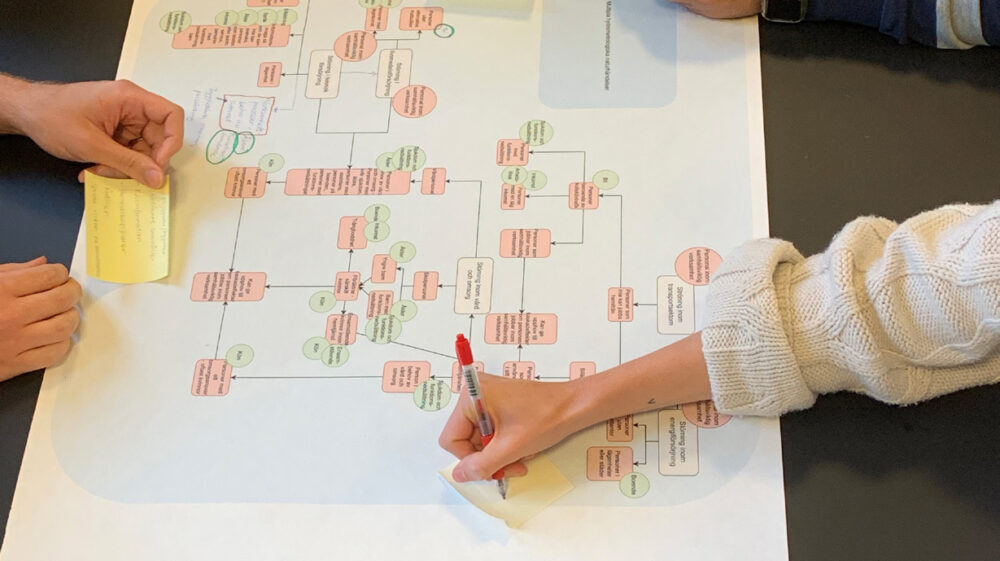
Together with the municipality of Halmstad, the team has developed a framework to model multi-sectoral interdependencies. This model helps water associations and electricity providers understand how their systems interact with others and how disruptions might propagate. By integrating stakeholder input, the team can identify vulnerable services and pinpoint critical infrastructure where breakdowns would have the most severe consequences.
This information allows planners and decision-makers to prioritize investments and develop appropriate contingency plans. It is essential to assess the importance of each component within the broader system and determine where redundancy measures – such as back-up services or alternative infrastructure – are most necessary.
Such studies add nuance to climate adaptation strategies by highlighting the most critical functions, making adaptation efforts more targeted. For example, when modeling the cascading impacts of urban flooding, the team found that just 1.3% of critical infrastructure nodes were particularly disruptive. Protecting key assets – such as power plants, storage tanks and wastewater facilities – could significantly reduce overall risk.
For security reasons, the project applies network analysis to open-source data, which makes the findings less precise but also minimizes sensitivity concerns.
Climate change requires a fundamental shift in how we plan our societies and prepare for extreme events. Based on SEI research, five key lessons emerge:
The research referred to in this article was primarily conducted within the following two projects:
This article builds on a presentation by Karina Barquet at the Climate Adaptation Summit 2024. Watch the presentation “Risk analysis, shared responsibilities and public finance – risks and opportunities” on YouTube.
Project / CrisAct aims to provide a comprehensive science-based framework to monitor and manage hydroclimatically driven natural hazard crisis and disaster responses.
Project / The project examines how exposure and vulnerability to water hazards impact infrastructures and populations in Sweden.
Journal article / This paper provides a data-driven framework for identifying and mapping localized hotspots and analyzing trends in single and compound hydroclimatic hazards.
SEI brief / The authors propose using current municipal assessments as a starting point to better understand social vulnerability to weather-related disasters.
Journal article / This study investigated the use of machine learning methods for predicting key indicators of agricultural drought over Sweden.