Early insights from observations and environmental monitoring in Bangkok’s pocket parks to understand who visits them and when, how park design shapes activity, and what this means for equitable access within 15 minutes.
Bangkok wakes early. By sunrise, children are chasing balls in narrow alleys, street vendors are fanning charcoal fires and office workers hurry toward skytrain stations. But in a city of more than 10 million people, green oases are rare. Many residents must walk past rows of shop houses, weave through motorbike traffic and cross busy roads before finding a single bench under a tree.
Once, nature was never far away – floating markets, canals for swimming and fishing, commuting by boat and tending to rice fields. Now, decades of rapid urbanization have replaced those landscapes with concrete, malls and high-rises. The loss is more than aesthetic: it has eroded public space, limited daily contact with nature and undermined livelihoods once woven through the city’s waterways and fields.
Bangkok, Thailand, circa 1965. Vendors paddle small boats at a floating market along a khlong (canal), with wooden houses lining both banks. Photo: Harvey Meston/Archive Photos/Getty Images.
Today, Bangkok is a global trading hub famous for hyper-retailing and world-class tourism. Yet residents have access to just 7.6 m² of green space each – well below the World Health Organization’s (WHO) recommended guideline of 9m². The city’s shortage mirrors that of other high-density urban centers such as Cairo, Chennai and Istanbul, which all face the triple challenge of dense development, climate stress and unequal access to public amenities, revealing a global struggle to safeguard public green space amid intense urban growth.
In response, the Bangkok Metropolitan Administration (BMA) launched the 15-minute park initiative – a network of small, walkable “pocket parks” across all 50 districts. These spaces aim to bring nature back within reach, giving every resident a green refuge within 800m of home. Whether they can truly improve urban resilience, equity and health is the question now guiding our research.
In the south to south-east of central Bangkok, the clatter of shipping yards meets the hum of community markets. Here, the logistics-heavy and commercial districts of Khlong Toei, Phra Kanong and Bang Na are home to long-standing low-income communities, aspiring middle-income households and a growing expat population.
Map showing the three Bangkok districts where pocket parks were studied: Khlong Toei, Phra Khanong and Bang Na. Map: SEI.
With our local partner, the Urban Design and Development Centre (UDDC), we selected five pocket park across these neighborhoods. Each has its own character: a wooded lot, a community mall, a wetland alley, a park beneath a highway network and a riverside pier. All are within 800m of surrounding homes – consistent with the “15-minute” goal.
These are not large municipal parks. They are compact public spaces embedded in the neighborhoods they aim to serve – quiet interruptions in the dense urban grid.
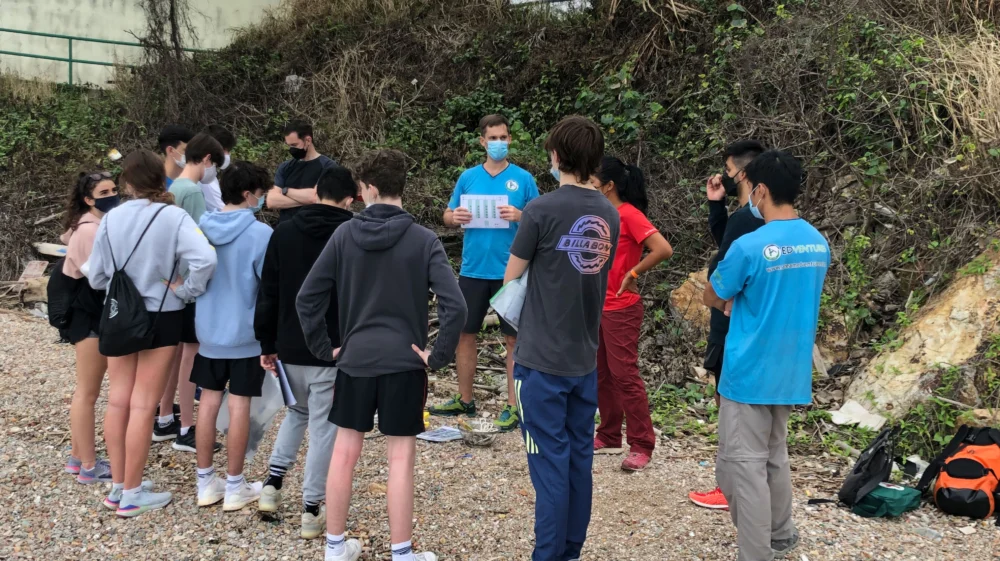
To assess how people use the parks, we applied SOPARC (System for Observing Play and Recreation in Communities) during five time slots, from early morning to evening. Through observation, we logged users’ age groups and gender, and categorized activity levels as: sedentary (sitting, standing, talking), walking (strolling, light exercise) or vigorous (running, stretching, sports).
We also tracked how use of park amenities such as benches, gym equipment, running tracks and scenic viewpoints, and noted other activities, from smoking to alcohol consumption. At the same time, we monitored air temperature, air quality and noise levels (Figure 1).
Figure 1: Data collection using SOPARC and air quality and noise level measuring equipment.
Photo: Raja Asvanon/ SEI.
From these observations, three broad patterns emerged.
At the park by the pier, children and adults fish from the river, while older residents gather to socialize and drink in the evening.


Residents also described uses outside our formal observation periods: teenagers socializing late at night, early-morning commuters pausing briefly or waiting for the nearby fresh market to open. These accounts hint at a broader spectrum of engagement than surface-level observation alone can reveal.
While observational data offers valuable insights into how parks function physically, it only tells part of the story. We will explore community perceptions, barriers to use and the potential wellbeing benefits through upcoming workshops and questionnaires – gathering perspectives from both park users and non-users. These insights will help us evaluate whether pocket parks genuinely enhance quality of life for local communities.
Protecting what green space remains, and reimagining land for public benefit, is key to sustainable urbanization (Figure 4). Bangkok’s initiative offers a valuable test: if these micro-spaces show measurable gains in community health and quality of life, they could offer a powerful model for urban planners worldwide. Ultimately, this research contributes to a broader dialogue on how rapidly growing cities can reclaim livability amid urban expansion.
Discover how SEI partners with communities and urban planners worldwide to create healthier cities and thriving communities.
Feature / A novel study by SEI researchers unveils the psychophysiological responses to walking in the cities of Nakuru, Kenya and Udon Thani, Thailand.
Feature / SEI’s project transformed a transit hub in Indonesia through community design, offering a replicable model for inclusive urban renewal.
SEI podcast / In this first episode, we talk to Steve Cinderby who introduces the Initiative its purpose, methods, challenges and findings.
Project / The project assessed how Bangkok’s pocket parks enhance urban wellbeing, accessibility, and environmental benefits, informing inclusive urban planning policies.
Feature / A roadmap being developed under SEI’s Green Agenda suggests clearer rules could strengthen science, protect local knowledge and ensure fairly shared benefits.
Journal article / Providing students with hands-on nature-based citizen science education can lead to greater frequency and range of pro-environmental behaviours.
Other publication / This research highlights the need to treat social viability as a core part of renewable energy planning, investment and implementation.