part of Your guide to COP29
Start readingAs climate change accelerates, the gap between what is needed to adapt and what is being done is widening. The latest IPCC report (2022) highlights an urgent need for more ambition and faster action on adaptation. While international negotiations acknowledge this, translating ambition into concrete action remains a challenge.
This blog post was originally published by IDDRI, an independent policy research institute and multi-stakeholder dialogue platform. It is republished here with permission.
This blog post describes shortcomings of the current negotiation approach, and proposes ways to accelerate adaptation efforts, focusing on both increasing ambition and ensuring implementation. It calls for the development of a shared vision for adaptation, grounded in collective decision-making and strengthened by international cooperation.
The COP29 Presidency has called for increased ambition in both mitigation and adaptation, urging countries to submit “ambitious, comprehensive, and robust” Nationally Determined Contributions (NDCs) and National Adaptation Plans (NAPs). Moreover, the outcome of the first Global Stocktake calls on Parties to have a national adaptation policy instrument in place by 2025 and to have made progress in implementation by 2030.
However, despite some progress, the risk of falling short on adaptation remains high. Current adaptation efforts are insufficient: as the IPCC warns, adaptation is too incremental, reactive, and not at the scale required. The focus is often on planning rather than actual implementation, hindered by several barriers, such as data and knowledge gaps, lack of monitoring and evaluation tools, difficulties in accessing finance, and limited integration of adaptation priorities into broader plans and policies (UNEP, 2023).
One of the biggest challenges to accelerating adaptation is the fragmentation of international negotiations under the UNFCCC, which has resulted in perpetual negotiation cycles and implementation inertia. Several adaptation-related processes are taking place in parallel but lack clear connections. For instance, when initial efforts to operationalize the Global Goal on Adaptation (GGA) stalled, the Glasgow–Sharm-el-Sheikh work program was launched, leading to further initiatives such as the UAE-Belém work program on indicators for adaptation progress.
Also in 2023, Parties invited the Adaptation Committee, in collaboration with other groups, to support the implementation of the UAE Framework for Global Climate Resilience with technical guidance and training materials. A year earlier, the IPCC was invited to update its technical guidelines for climate impact assessment.
As of February 2023, 140 countries have submitted NDCs that include an adaptation component, and 130 have submitted updated versions (TAAN). 1 NDCs outline adaptation goals, while NAPs focus on actions needed to achieve these goals (NAP Global Network, 2019). However, countries often fail to link their NAPs with NDC adaptation components, causing the two processes to be pursued separately and hindering progress.
As countries update their NDCs and adaptation plans by COP30 in 2025, they must consider priorities at international, national, and subnational levels. This requires a “whole-of-society” approach, where adaptation is viewed as a societal and political challenge. Countries need to establish a collective vision of acceptable risk levels, with buy-in from all sectors and levels. This effort requires innovative tools to facilitate multi-stakeholder processes and to strengthen international cooperation.
Mostly developing and least developed countries: https://unfccc.int/process/parties-non-party-stakeholders/parties-convention-and-observer-states?field_national_communications_target_id%5B514%5D=514
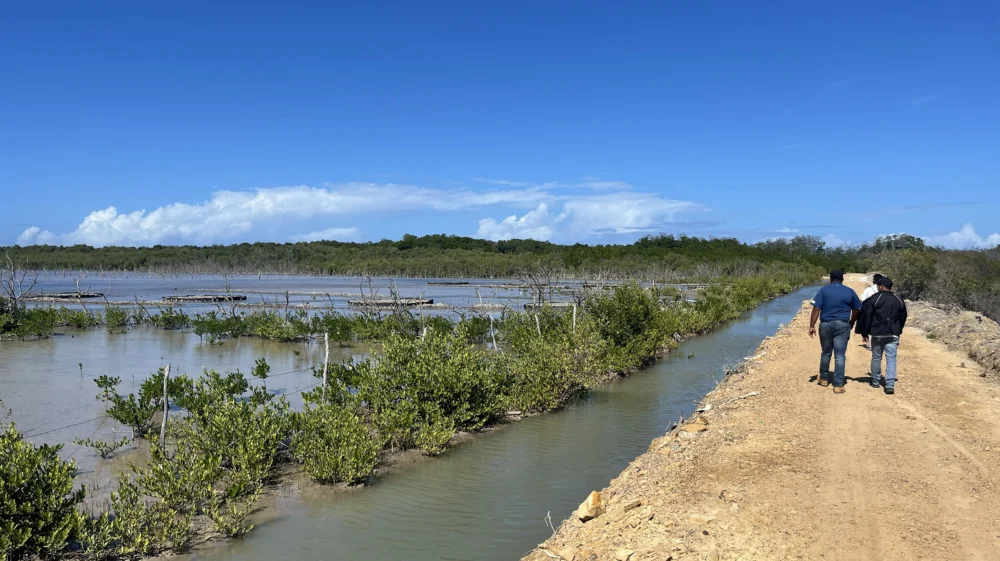
Feature / Mangroves are returning to Montecristi, where an SEI-led living lab is piloting a comprehensive restoration approach.
Feature / Biodiversity action is falling short – SEI shares five recommendations for building more resilient societies ahead of COP17.
Feature / SEI US introduces a new research program focused on climate forecasting and capacity building.