part of The Paris Agreement 10 years later
Start readingResearch Fellow Alphayo Lutta gives the Paris Agreement a report card on its first 10 years and outlines what should be a focus to do better over the next decade.
Across Eastern Africa’s drylands, communities are strengthening practical governance systems that make adaptation work on the ground.
These initiatives rely on a mix of external climate finance, county co-financing, and community contributions. At the same time, their success hinges on other matters: trusted local institutions, effective governance, and the social negotiations that make resource sharing possible.
Local control is a key lever for change. In the Horn of Africa, where communities hold formal authority over grazing plans and access to strategic dry-season water points, I have seen forage regenerate, conflict decline, value chains improve, and recovery from drought accelerate far more than in neighbouring areas without such local control.
What I have witnessed happening in Africa figures into my reflections about the Paris Agreement’s record to date – and the issues that are important for its future. Here, I give the agreement a “report card”, grading how its done over the first decade, and I outline six priorities for its second decade so that it can earn higher grades.
For its architecture of ambition: B+
The agreement successfully created a durable system for increasing ambition over time.
For transparency and accountability: C
Reporting systems have improved, but there are still few, meaningful consequences for non-delivery.
For adaptation and resilience: C-
Clear implementation metrics and predictable finance to match the scale of need are lacking.
For equity and finance: C-
While related rhetoric has increased, advances have been limited for creating consistent, adequate and accessible financial flows.
For fossil fuel supply: D
Even though demand-side transitions have accelerated, efforts to manage the decline of fossil-fuel production remain weak and inconsistent.
Here are six priorities that can strengthen the impacts of the Paris Agreement going forward:
This is perspective is part of a series by SEI researchers worldwide marking the 10th anniversary of the Paris Agreement by examining the lessons from its first decade and the implications for the next.
Media coverage / In a Daily Nation Opinion, SEI Researcher Cassilde Muhoza explains why Kenya’s expansion of renewable energy has not automatically translated into lower tariffs
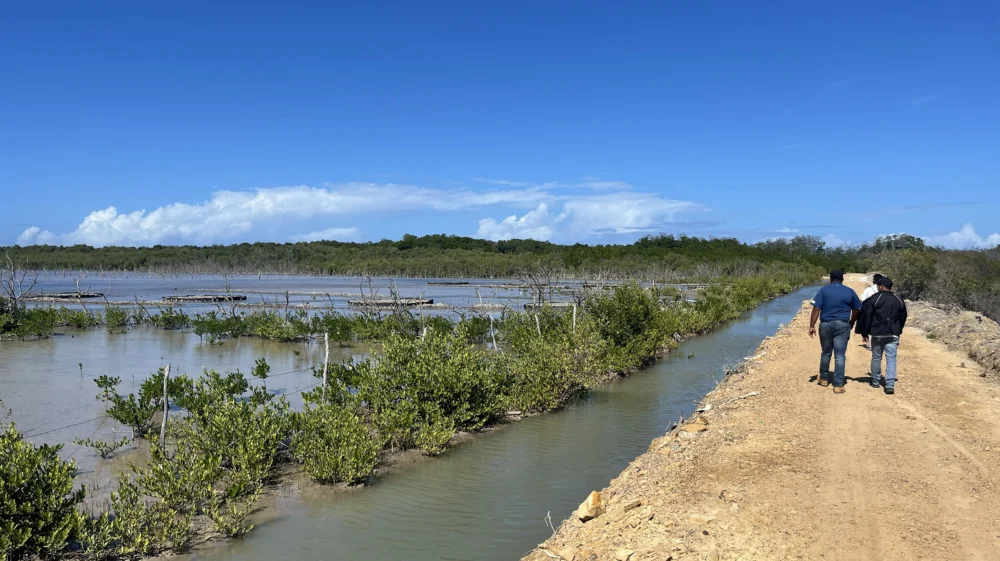
Feature / Mangroves are returning to Montecristi, where an SEI-led living lab is piloting a comprehensive restoration approach.
Feature / SEI US introduces a new research program focused on climate forecasting and capacity building.